School of Social Sciences and Psychology, Western Sydney University, Sydney, New South Wales, Australia.
World Vision International, Southern Africa Regional Office, Mbabane, Swaziland.
PLoS One. 2019 Mar 1;14(3):e0212994. doi: 10.1371/journal.pone.0212994. eCollection 2019.
Lesotho and Swaziland experience intense, recurring drought resulting in disaster situations. Despite the recurrence of drought, both its influence on rural subsistence communities' support systems and the actions that enable structures of resilience remain poorly understood. Each incidence of drought stimulates a disaster resilience discussion that stalls without achievement of positive results until the next disaster. This study has examined the influence of recurring drought on communities' inherent resilience and proposes an evidence-based framework to enhance community resilience.
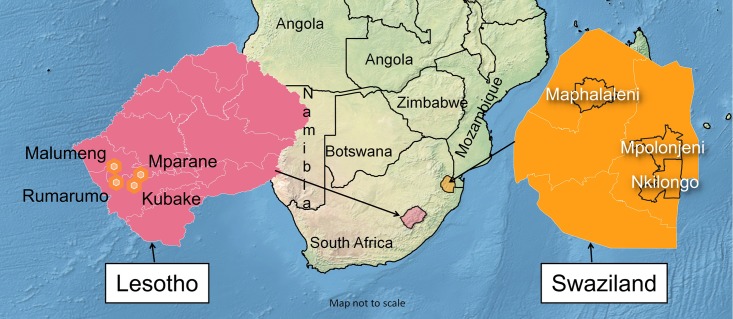
Data were collected from 16 focus group discussions (N = 197) in the Highveld, Midveld and Lowveld agro-ecological regions of Swaziland and Lesotho. Themes and subthemes have been identified, defined, categorised and narrated using structuration theory as a guide.
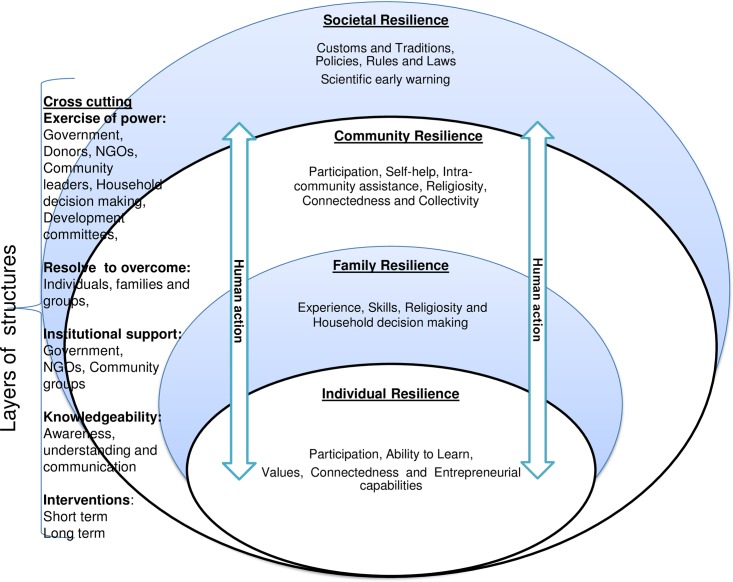
Resilience activities were found to be characterised by knowledgeability and changes in behaviour in adapting and applying appropriate actions, all of which were enhanced by institutional support. The effectiveness of institutional support hinged on harnessing communities' knowledge, social groups, value systems, connectedness, participation, decision-making and collectivism.
Large-scale interventions to build and strengthen resilience are urgently needed in order to maintain cohesiveness and development gains, especially because rural subsistence farmers make up the majority of these two countries' populations. Policies that integrate resilience with national development planning must be urgently developed and executed.
莱索托和斯威士兰经常经历强烈且反复出现的干旱,导致灾害情况。尽管干旱一再发生,但它对农村生计社区支持系统的影响以及增强适应力结构的行动仍未得到充分理解。每次干旱都会引发一场关于抗灾能力的讨论,但都没有取得积极成果,直到下一次灾害发生时才会停止。本研究考察了反复发生的干旱对社区固有适应力的影响,并提出了一个基于证据的框架来增强社区适应力。
在斯威士兰和莱索托的高地、中地和低地农业生态区,从 16 个焦点小组讨论中收集了数据(N=197)。使用结构化理论作为指导,对主题和子主题进行了识别、定义、分类和叙述。
适应力活动的特点是具备知识和行为变化,以适应和应用适当的行动,所有这些都得到了制度支持的增强。制度支持的有效性取决于利用社区的知识、社会团体、价值体系、联系、参与、决策和集体主义。
迫切需要进行大规模干预以建立和加强适应力,以保持凝聚力和发展成果,特别是因为农村生计农民构成了这两个国家人口的大多数。必须紧急制定和执行将适应力与国家发展规划相结合的政策。