College of Fisheries, Chinese Perch Research Center, Huazhong Agricultural University, Wuhan 430070, China.
Freshwater Aquaculture Collaborative Innovation Center of Hubei Province, Key Lab of Freshwater Animal Breeding, Ministry of Agriculture, Wuhan 430070, China.
Genes (Basel). 2019 Feb 25;10(2):178. doi: 10.3390/genes10020178.
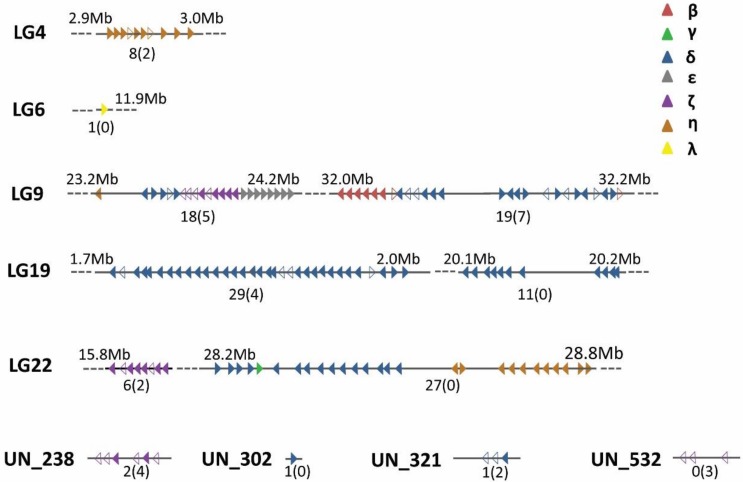
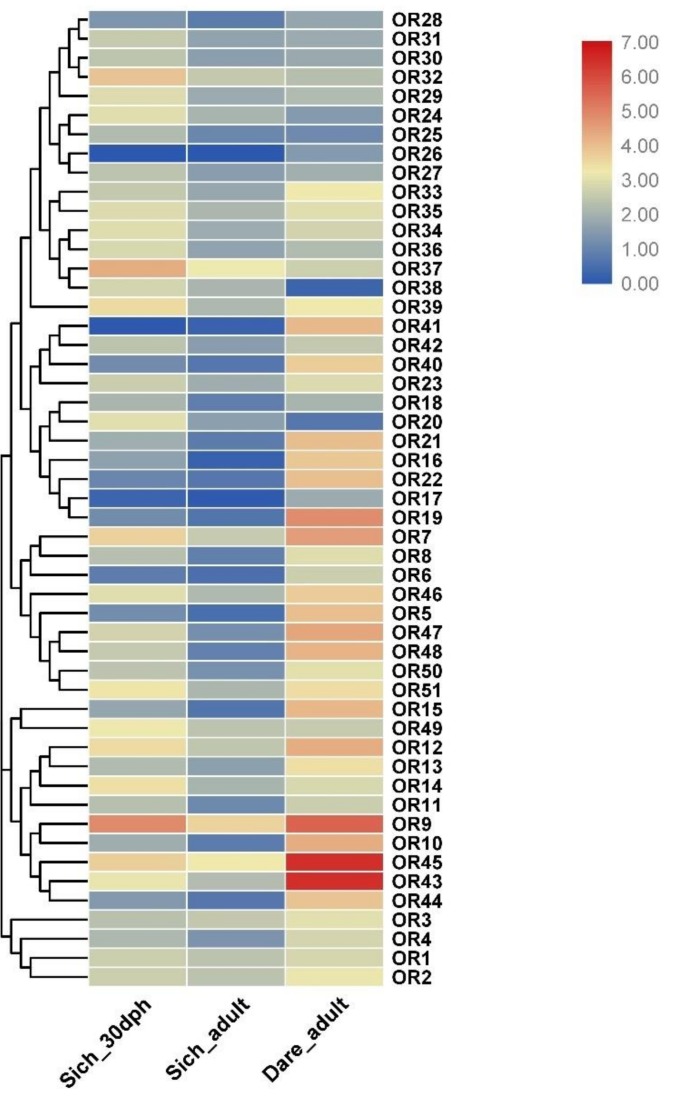
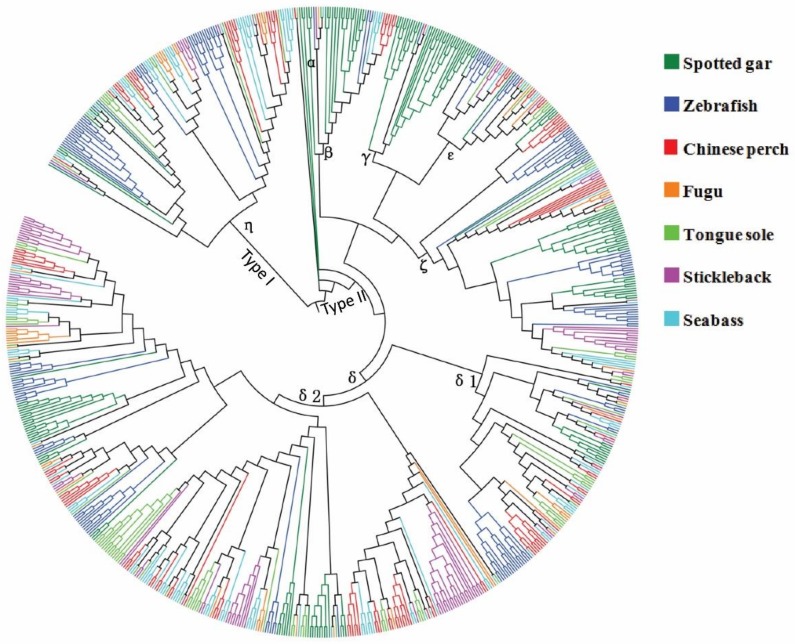
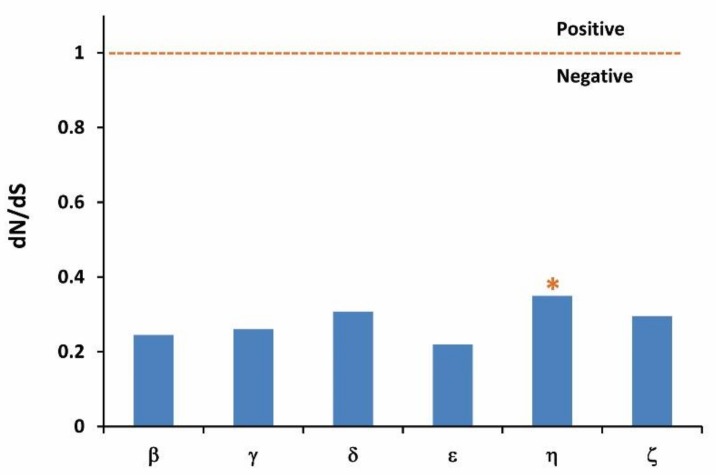
Olfaction, which is mediated by olfactory receptor (OR) genes, is essential in the daily life of fish, especially in foraging. However, Chinese perch () is believed to prey with reliance on vision and lateral sensation, but not on olfaction. Therefore, understanding the evolutionary dynamics of the Chinese perch OR repertoire could provide insights into genetic evidence for adapting to a decreasing reliance on olfaction. Here, we reported a whole-genome analysis of the Chinese perch OR repertoire. Our analysis identified a total of 152 OR genes, including 123 functional genes and 29 pseudogenes, and showed their genomic organization. A phylogenetic tree was constructed, and the phylogenetic relationships of teleosts ORs was illustrated. The dN/dS (global ratios of non-synonymous to synonymous) analysis demonstrated that OR groups all appeared to be under purifying selection. Among the five Percomorpha fishes, Chinese perch only had 22 subfamilies, suggesting a decrease in OR diversities. The species-specific loss of subfamily 56 and 66 in Chinese perch, of which the genes belonged to subfamily 66, were orthologs of OR51E2, which recognized the plant odorant β-ionone, indicating that extremely piscivorous fish which might lose those receptors responded to plant-related odors. Finally, the expression profiles of OR genes in the olfactory epithelium at different developmental stages were investigated using RNA-seq data. From the aforementioned results, the evolution of the OR repertoire may be shaped by the adaption of vision-dependent specializations for foraging in Chinese perch. The first systematic study of OR genes in Chinese perch could provide valuable genomic resources for the further investigation of olfactory function in teleosts.
嗅觉是由嗅觉受体 (OR) 基因介导的,在鱼类的日常生活中至关重要,尤其是在觅食方面。然而,人们认为中国鲈鱼主要依赖视觉和侧线感觉觅食,而不是嗅觉。因此,了解中国鲈鱼 OR 基因库的进化动态可以为适应嗅觉依赖度降低提供遗传证据。在这里,我们报告了中国鲈鱼 OR 基因库的全基因组分析。我们的分析共鉴定出 152 个 OR 基因,包括 123 个功能基因和 29 个假基因,并展示了它们的基因组组织。构建了系统发育树,说明了硬骨鱼类 ORs 的系统发育关系。dN/dS(非同义与同义替换的全局比值)分析表明,OR 组似乎都受到了纯化选择的作用。在五个鲈形目鱼类中,中国鲈鱼仅有 22 个亚科,表明 OR 多样性减少。中国鲈鱼中,亚科 56 和 66 的物种特异性缺失,这些基因属于亚科 66,是 OR51E2 的同源物,OR51E2 能识别植物气味β-紫罗兰酮,这表明极度肉食性鱼类可能会失去那些能识别植物相关气味的受体。最后,使用 RNA-seq 数据研究了 OR 基因在嗅觉上皮不同发育阶段的表达谱。从上述结果可以看出,OR 基因库的进化可能是由适应中国鲈鱼视觉依赖型觅食的特殊化所塑造的。对中国鲈鱼 OR 基因的首次系统研究可为进一步研究硬骨鱼类的嗅觉功能提供有价值的基因组资源。