Molecular Oncology Research Center, Barretos Cancer Hospital, Barretos, Brazil.
Center of Molecular Diagnoses, Barretos Cancer Hospital, Barretos, Brazil.
Sci Rep. 2019 Mar 1;9(1):3209. doi: 10.1038/s41598-019-39965-x.
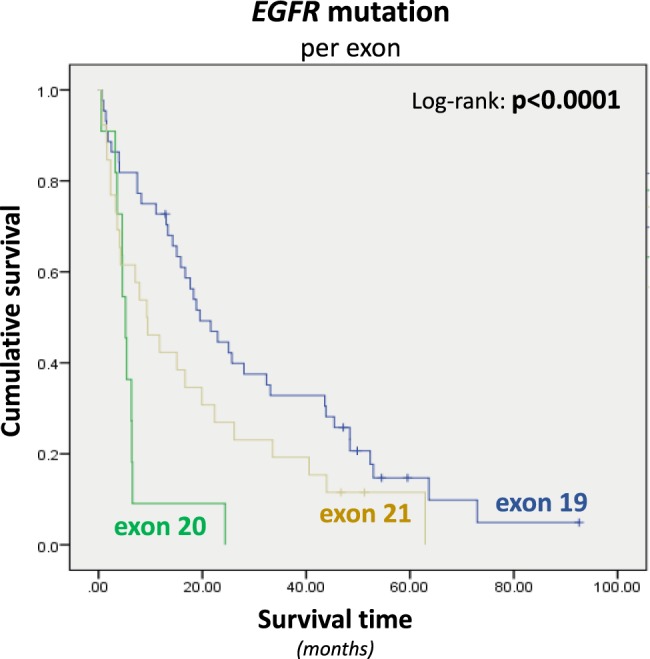
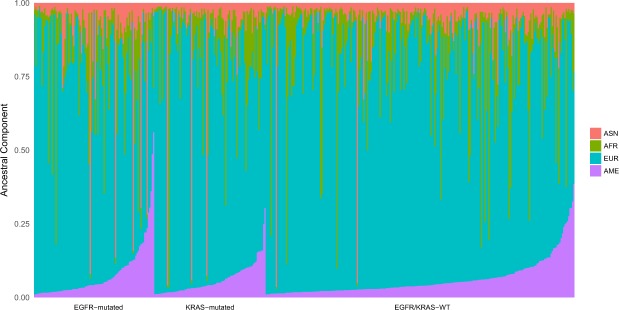
Lung cancer is the deadliest cancer worldwide. The mutational frequency of EGFR and KRAS genes in lung adenocarcinoma varies worldwide per ethnicity and smoking. The impact of EGFR and KRAS mutations in Brazilian lung cancer remains poorly explored. Thus, we investigated the frequency of EGFR and KRAS mutations in a large Brazilian series of lung adenocarcinoma together with patients' genetic ancestry, clinicopathological and sociodemographic characteristics. The mutational frequency of EGFR was 22.7% and KRAS was 20.4%. The average ancestry proportions were 73.1% for EUR, 13.1% for AFR, 6.5% for AME and 7.3% for ASN. EGFR mutations were independently associated with never-smokers, high-Asian ancestry, and better performance status. KRAS mutations were independently associated with tobacco exposure and non-Asian ancestry. EGFR-exon 20 mutations were associated with worse outcome. The Cox regression model indicated a worse outcome for patients whose were older at diagnosis (>61 y), solid histological subtype, loss of weight (>10%), worse performance status (≥2), and presence of KRAS mutations and EGFR mutational status in TKi non-treated patients. In conclusion, we assessed the clinicopathological and ethnic impact of EGFR and KRAS mutations in the largest series reported of Brazilian lung adenocarcinomas. These findings can support future clinical strategies for Brazilian lung cancer patients.
肺癌是全球最致命的癌症。肺腺癌中 EGFR 和 KRAS 基因的突变频率因种族和吸烟情况在全球范围内有所不同。EGFR 和 KRAS 突变对巴西肺癌的影响仍未得到充分探索。因此,我们研究了一个大型巴西肺腺癌系列中 EGFR 和 KRAS 突变的频率,以及患者的遗传背景、临床病理和社会人口统计学特征。EGFR 的突变频率为 22.7%,KRAS 的突变频率为 20.4%。EUR 的平均遗传比例为 73.1%,AFR 为 13.1%,AME 为 6.5%,ASN 为 7.3%。EGFR 突变与从不吸烟者、高亚洲血统和更好的体能状态独立相关。KRAS 突变与烟草暴露和非亚洲血统独立相关。EGFR 外显子 20 突变与预后不良相关。Cox 回归模型表明,诊断时年龄较大(>61 岁)、组织学类型为实体型、体重减轻(>10%)、体能状态较差(≥2)、存在 KRAS 突变和 TKi 未治疗患者中 EGFR 突变状态的患者预后更差。总之,我们评估了 EGFR 和 KRAS 突变在最大的巴西肺腺癌系列报告中的临床病理和种族影响。这些发现可以为巴西肺癌患者的未来临床策略提供支持。