Department of Neurobiology, Care Sciences and Society, Karolinska Institutet, 23 300, SE-141 83, Huddinge, Sweden.
Patient Area of Hematology, Karolinska University Hospital, Stockholm, Sweden.
J Cancer Educ. 2020 Jun;35(3):538-544. doi: 10.1007/s13187-019-01493-7.
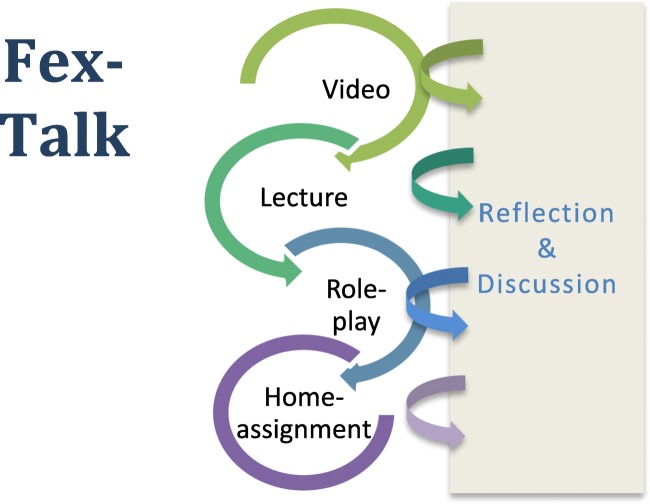
Sexual and reproductive health is known to generally be insufficiently addressed by health care personnel working in cancer care. We hence developed a short educational intervention, Fex-Talk, to overcome the barriers to communicate about sexuality and fertility. The present study sought to evaluate the Fex-Talk intervention, which aims to enhance nurses' readiness to discuss fertility and sexuality issues with cancer patients. The educational intervention involves a single session with an optional follow-up session, and it includes different components in accordance with Kolb's experiential learning cycle. The evaluation was based on participants' oral and written feedback regarding the content and organization of the intervention, as well as on teachers' field notes from five educational events involving nurses who work with cancer patients (n = 140). The data were analyzed using a thematic approach. Four themes were identified, namely increased awareness, need for knowledge, challenging discomfort, and dealing with external obstacles. The intervention increased participants' awareness of patients' need to discuss sexuality and fertility and of their own need for additional knowledge. The role-play exercise was said to challenge personal discomfort, although the participants still felt it helped to boost their courage to, in the future, engage in such conversations. Several external obstacles to initiate a conversation about sexuality or fertility were identified, and possible strategies for overcoming them were discussed. In conclusion, the Fex-Talk intervention was experienced positively by the participating nurses. The results indicate that the intervention increased nurses' understanding of patients' needs related to sex and fertility and overcome barriers to initiate discussions about sex and fertility with patients.
性与生殖健康通常是癌症护理医护人员关注不足的领域。因此,我们开发了一个简短的教育干预措施,即 Fex-Talk,以克服在沟通性和生育问题方面的障碍。本研究旨在评估 Fex-Talk 干预措施,该措施旨在增强护士与癌症患者讨论生育和性问题的准备程度。该教育干预措施包括一次单独的课程,可选择参加后续课程,并且根据科尔布的体验式学习周期包含不同的组成部分。评估基于参与者对干预内容和组织的口头和书面反馈,以及五位涉及与癌症患者一起工作的护士的教师现场记录(n=140)。使用主题方法分析数据。确定了四个主题,即提高认识、知识需求、应对不适和应对外部障碍。干预措施提高了参与者对患者讨论性和生育问题的需求以及他们自身对额外知识的需求的认识。角色扮演练习被认为是对个人不适的挑战,尽管参与者仍然认为这有助于增强他们的勇气,以便在未来进行此类对话。确定了一些启动有关性或生育的对话的外部障碍,并讨论了克服这些障碍的可能策略。总之,参与的护士对 Fex-Talk 干预措施的体验是积极的。结果表明,该干预措施增加了护士对患者与性和生育相关需求的理解,并克服了与患者就性和生育问题进行讨论的障碍。