San Raffaele Telethon Institute for Gene Therapy (SR-TIGET), and.
Regulation of Iron Metabolism Unit, Division of Genetics and Cell Biology, IRCCS San Raffaele Scientific Institute, Milan, Italy.
J Clin Invest. 2019 Feb 25;129(4):1566-1580. doi: 10.1172/JCI123191.
The human bone marrow (BM) niche contains a population of mesenchymal stromal cells (MSCs) that provide physical support and regulate hematopoietic stem cell (HSC) homeostasis. β-Thalassemia (BT) is a hereditary disorder characterized by altered hemoglobin beta-chain synthesis amenable to allogeneic HSC transplantation and HSC gene therapy. Iron overload (IO) is a common complication in BT patients affecting several organs. However, data on the BM stromal compartment are scarce.
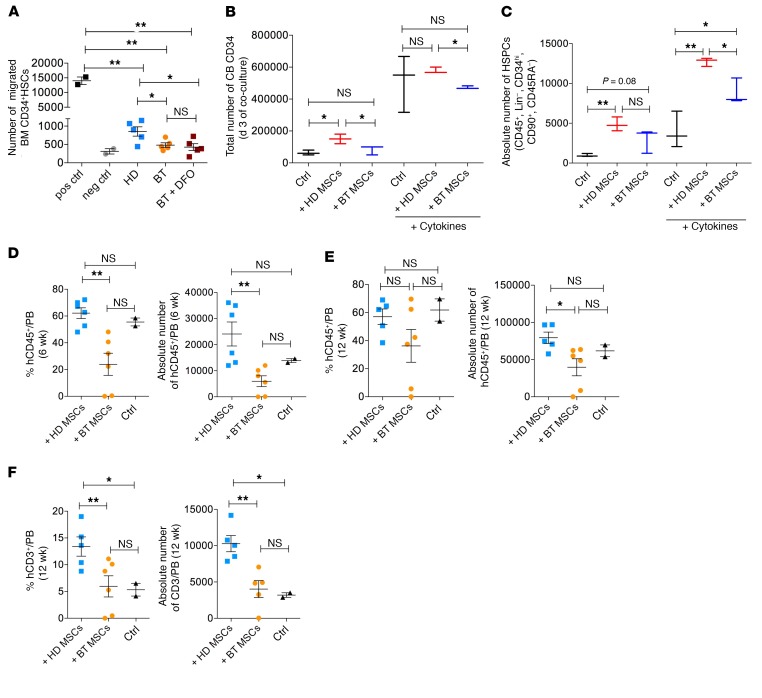
MSCs were isolated and characterized from BM aspirates of healthy donors (HDs) and BT patients. The state of IO was assessed and correlated with the presence of primitive MSCs in vitro and in vivo. Hematopoietic supportive capacity of MSCs was evaluated by transwell migration assay and 2D coculture of MSCs with human CD34+ HSCs. In vivo, the ability of MSCs to facilitate HSC engraftment was tested in a xenogenic transplant model, whereas the capacity to sustain human hematopoiesis was evaluated in humanized ossicle models.
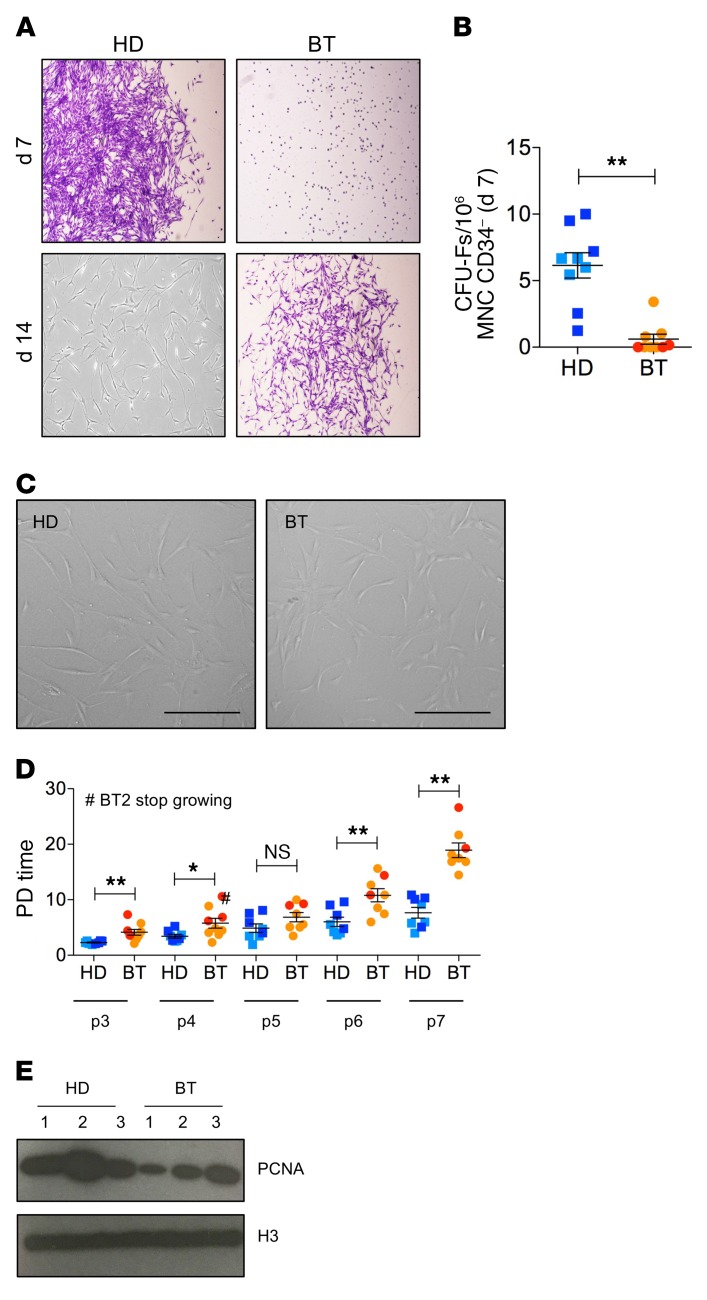
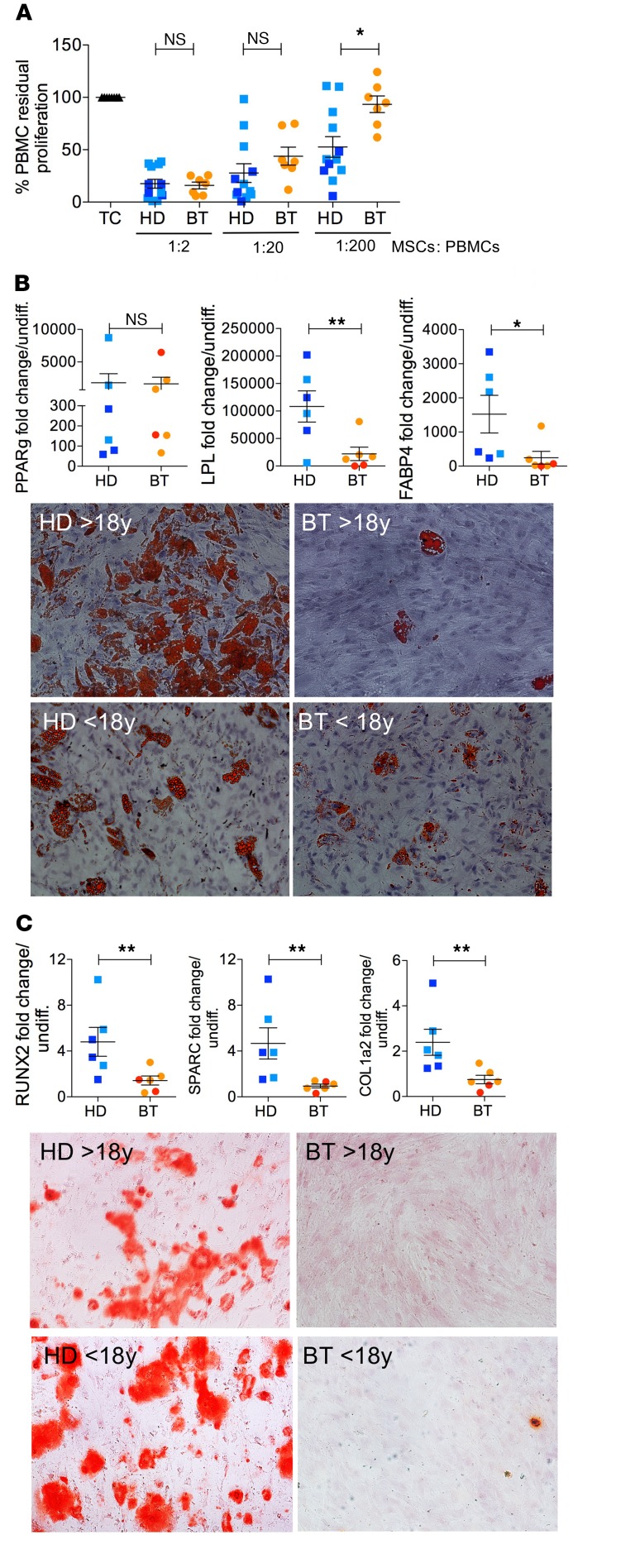
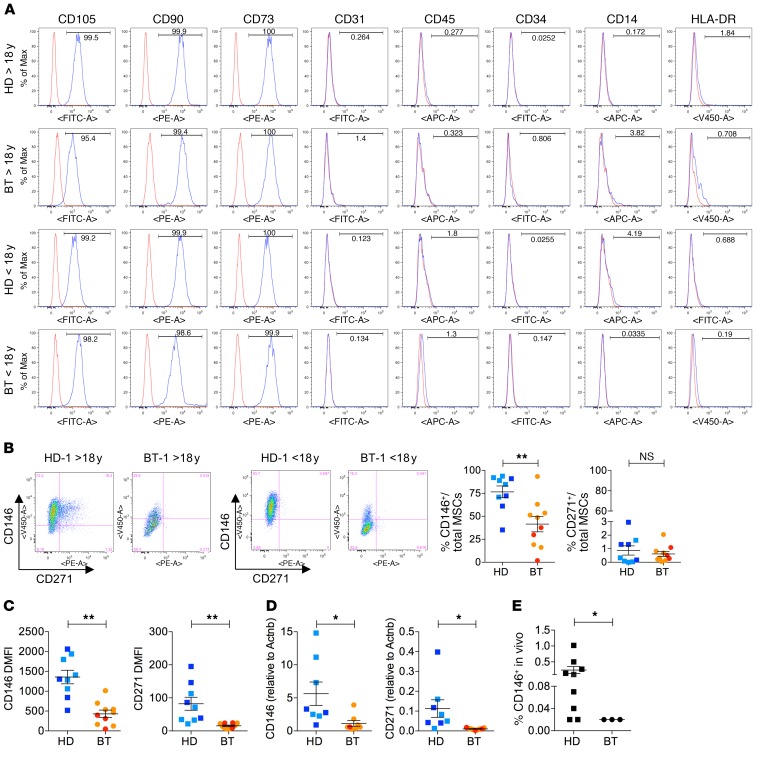
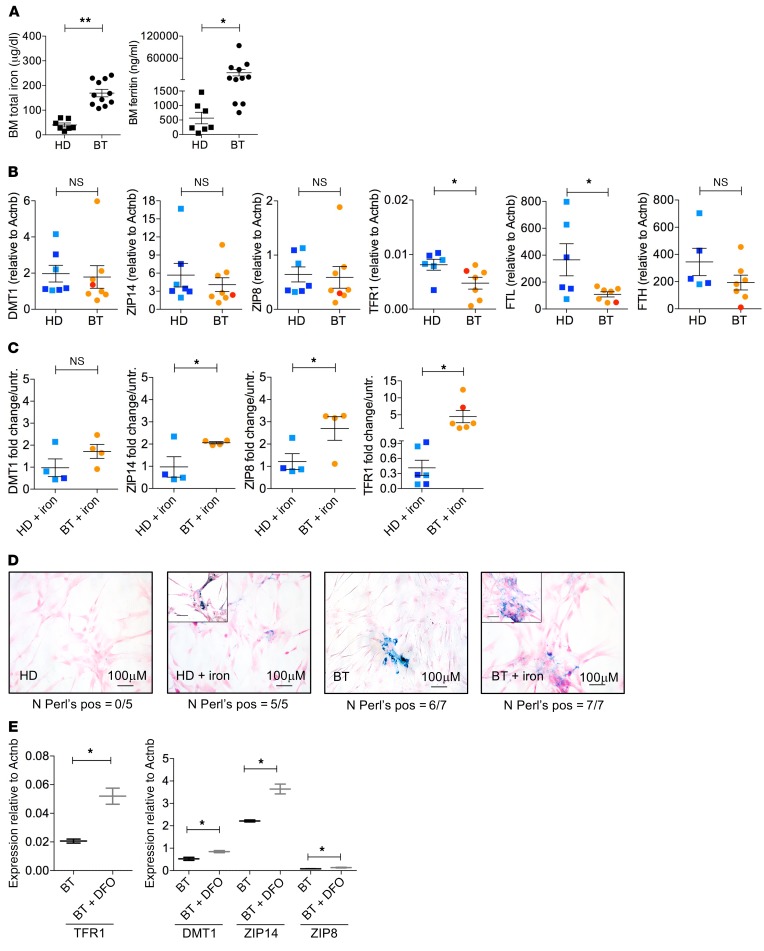
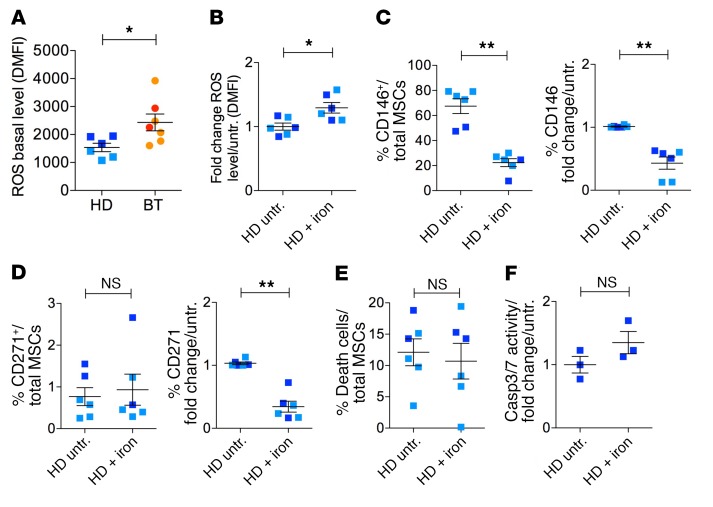
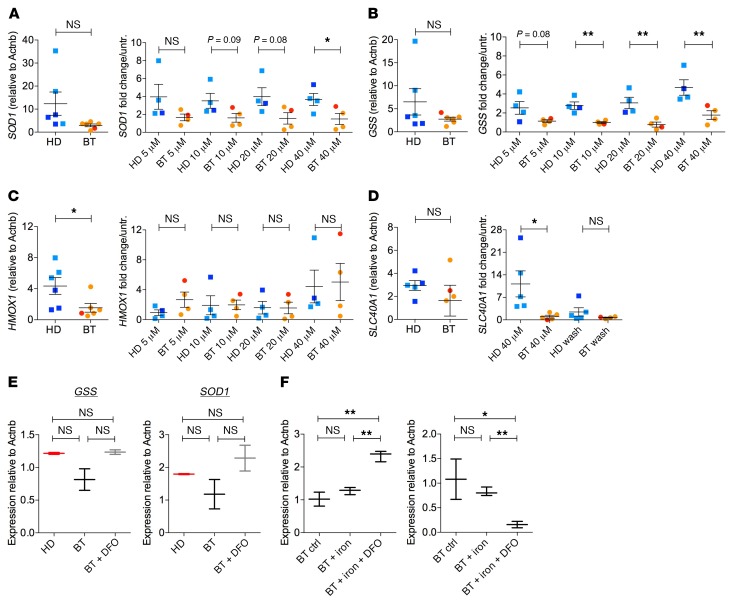
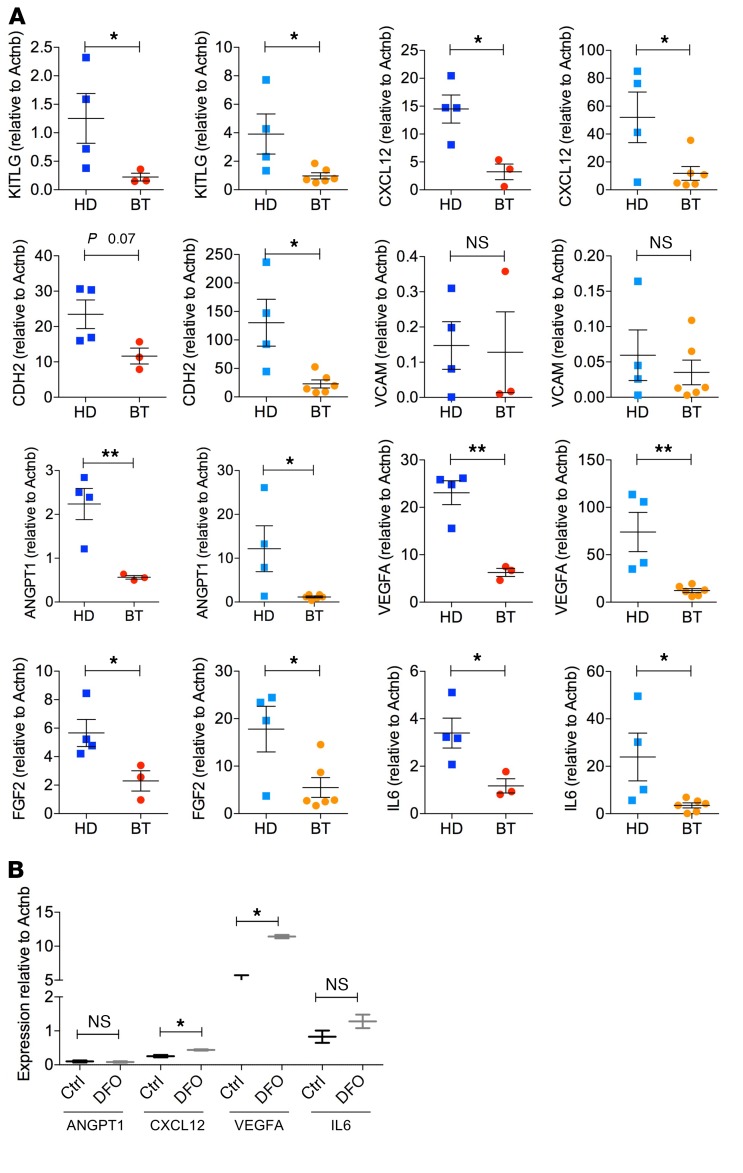
We report that, despite iron chelation, BT BM contains high levels of iron and ferritin, indicative of iron accumulation in the BM niche. We found a pauperization of the most primitive MSC pool caused by increased ROS production in vitro which impaired MSC stemness properties. We confirmed a reduced frequency of primitive MSCs in vivo in BT patients. We also discovered a weakened antioxidative response and diminished expression of BM niche-associated genes in BT-MSCs. This caused a functional impairment in MSC hematopoietic supportive capacity in vitro and in cotransplantation models. In addition, BT-MSCs failed to form a proper BM niche in humanized ossicle models.
Our results suggest an impairment in the mesenchymal compartment of BT BM niche and highlight the need for novel strategies to target the niche to reduce IO and oxidative stress before transplantation.
This work was supported by the SR-TIGET Core grant from Fondazione Telethon and by Ricerca Corrente.
人类骨髓(BM)龛位含有一群间充质基质细胞(MSCs),为造血干细胞(HSC)提供物理支持并调节其稳态。β-地中海贫血(BT)是一种遗传性疾病,其特征是β-珠蛋白链合成改变,适合异体 HSC 移植和 HSC 基因治疗。铁过载(IO)是 BT 患者的常见并发症,影响多个器官。然而,关于 BM 基质细胞的资料却很少。
从健康供体(HDs)和 BT 患者的 BM 抽吸物中分离和鉴定 MSCs。评估 IO 的状态,并与体外和体内原始 MSCs 的存在相关联。通过 Transwell 迁移实验和 MSCs 与人类 CD34+HSCs 的二维共培养评估 MSCs 的造血支持能力。在体内,通过异种移植模型测试 MSCs 促进 HSC 植入的能力,而通过人源化听小骨模型评估其维持人类造血的能力。
我们报告说,尽管进行了铁螯合,BT BM 仍含有高水平的铁和铁蛋白,表明 BM 龛位中铁的积累。我们发现,由于体外 ROS 产生增加,最原始的 MSC 池贫化,从而损害了 MSC 的干细胞特性。我们在 BT 患者体内证实了原始 MSCs 频率降低。我们还发现 BT-MSCs 的抗氧化反应减弱,与 BM 龛位相关的基因表达减少。这导致 MSC 体外和共移植模型中的造血支持能力受损。此外,BT-MSCs 在人源化听小骨模型中未能形成适当的 BM 龛位。
我们的结果表明 BT BM 龛位的间充质细胞群受损,并强调需要新的策略来靶向龛位,以减少移植前的 IO 和氧化应激。
这项工作得到了 Telethon 基金会 SR-TIGET 核心拨款和 Ricerca Corrente 的支持。