Calabria Andrea, Spinozzi Giulio, Cesana Daniela, Buscaroli Elena, Benedicenti Fabrizio, Pais Giulia, Gazzo Francesco, Scala Serena, Lidonnici Maria Rosa, Scaramuzza Samantha, Albertini Alessandra, Esposito Simona, Tucci Francesca, Canarutto Daniele, Omrani Maryam, De Mattia Fabiola, Dionisio Francesca, Giannelli Stefania, Marktel Sarah, Fumagalli Francesca, Calbi Valeria, Cenciarelli Sabina, Ferrua Francesca, Gentner Bernhard, Caravagna Giulio, Ciceri Fabio, Naldini Luigi, Ferrari Giuliana, Aiuti Alessandro, Montini Eugenio
San Raffaele Telethon Institute for Gene Therapy (SR-Tiget), IRCCS San Raffaele Scientific Institute, Milan, Italy.
Department of Mathematics, Informatics and Geosciences, University of Trieste, Triste, Italy.
Nature. 2024 Dec;636(8041):162-171. doi: 10.1038/s41586-024-08250-x. Epub 2024 Oct 23.
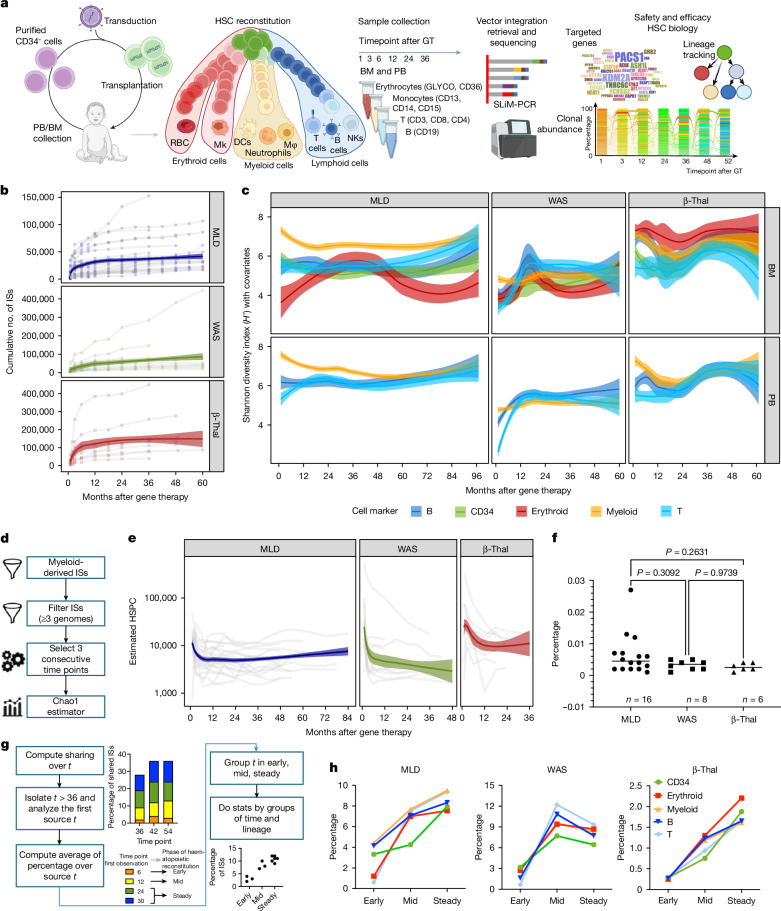
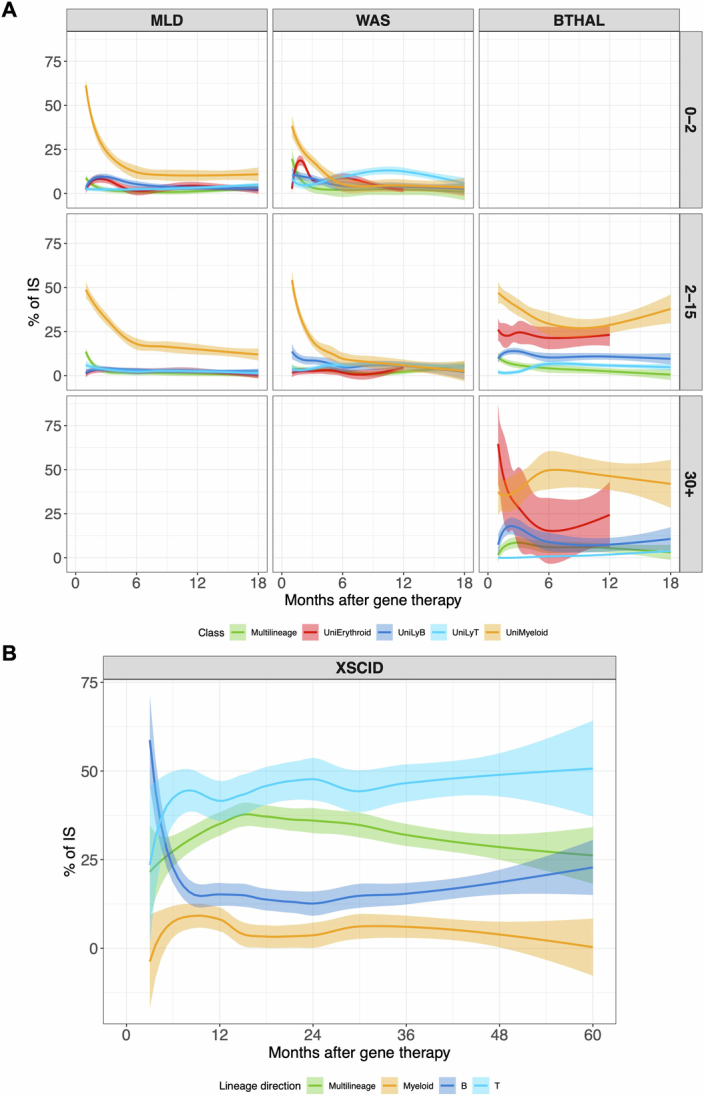
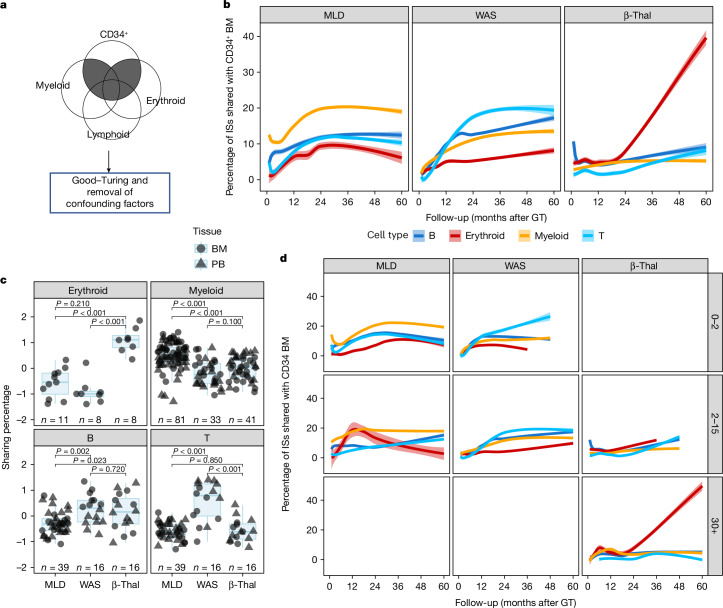
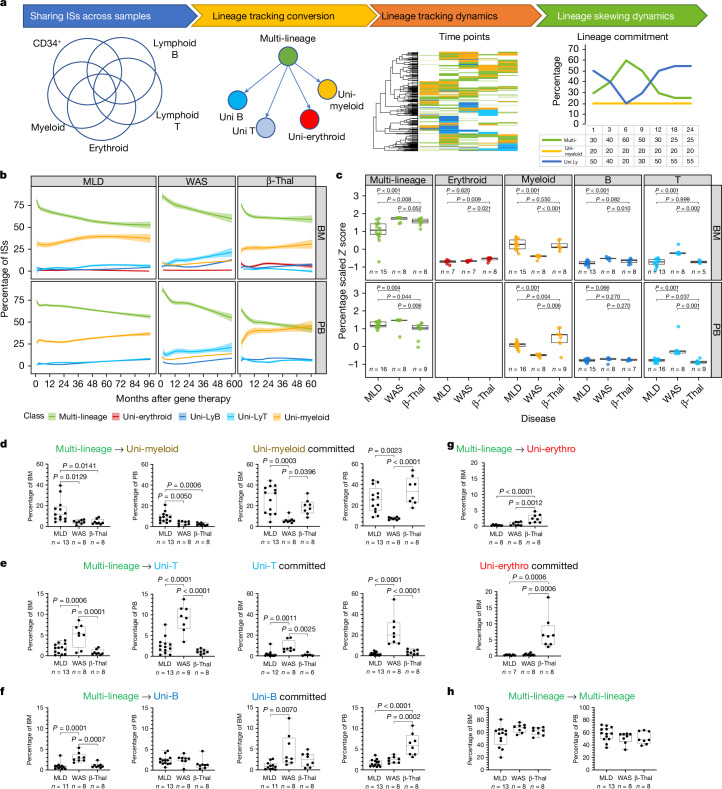
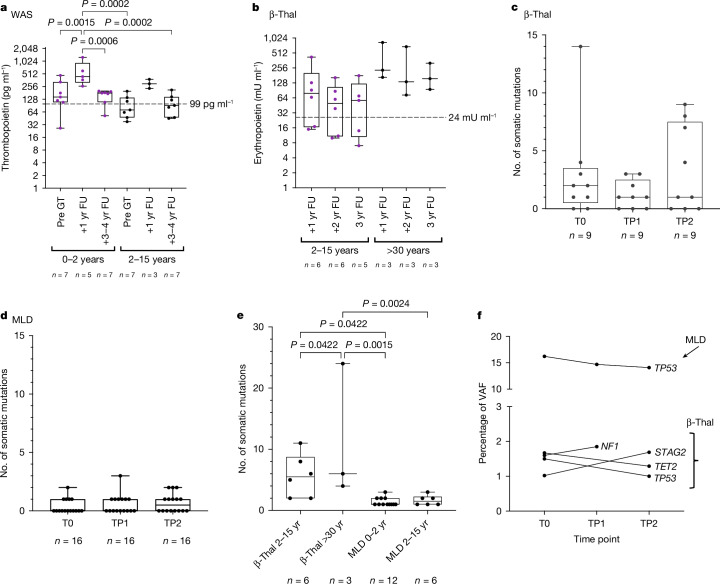
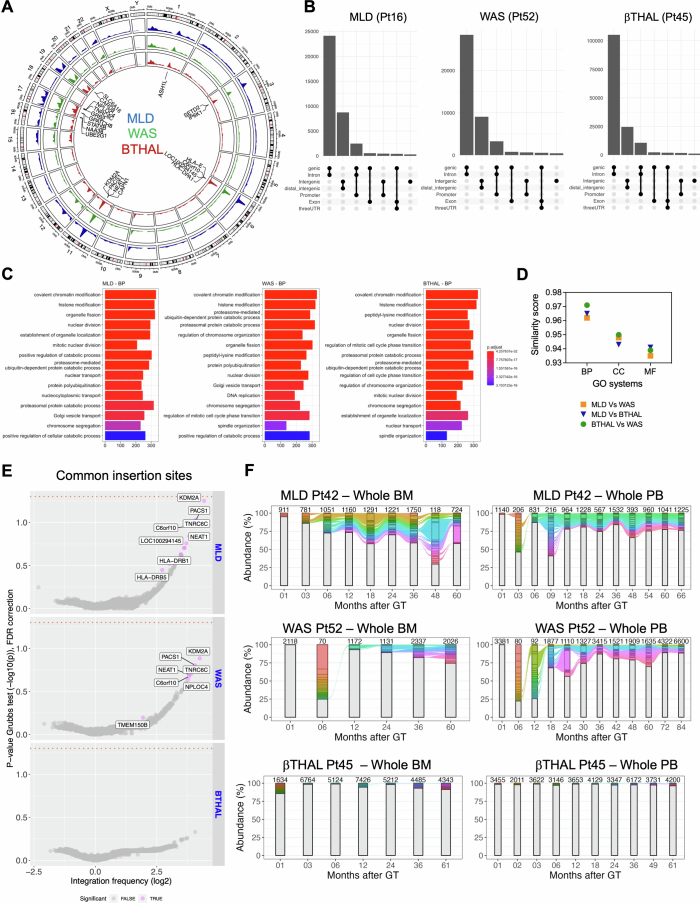
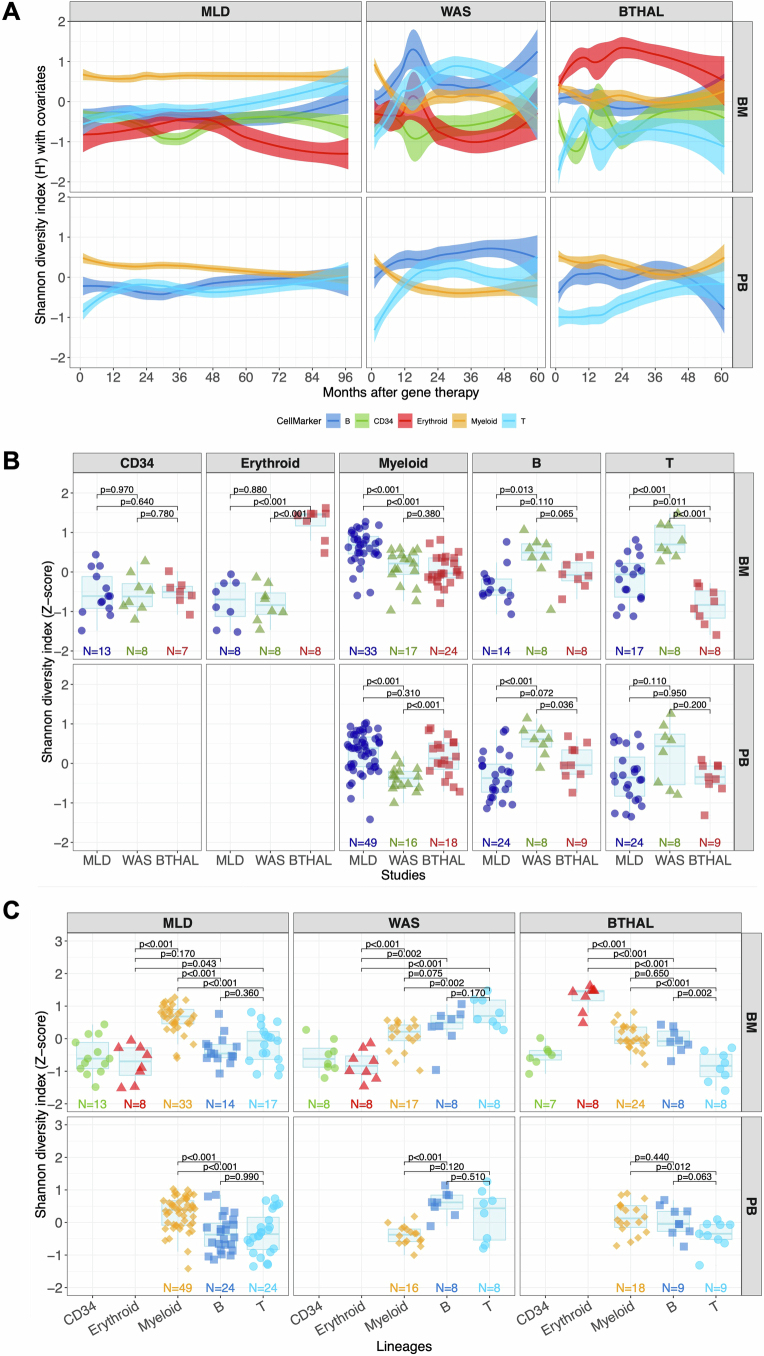
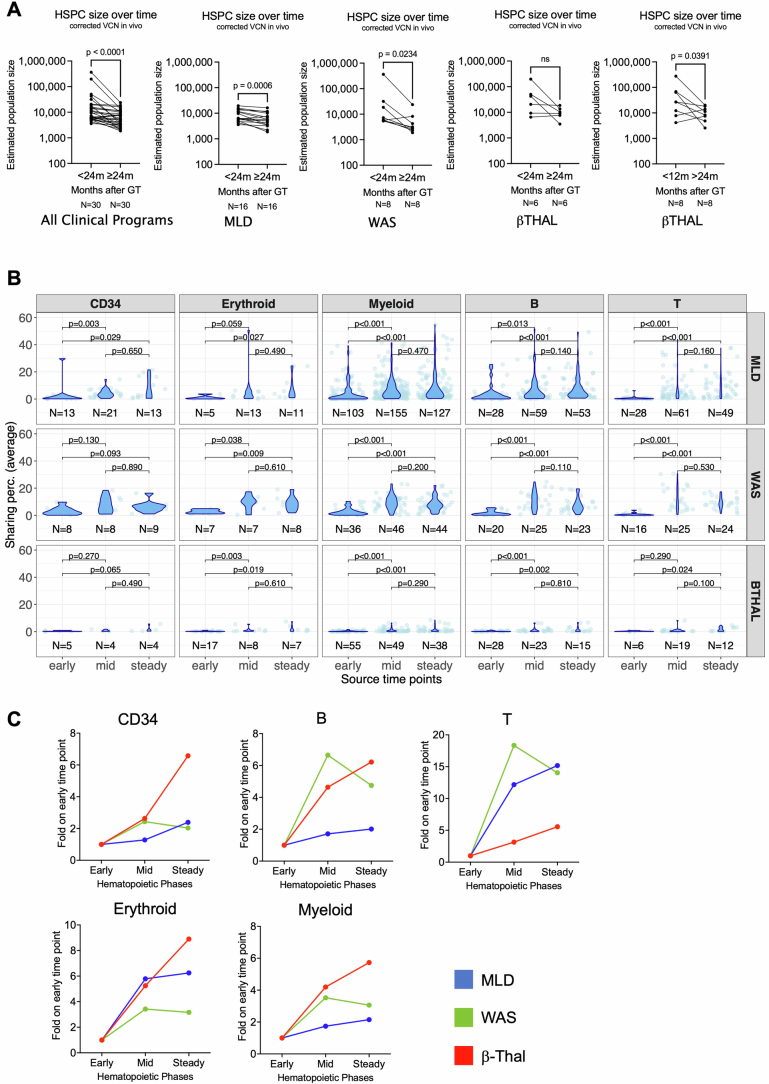
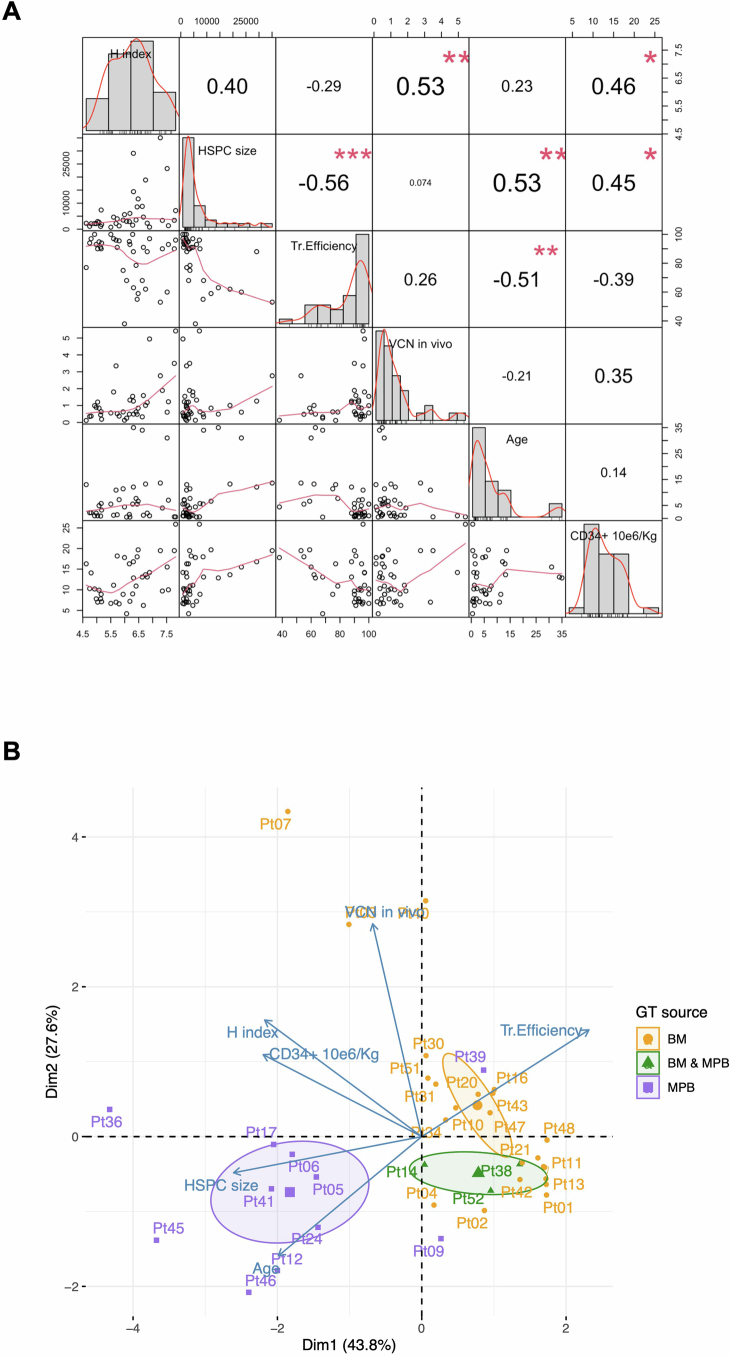
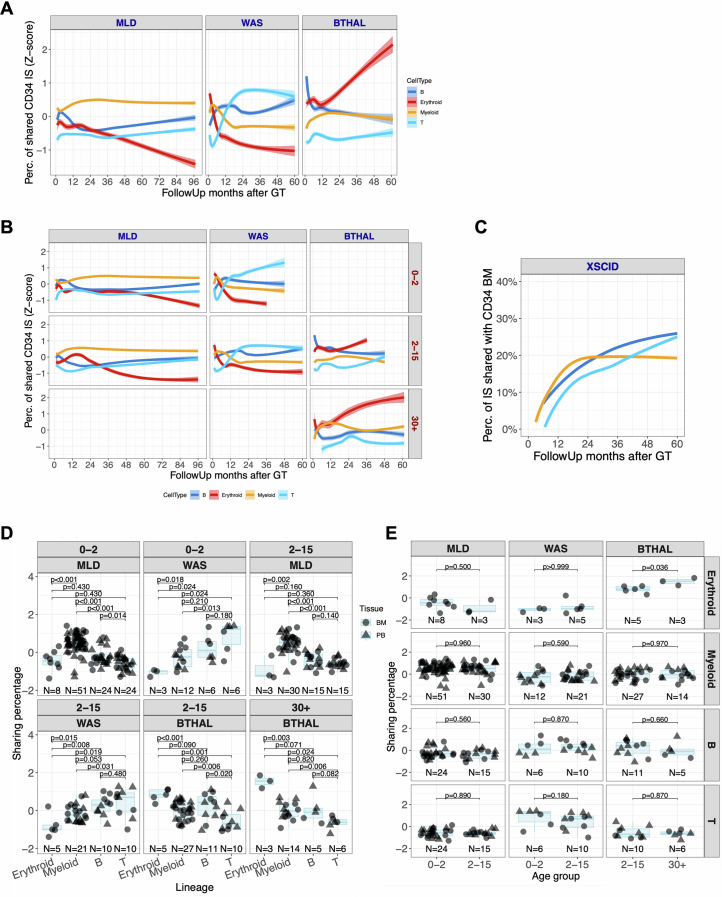
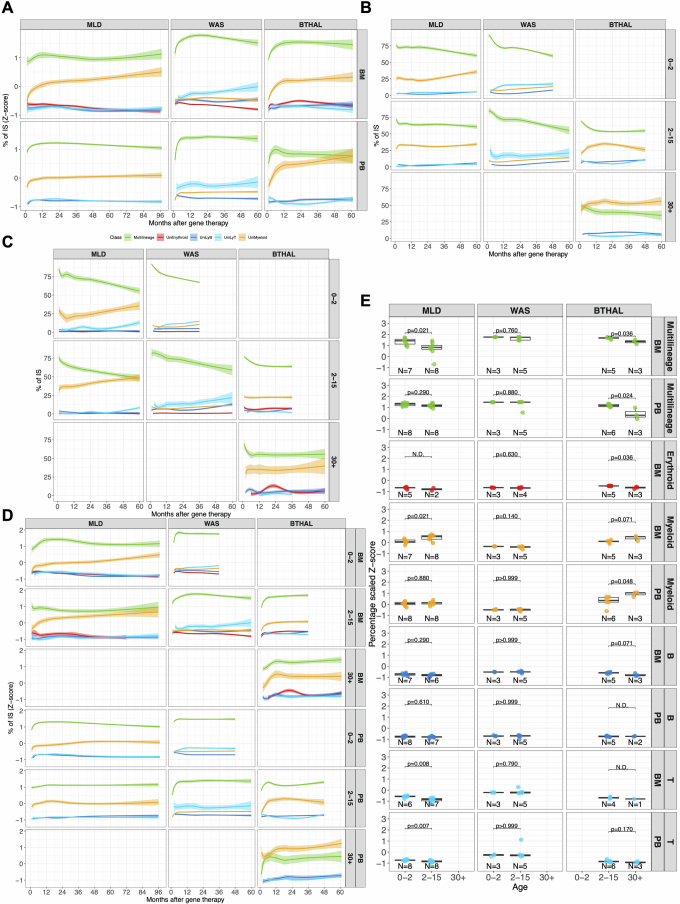
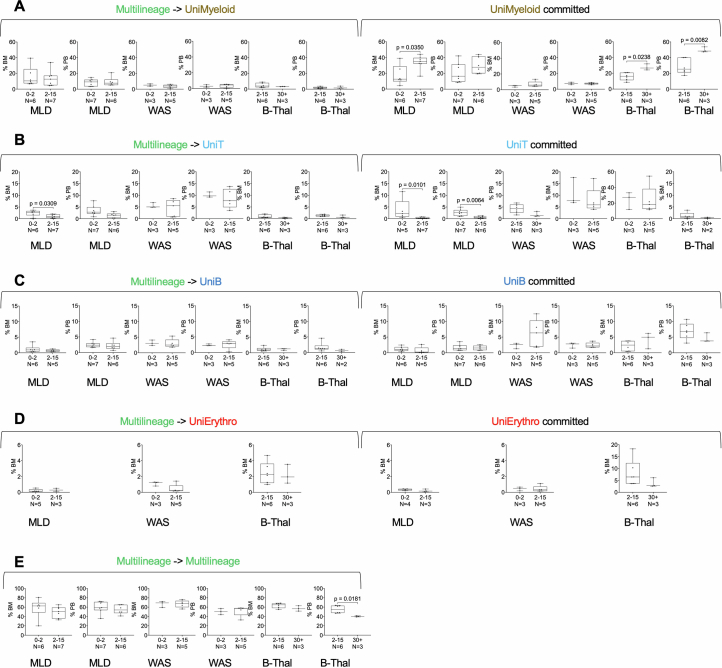
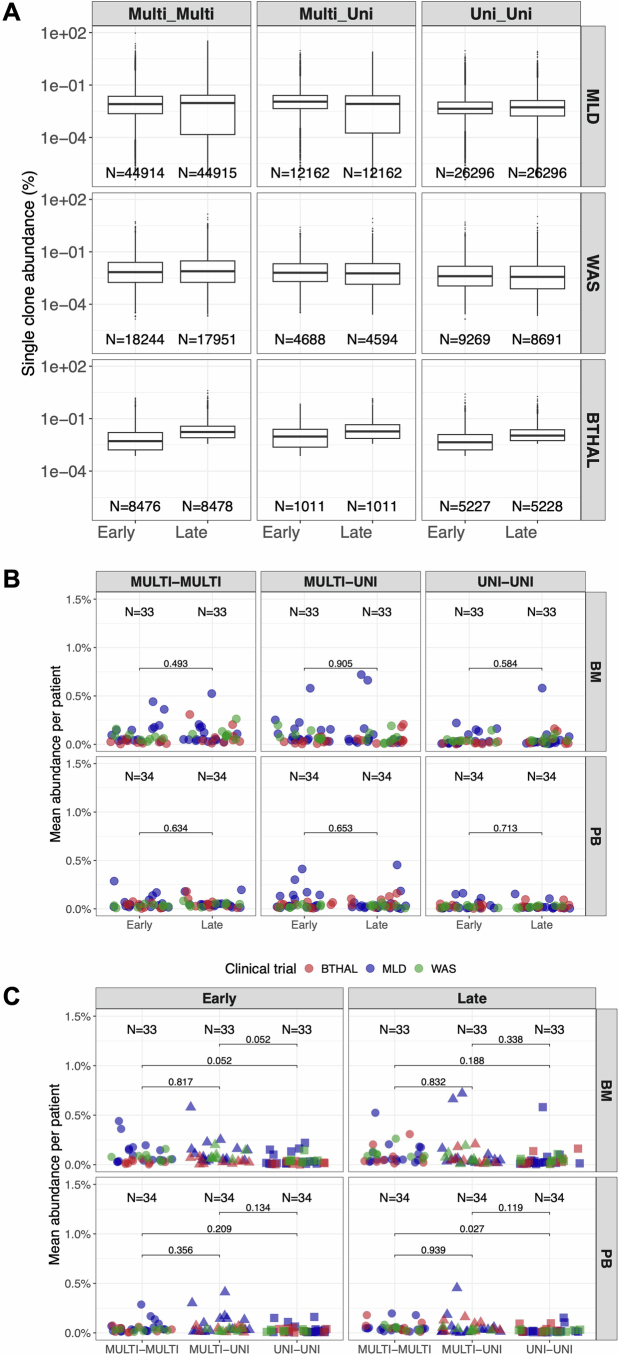
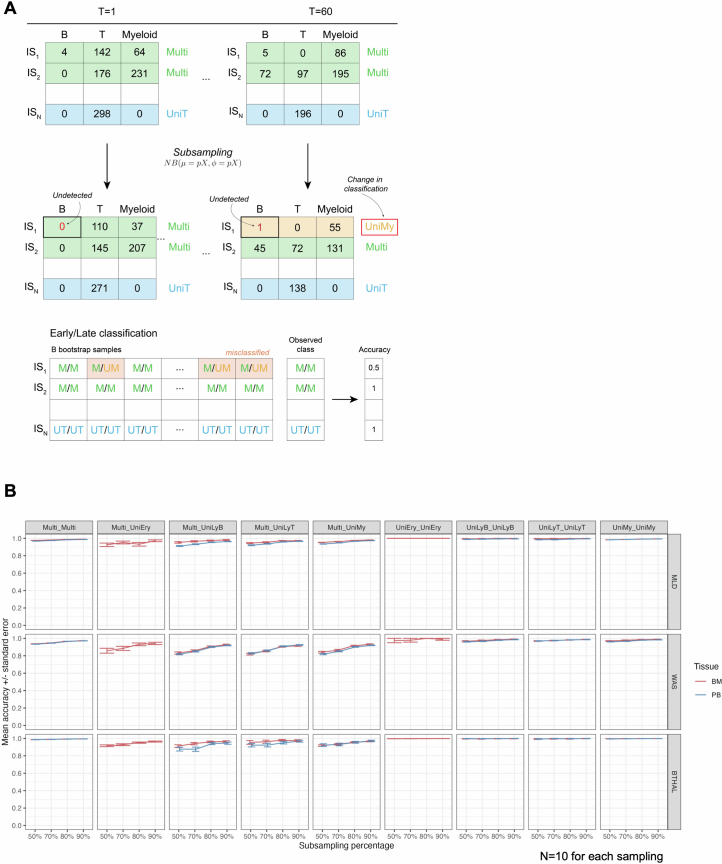
Haematopoietic stem cell (HSC) gene therapy (GT) may provide lifelong reconstitution of the haematopoietic system with gene-corrected cells. However, the effects of underlying genetic diseases, replication stress and ageing on haematopoietic reconstitution and lineage specification remain unclear. In this study, we analysed haematopoietic reconstitution in 53 patients treated with lentiviral-HSC-GT for diverse conditions such as metachromatic leukodystrophy (MLD), Wiskott-Aldrich syndrome (WAS) and β-thalassaemia (β-Thal) over a follow-up period of up to 8 years, using vector integration sites as markers of clonal identity. We found that long-term haematopoietic reconstitution was supported by 770 to 35,000 active HSCs. Whereas 50% of transplanted clones demonstrated multi-lineage potential across all conditions, the remaining clones showed a disease-specific preferential lineage output and long-term commitment: myeloid for MLD, lymphoid for WAS and erythroid for β-Thal, particularly in adult patients. Our results indicate that HSC clonogenic activity, lineage output, long-term lineage commitment and rates of somatic mutations are influenced by the underlying disease, patient age at the time of therapy, the extent of genetic defect correction and the haematopoietic stress imposed by the inherited disease. This suggests that HSCs adapt to the pathological condition during haematopoietic reconstitution.
造血干细胞(HSC)基因治疗(GT)或许能通过基因校正细胞实现造血系统的终身重建。然而,潜在遗传疾病、复制应激和衰老对造血重建及谱系分化的影响仍不明确。在本研究中,我们分析了53例接受慢病毒-HSC-GT治疗的患者的造血重建情况,这些患者患有多种疾病,如异染性脑白质营养不良(MLD)、威斯科特-奥尔德里奇综合征(WAS)和β地中海贫血(β-Thal),随访时间长达8年,使用载体整合位点作为克隆身份的标志物。我们发现,770至35,000个活跃的造血干细胞支持长期造血重建。虽然50%的移植克隆在所有情况下都表现出多谱系分化潜能,但其余克隆则表现出疾病特异性的优先谱系输出和长期定向分化:MLD患者为髓系,WAS患者为淋巴系,β-Thal患者为红系,尤其是成年患者。我们的结果表明,造血干细胞的克隆形成活性、谱系输出、长期谱系定向分化和体细胞突变率受潜在疾病、治疗时的患者年龄、基因缺陷校正程度以及遗传性疾病所施加的造血应激影响。这表明造血干细胞在造血重建过程中会适应病理状况。