Chen Chih-Hsien, Chen Yen-Nien, Li Chun-Ting, Chang Chih-Wei, Chang Chih-Han, Peng Yao-Te
Department of BioMedical Engineering, National Cheng Kung University, Tainan City, Taiwan.
Department of Orthopaedic Surgery, Tainan Municipal Hospital (Managed by Show Chwan Medical Care Corporation), Tainan City, Taiwan.
BMC Musculoskelet Disord. 2019 Mar 4;20(1):99. doi: 10.1186/s12891-019-2474-7.
Cannulated screws with an anterior wire are currently used for managing transverse patellar fracture. However, the addition of anterior wiring with various types of screws via open surgery to increase the mechanical stability is yet to be determined. Hence, this study aimed to compare the mechanical behaviors of a fractured patella fixed with various screws types and at various screw locations with and without the anterior wire. The present study hypothesized that using the anterior wire reduces the fracture gap formation.
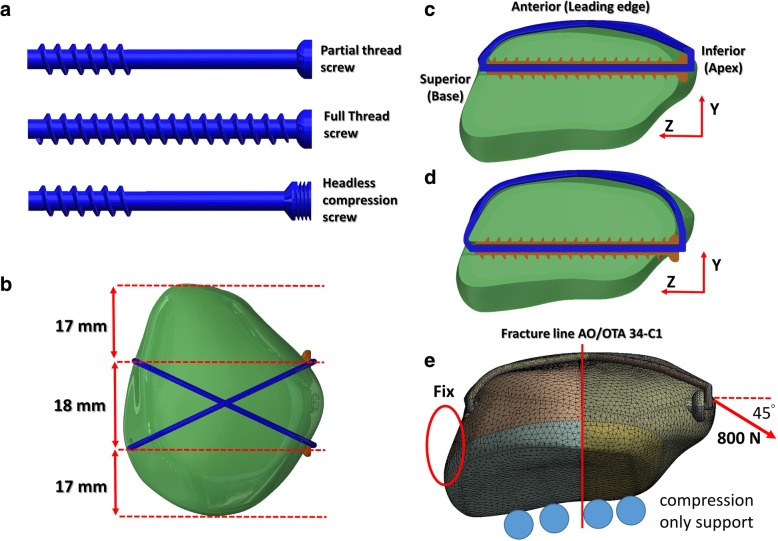
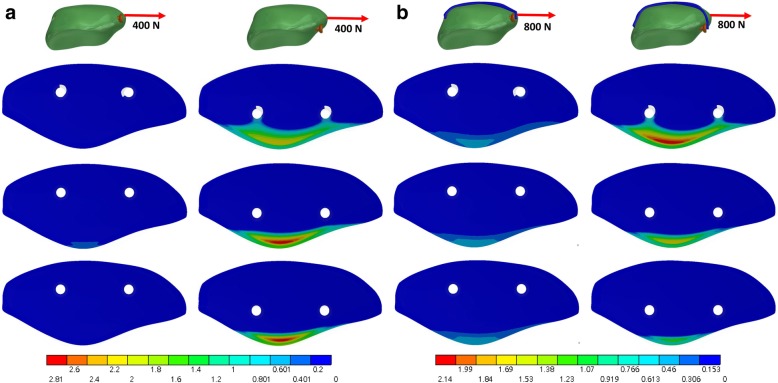
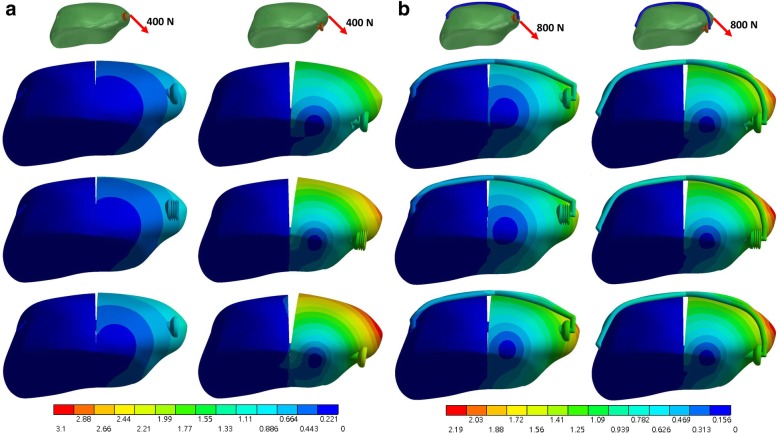
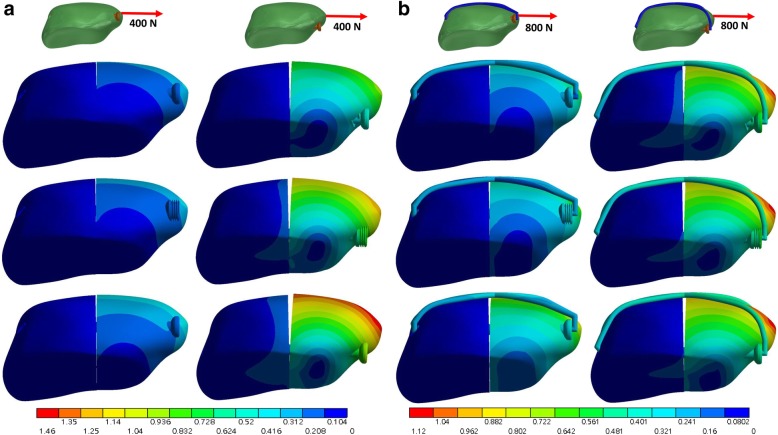
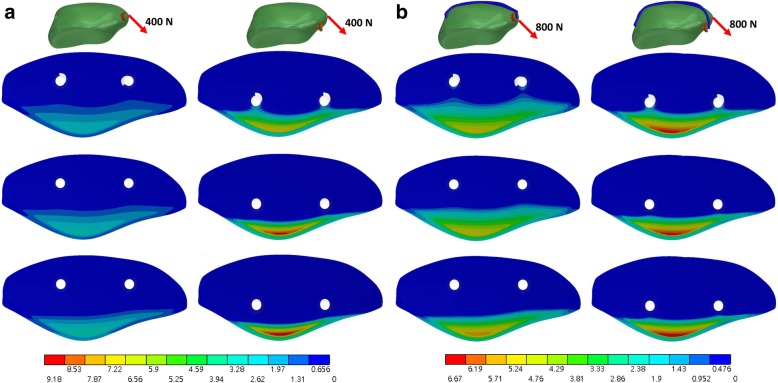
A finite element (FE) model containing a fractured patella fixed with various types of cannulated screws and anterior wiring was created in this study. Three types of screws, namely partial thread, full thread, and headless compression screws, and two screw depths, namely 5 and 10 mm away from the anterior surface of the patella, were included. The effect of the anterior wire was clarified by comparing the results of surgical fixation with and without the wire. Two magnitudes and two loading directions were used to simulate and examine the mechanical responses of the fractured patella with various fixation conditions during knee flexion/extension.
Compared with partial thread and headless compression screws, the full thread screw increased the stability of the fractured patella by reducing fragment displacement, fracture gap formation, and contact pressure while increasing the contact area at the fracture site. Under 400-N in the direction 45°, the full thread screw with 5-mm placement reduced the gap formation by 86.7% (from 2.71 to 0.36 mm) and 55.6% (from 0. 81 to 0. 36 mm) compared with the partial thread screw with 10-mm placement, respectively without and with the anterior wire.
The anterior wire along with the full thread screw is preferentially recommended for maintaining the surgical fixation of the fractured patella. Without the use of anterior wiring, the full thread screw with 5-mm placement may be considered as a less invasive alternative; however, simple screw fixation at a deeper placement (10 mm) is least recommended for the fixation of transverse patellar fracture.
带前方钢丝的空心螺钉目前用于治疗髌骨横行骨折。然而,通过开放手术将前方钢丝与各种类型的螺钉相结合以提高机械稳定性的效果尚未确定。因此,本研究旨在比较在有和没有前方钢丝的情况下,用不同类型螺钉和在不同螺钉位置固定的髌骨骨折的力学行为。本研究假设使用前方钢丝可减少骨折间隙的形成。
本研究创建了一个有限元(FE)模型,该模型包含用各种类型空心螺钉和前方钢丝固定的髌骨骨折。包括三种类型的螺钉,即部分螺纹螺钉、全螺纹螺钉和无头加压螺钉,以及两种螺钉深度,即距髌骨前表面5毫米和10毫米。通过比较有钢丝和无钢丝手术固定的结果来阐明前方钢丝的作用。使用两个大小和两个加载方向来模拟和检查在膝关节屈伸过程中不同固定条件下髌骨骨折的力学反应。
与部分螺纹螺钉和无头加压螺钉相比,全螺纹螺钉通过减少碎片位移、骨折间隙形成和接触压力,同时增加骨折部位的接触面积,提高了髌骨骨折的稳定性。在45°方向400N的载荷下,与10毫米放置的部分螺纹螺钉相比,5毫米放置的全螺纹螺钉在无前方钢丝和有前方钢丝时分别减少了86.7%(从2.71毫米降至0.36毫米)和55.6%(从0.81毫米降至0.36毫米)的间隙形成。
优先推荐使用前方钢丝和全螺纹螺钉来维持髌骨骨折的手术固定。如果不使用前方钢丝,5毫米放置的全螺纹螺钉可被视为一种侵入性较小的替代方案;然而,对于髌骨横行骨折的固定,最不推荐在更深位置(10毫米)进行单纯螺钉固定。