Center of Scientific Research, the Second Affiliated Hospital and Yuying Children's Hospital of Wenzhou Medical University, Wenzhou, Zhejiang, China.
Reproductive Medicine Center, the Second Affiliated Hospital and Yuying Children's Hospital of Wenzhou Medical University, Wenzhou, Zhejiang, China.
Cell Death Dis. 2019 Mar 4;10(3):220. doi: 10.1038/s41419-019-1461-0.
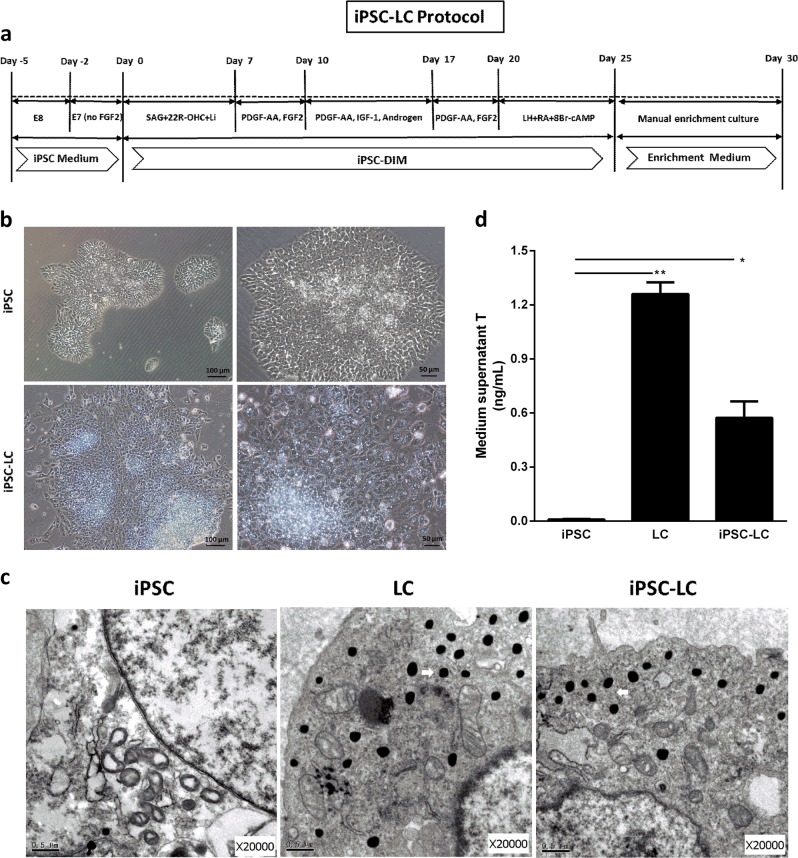
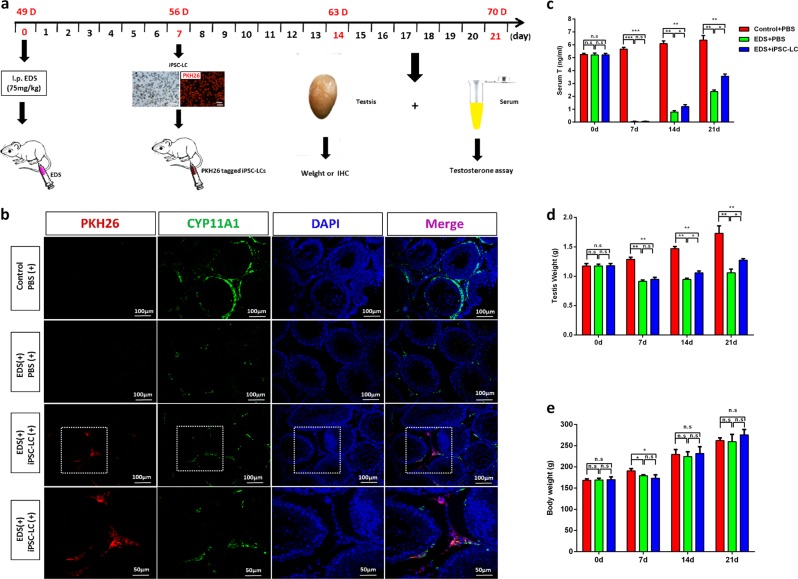
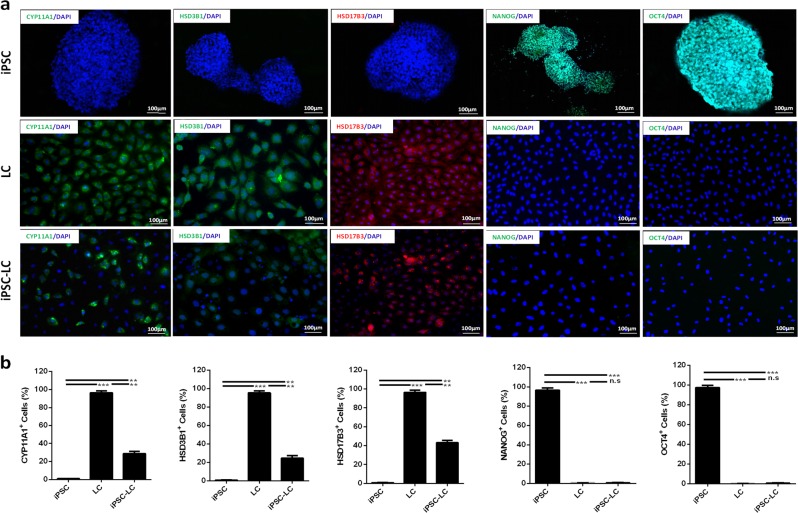
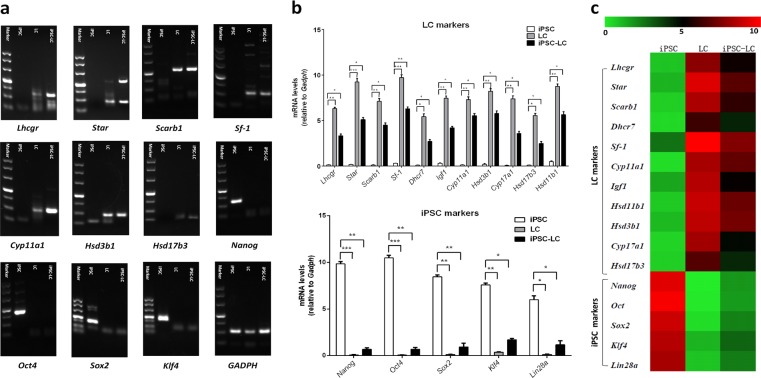
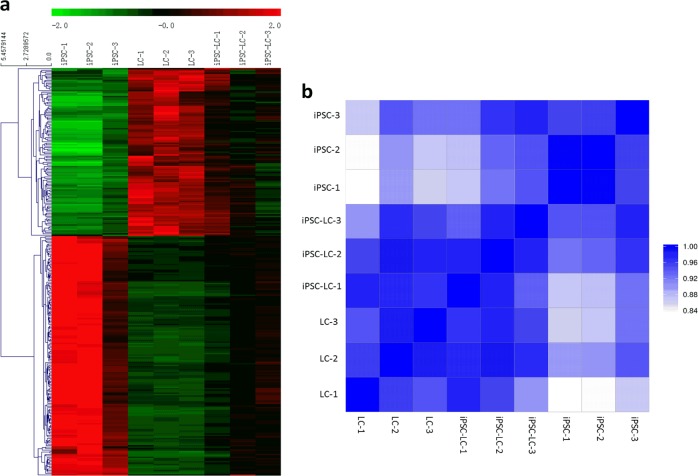
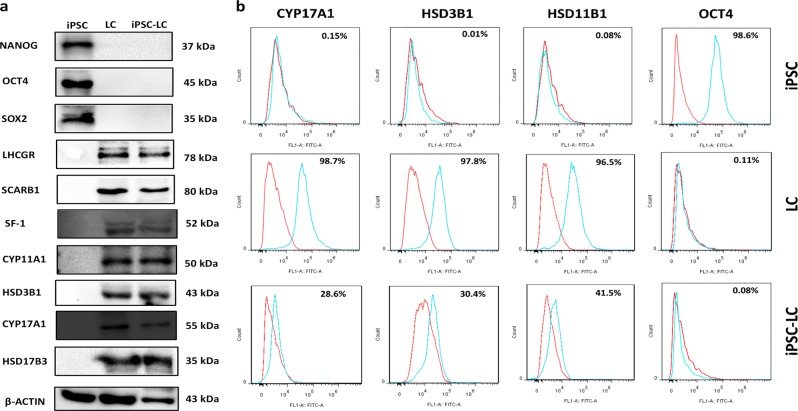
Leydig cells (LCs) play crucial roles in producing testosterone, which is critical in the regulation of male reproduction and development. Low levels of testosterone will lead to male hypogonadism. LC transplantation is a promising alternative therapy for male hypogonadism. However, the source of LCs limits this strategy for clinical applications. Thus far, others have reported that LCs can be derived from stem cells by gene transfection, but the safe and effective induction method has not yet been reported. Here, we report that Leydig-like cells can be derived from human induced pluripotent stem cells (iPSCs) using a novel differentiation protocol based on molecular compounds. The iPSCs-derived Leydig-like cells (iPSC-LCs) acquired testosterone synthesis capabilities, had the similar gene expression profiles with LCs, and positively expressed Leydig cell lineage-specific protein markers LHCGR, STAR, SCARB1, SF-1, CYP11A1, HSD3B1, and HSD17B3 as well as negatively expressed iPSC-specific markers NANOG, OCT4, and SOX2. When iPSC-LCs labeled with lipophilic red dye (PKH26) were transplanted into rat testes that were selectively eliminated endogenous LCs using EDS (75 mg/kg), the transplanted iPSC-LCs could survive and function in the interstitium of testes, and accelerate the recovery of serum testosterone levels and testis weights. Collectively, these findings demonstrated that the iPSCs were able to be differentiated into Leydig-like cells by few defined molecular compounds, which may lay the safer groundwork for further clinical application of iPSC-LCs for hypogonadism.
间质细胞(LCs)在产生睾酮中发挥着关键作用,睾酮对于男性生殖和发育的调节至关重要。睾酮水平低会导致男性性腺功能减退症。LC 移植是治疗男性性腺功能减退症的一种有前途的替代疗法。然而,LC 的来源限制了这种策略在临床应用中的应用。到目前为止,其他人已经报道 LCs 可以通过基因转染从干细胞中获得,但安全有效的诱导方法尚未报道。在这里,我们报告说,可以使用基于分子化合物的新型分化方案,从人诱导多能干细胞(iPSCs)中获得类间质细胞(iPSC-LCs)。iPSC 衍生的类间质细胞(iPSC-LCs)获得了合成睾酮的能力,其基因表达谱与 LCs 相似,并阳性表达间质细胞谱系特异性蛋白标记物 LHCGR、STAR、SCARB1、SF-1、CYP11A1、HSD3B1 和 HSD17B3,以及阴性表达 iPSC 特异性标记物 NANOG、OCT4 和 SOX2。当用亲脂性红色染料(PKH26)标记 iPSC-LCs 并将其移植到大鼠睾丸中,用 EDS(75mg/kg)选择性消除内源性 LCs 时,移植的 iPSC-LCs 可以在睾丸间质中存活并发挥作用,并加速血清睾酮水平和睾丸重量的恢复。总之,这些发现表明,iPSCs 可以通过少数明确的分子化合物分化为类间质细胞,这可能为 iPSC-LCs 在性腺功能减退症中的进一步临床应用奠定更安全的基础。