Max Planck Institute for Molecular Biomedicine, Münster, Germany.
Centre of Reproductive Medicine and Andrology, Münster, Germany.
PLoS One. 2021 Oct 15;16(10):e0258427. doi: 10.1371/journal.pone.0258427. eCollection 2021.
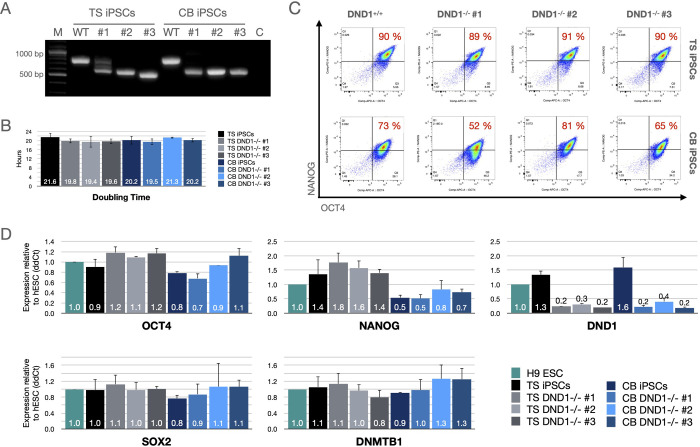
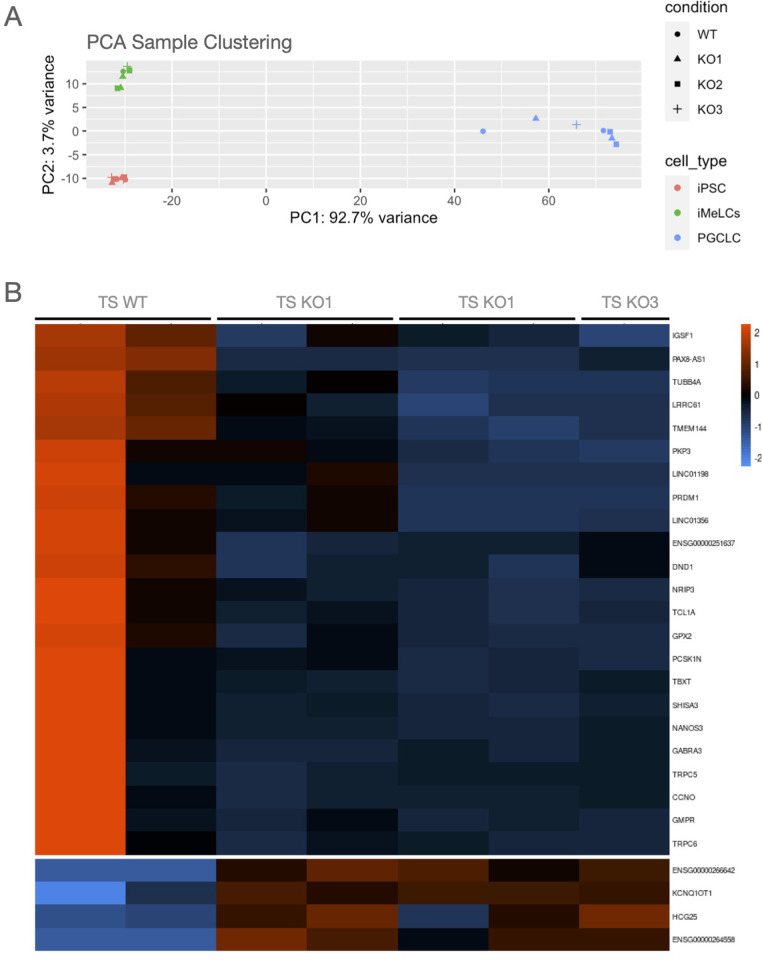
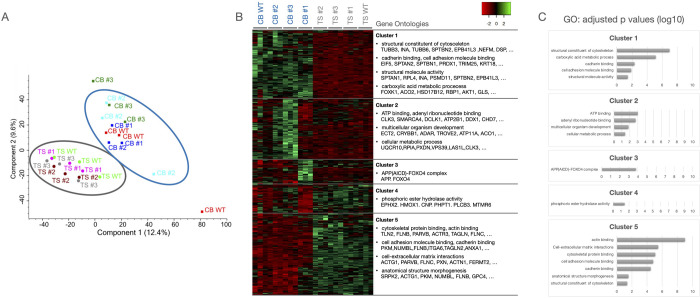
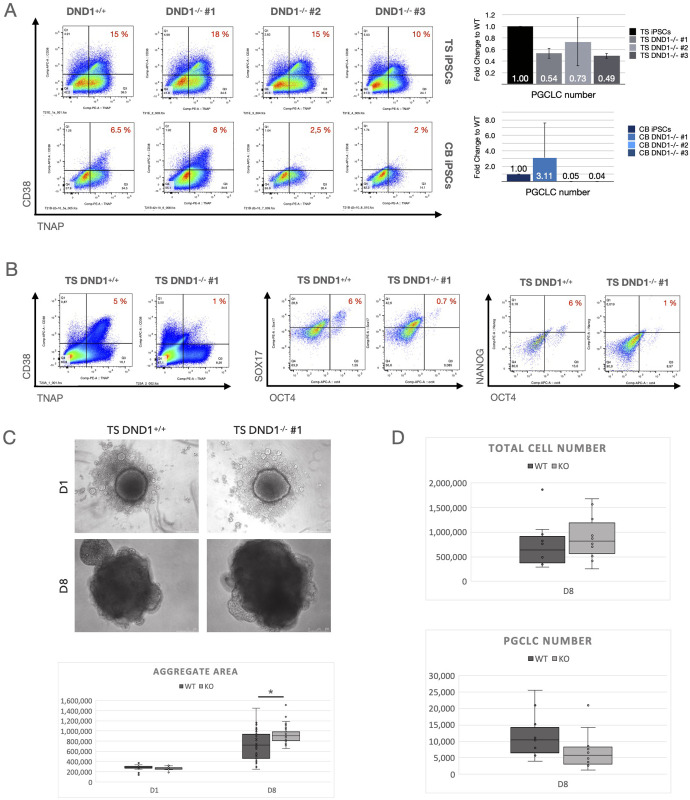
The DND microRNA-mediated repression inhibitor 1 (DND1) is a conserved RNA binding protein (RBP) that plays important roles in survival and fate maintenance of primordial germ cells (PGCs) and in the development of the male germline in zebrafish and mice. Dead end was shown to be expressed in human pluripotent stem cells (PSCs), PGCs and spermatogonia, but little is known about its specific role concerning pluripotency and human germline development. Here we use CRISPR/Cas mediated knockout and PGC-like cell (PGCLC) differentiation in human iPSCs to determine if DND1 (1) plays a role in maintaining pluripotency and (2) in specification of PGCLCs. We generated several clonal lines carrying biallelic loss of function mutations and analysed their differentiation potential towards PGCLCs and their gene expression on RNA and protein levels via RNA sequencing and mass spectrometry. The generated knockout iPSCs showed no differences in pluripotency gene expression, proliferation, or trilineage differentiation potential, but yielded reduced numbers of PGCLCs as compared with their parental iPSCs. RNAseq analysis of mutated PGCLCs revealed that the overall gene expression remains like non-mutated PGCLCs. However, reduced expression of genes associated with PGC differentiation and maintenance (e.g., NANOS3, PRDM1) was observed. Together, we show that DND1 iPSCs maintain their pluripotency but exhibit a reduced differentiation to PGCLCs. This versatile model will allow further analysis of the specific mechanisms by which DND1 influences PGC differentiation and maintenance.
DND 微 RNA 介导的抑制因子 1 (DND1) 是一种保守的 RNA 结合蛋白 (RBP),在原始生殖细胞 (PGCs) 的存活和命运维持以及斑马鱼和小鼠的雄性生殖系发育中发挥重要作用。已经表明 Dead end 在人类多能干细胞 (PSCs)、PGCs 和精原细胞中表达,但关于其在多能性和人类生殖系发育中的具体作用知之甚少。在这里,我们使用 CRISPR/Cas 介导的敲除和人 iPSCs 中的类 PGC 细胞 (PGCLC) 分化来确定 DND1 (1) 是否在维持多能性和 (2) 在 PGCLC 的特化中发挥作用。我们生成了几个携带双等位基因功能丧失突变的克隆系,并通过 RNA 测序和质谱分析它们向 PGCLCs 的分化潜力及其在 RNA 和蛋白质水平上的基因表达。生成的敲除 iPSCs 在多能性基因表达、增殖或三系分化潜力方面没有差异,但与亲本 iPSCs 相比,PGCLCs 的数量减少。突变的 PGCLCs 的 RNAseq 分析表明,整体基因表达仍然与非突变的 PGCLCs 相似。然而,观察到与 PGC 分化和维持相关的基因(例如,NANOS3、PRDM1)的表达减少。总之,我们表明 DND1 iPSCs 维持其多能性,但向 PGCLCs 的分化减少。这种多功能模型将允许进一步分析 DND1 影响 PGC 分化和维持的具体机制。