Department of Nanoscience, Nanobiology, Joint School of Nanoscience and Nanoengineering, University of North Carolina, Greensboro, NC, United States.
Division of Surgical Oncology, Department of Surgery, David Geffen School of Medicine, University of California, Los Angeles, Los Angeles, CA, United States.
Front Immunol. 2019 Feb 18;10:138. doi: 10.3389/fimmu.2019.00138. eCollection 2019.
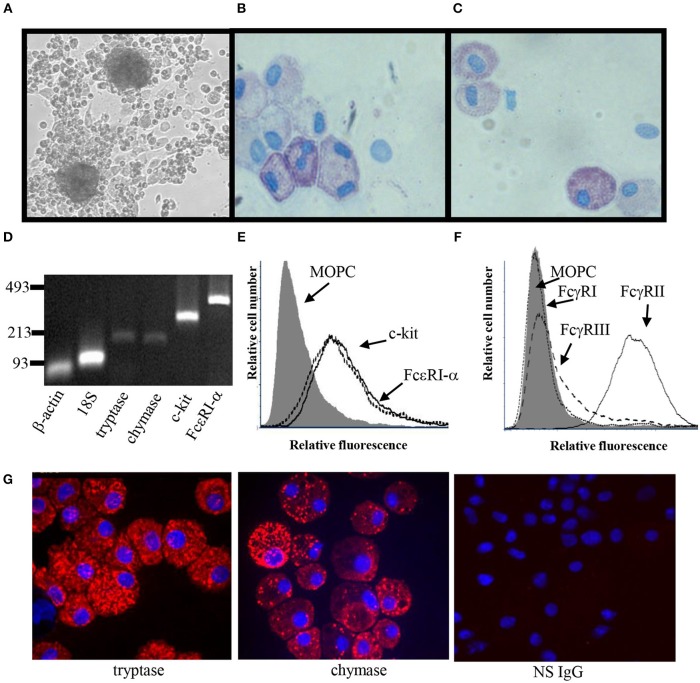
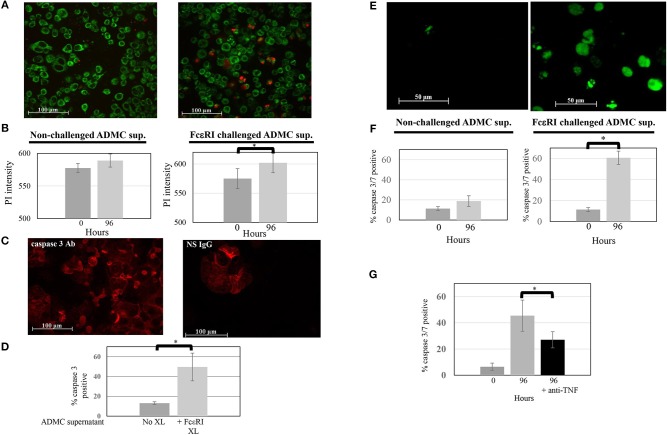
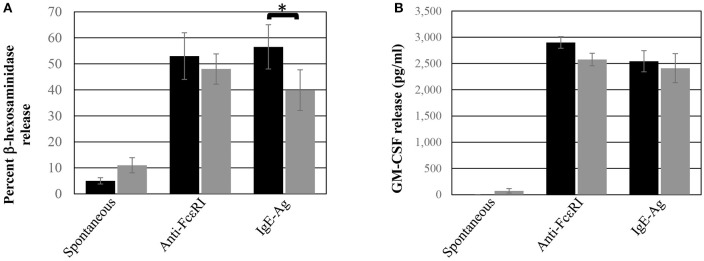
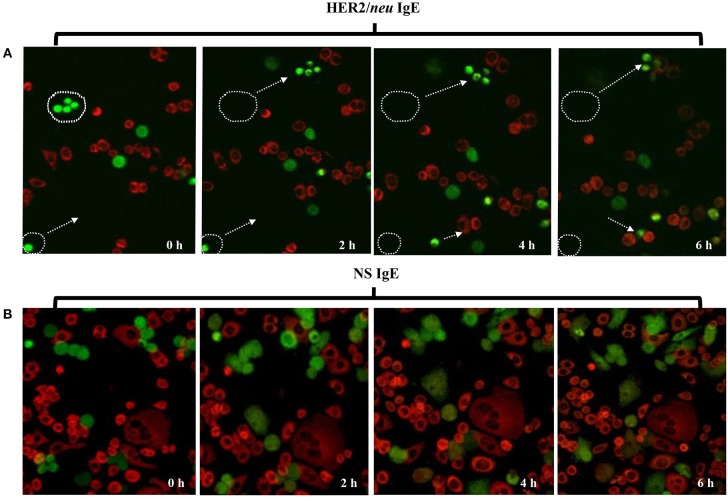
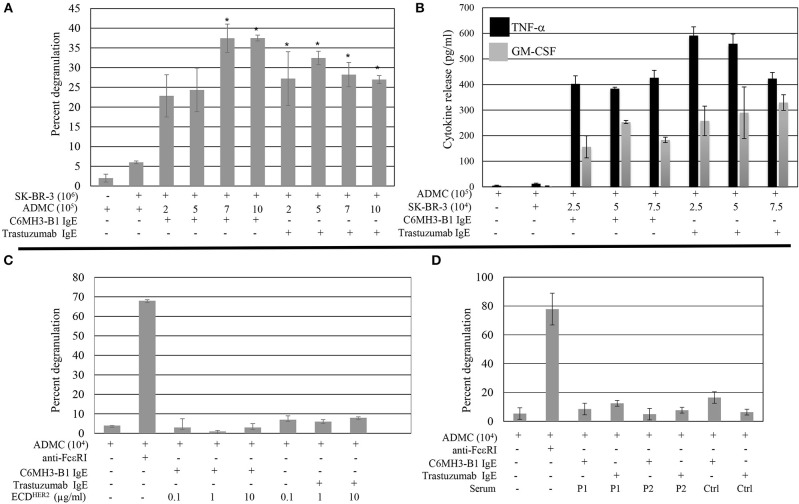
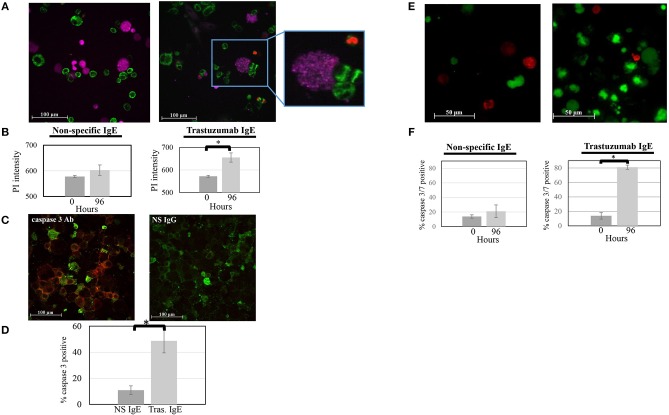
Mast cells (MC) are important immune sentinels found in most tissue and widely recognized for their role as mediators of Type I hypersensitivity. However, they also secrete anti-cancer mediators such as tumor necrosis factor alpha (TNF-α) and granulocyte-macrophage colony-stimulating factor (GM-CSF). The purpose of this study was to investigate adipose tissue as a new source of MC in quantities that could be used to study MC biology focusing on their ability to bind to and kill breast cancer cells. We tested several cell culture media previously demonstrated to induce MC differentiation. We report here the generation of functional human MC from adipose tissue. The adipose-derived mast cells (ADMC) are phenotypically and functionally similar to connective tissue expressing tryptase, chymase, c-kit, and FcεRI and capable of degranulating after cross-linking of FcεRI. The ADMC, sensitized with anti-HER2/ IgE antibodies with human constant regions (trastuzumab IgE and/or C6MH3-B1 IgE), bound to and released MC mediators when incubated with HER2/-positive human breast cancer cells (SK-BR-3 and BT-474). Importantly, the HER2/ IgE-sensitized ADMC induced breast cancer cell (SK-BR-3) death through apoptosis. Breast cancer cell apoptosis was observed after the addition of cell-free supernatants containing mediators released from FcεRI-challenged ADMC. Apoptosis was significantly reduced when TNF-α blocking antibodies were added to the media. Adipose tissue represents a source MC that could be used for multiple research purposes and potentially as a cell-mediated cancer immunotherapy through the expansion of autologous (or allogeneic) MC that can be targeted to tumors through IgE antibodies recognizing tumor specific antigens.
肥大细胞(MC)是在大多数组织中发现的重要免疫哨兵,它们作为 I 型超敏反应的介质而广为人知。然而,它们也分泌抗肿瘤介质,如肿瘤坏死因子-α(TNF-α)和粒细胞-巨噬细胞集落刺激因子(GM-CSF)。本研究的目的是研究脂肪组织作为 MC 的新来源,其数量可用于研究 MC 生物学,重点研究其与乳腺癌细胞结合和杀伤的能力。我们测试了几种先前证明可诱导 MC 分化的细胞培养介质。我们在此报告了从脂肪组织生成功能性人 MC。脂肪衍生的肥大细胞(ADMC)在表型和功能上与表达类胰蛋白酶、糜蛋白酶、c-kit 和 FcεRI 的结缔组织相似,并且能够在 FcεRI 交联后脱颗粒。ADMC 用具有人恒定区的抗 HER2/IgE 抗体(曲妥珠单抗 IgE 和/或 C6MH3-B1 IgE)敏化,与 HER2/阳性人乳腺癌细胞(SK-BR-3 和 BT-474)孵育时结合并释放 MC 介质。重要的是,用 HER2/IgE 敏化的 ADMC 通过细胞凋亡诱导乳腺癌细胞(SK-BR-3)死亡。在用 FcεRI 挑战的 ADMC 释放的介质包含的细胞无血清添加到培养基中后观察到乳腺癌细胞凋亡。当向培养基中添加 TNF-α 阻断抗体时,凋亡明显减少。脂肪组织代表了一种 MC 来源,可用于多种研究目的,并可能通过扩增可通过识别肿瘤特异性抗原的 IgE 抗体靶向肿瘤的自体(或同种异体)MC,作为细胞介导的癌症免疫疗法。