
细胞外基质包被的间充质干细胞促进糖尿病大鼠伤口愈合
Mesenchymal Stem Cells Coated by the Extracellular Matrix Promote Wound Healing in Diabetic Rats.
作者信息
Wang Linhao, Wang Fang, Zhao Liling, Yang Wenjun, Wan Xinxing, Yue Chun, Mo Zhaohui
机构信息
Department of Endocrinology and Metabolism, Third Xiangya Hospital of Central South University, China.
出版信息
Stem Cells Int. 2019 Jan 28;2019:9564869. doi: 10.1155/2019/9564869. eCollection 2019.
OBJECTIVE
To investigate the effects of mesenchymal stem cells (MSCs) coated by the extracellular matrix (ECM) on wound healing in diabetic rats.
METHODS
Mesenchymal stem cells were cocultured with ECM. Cell viabilities were evaluated using MTT assay. The diabetes model was established using both STZ and high-glucose/fat methods in SD rats. A wound area was made on the middle of the rats' back. MSCs or ECM-MSCs were used to treat the rats. HE staining and CD31 immunohistochemistry were used to detect the skin thickness and angiogenesis. Western blotting and qRT-PCR were conducted to determine the level of VEGF-, PDGF, and EGF.
RESULTS
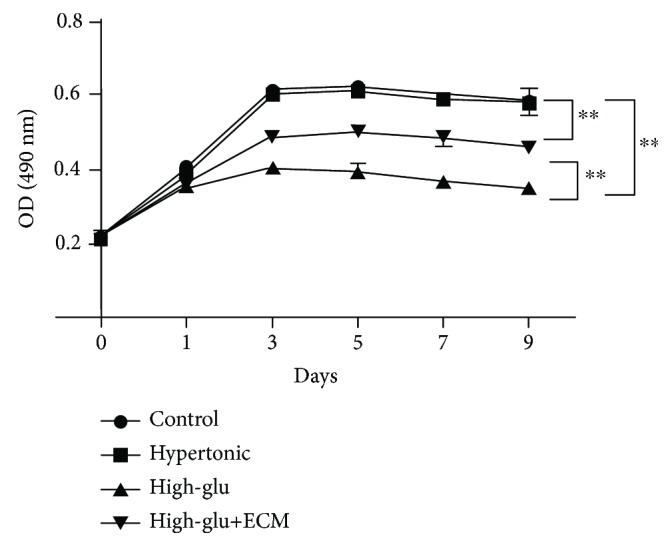
It was observed that treatment of ECM had no significant effects on the cell viability of ECM-MSCs. Wound area assay showed that both MSCs and ECM-MSCs could enhance the wound healing of diabetic rats and ECM-MSCs could further promote the effects. Both MSCs and ECM-MSCs could enhance angiogenesis and epithelialization of the wounds, as well as the expression of VEGF-, PDGF, and EGF in wound tissues, while ECM-MSC treatment showed more obvious effects.
CONCLUSION
Mesenchymal stem cells coated by the extracellular matrix could promote wound healing in diabetic rats. Our study may offer a novel therapeutic method for impaired diabetic wound healing.
目的
研究细胞外基质(ECM)包被的间充质干细胞(MSCs)对糖尿病大鼠伤口愈合的影响。
方法
将间充质干细胞与ECM共培养。采用MTT法评估细胞活力。使用链脲佐菌素(STZ)和高糖/高脂法在SD大鼠中建立糖尿病模型。在大鼠背部中间制造伤口区域。使用MSCs或ECM-MSCs治疗大鼠。采用苏木精-伊红(HE)染色和CD31免疫组织化学检测皮肤厚度和血管生成。进行蛋白质免疫印迹法(Western blotting)和实时定量聚合酶链反应(qRT-PCR)以测定血管内皮生长因子(VEGF)、血小板衍生生长因子(PDGF)和表皮生长因子(EGF)的水平。
结果
观察到ECM处理对ECM-MSCs的细胞活力无显著影响。伤口面积测定表明,MSCs和ECM-MSCs均可促进糖尿病大鼠的伤口愈合,且ECM-MSCs的促进作用更强。MSCs和ECM-MSCs均可增强伤口的血管生成和上皮化,以及伤口组织中VEGF、PDGF和EGF的表达,而ECM-MSCs处理的效果更明显。
结论
细胞外基质包被的间充质干细胞可促进糖尿病大鼠的伤口愈合。我们的研究可能为受损的糖尿病伤口愈合提供一种新的治疗方法。



 Zotero 插件