Department of Science, University of Basilicata, 85100, Potenza, Italy.
Department of Women's Health, Research Institute for Women's Health, Eberhard-Karls-University Tübingen, 72076, Tübingen, Germany.
Sci Rep. 2019 Mar 5;9(1):3446. doi: 10.1038/s41598-019-40079-7.
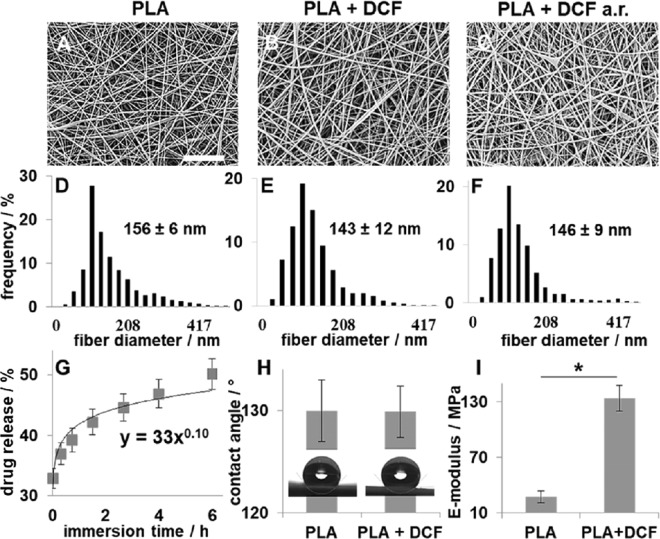
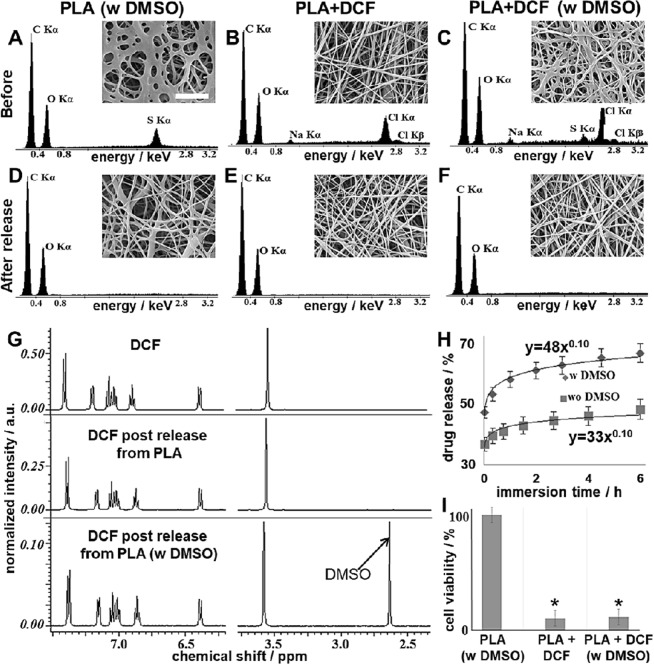
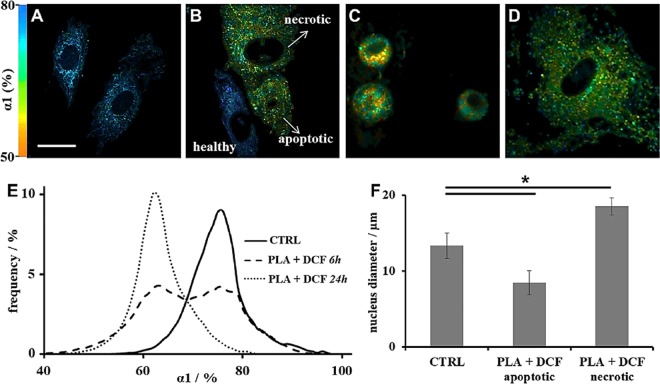
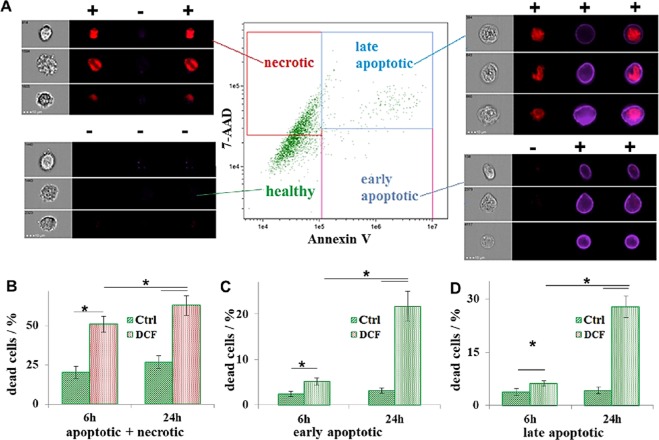
Electrospinning is an attractive method to generate drug releasing systems. In this work, we encapsulated the cell death-inducing drug Diclofenac (DCF) in an electrospun poly-L-lactide (PLA) scaffold. The scaffold offers a system for a sustained and controlled delivery of the cytotoxic DCF over time making it clinically favourable by achieving a prolonged therapeutic effect. We exposed human dermal fibroblasts (HDFs) to the drug-eluting scaffold and employed multiphoton microscopy and fluorescence lifetime imaging microscopy. These methods were suitable for non-invasive and marker-independent assessment of the cytotoxic effects. Released DCF induced changes in cell morphology and glycolytic activity. Furthermore, we showed that drug release can be influenced by adding dimethyl sulfoxide as a co-solvent for electrospinning. Interestingly, without affecting the drug diffusion mechanism, the resulting PLA scaffolds showed altered fibre morphology and enhanced initial DCF burst release. The here described model could represent an interesting way to control the diffusion of encapsulated bio-active molecules and test them using a marker-independent, non-invasive approach.
电纺丝是一种很有吸引力的方法,可以用来生成药物释放系统。在这项工作中,我们将诱导细胞死亡的药物双氯芬酸(DCF)封装在电纺聚 L-乳酸(PLA)支架中。该支架提供了一个系统,可以随着时间的推移持续和控制细胞毒性 DCF 的释放,从而通过实现延长的治疗效果在临床上更有利。我们将载药支架暴露于人类真皮成纤维细胞(HDF),并使用多光子显微镜和荧光寿命成像显微镜进行检测。这些方法适用于非侵入性和无标记的细胞毒性作用评估。释放的 DCF 诱导细胞形态和糖酵解活性发生变化。此外,我们表明,通过添加二甲基亚砜作为电纺的共溶剂,可以影响药物的释放。有趣的是,在不影响药物扩散机制的情况下,得到的 PLA 支架显示出纤维形态的改变和初始 DCF 突释释放的增强。这里描述的模型可以代表一种控制封装生物活性分子扩散的有趣方法,并使用无标记、非侵入性的方法对其进行测试。