Dipartimento di Scienze Cardiovascolari, Respiratorie, Nefrologiche, Anestesiologiche e Geriatriche, Policlinico Umberto I, "La Sapienza" University of Rome, Viale del Policlinico, 00185, Rome, Italy.
Department of Experimental Medicine, Sapienza University of Rome, Rome, Italy.
J Endocrinol Invest. 2019 Sep;42(9):1051-1065. doi: 10.1007/s40618-019-01026-5. Epub 2019 Mar 5.
Evidences suggest that androgen deficiency is associated with sudden cardiac death (SCD). Our purpose was to analyse some electrocardiographic (ECG) markers of repolarization phase in hypogonadal patients either at baseline or after testosterone replacement therapy (TRT).
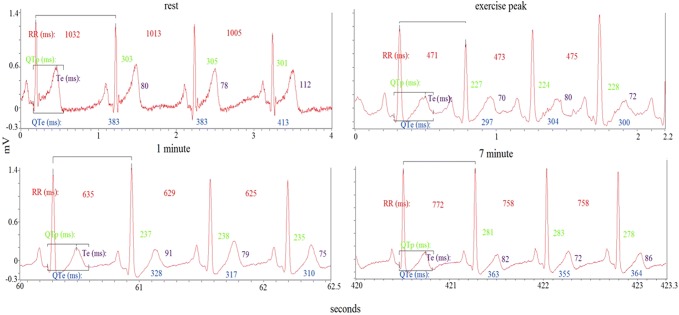
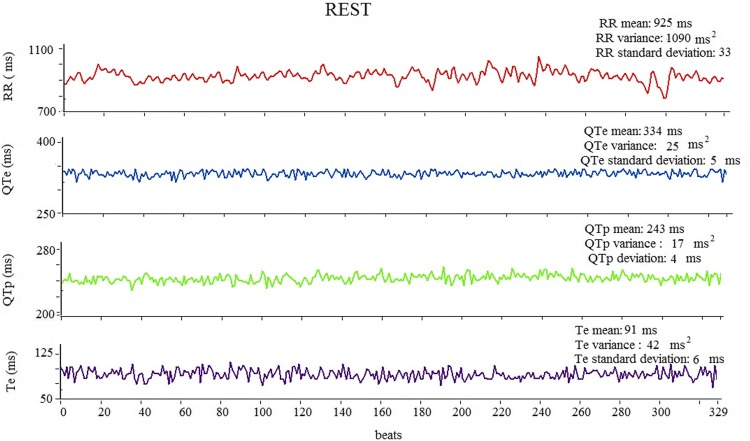
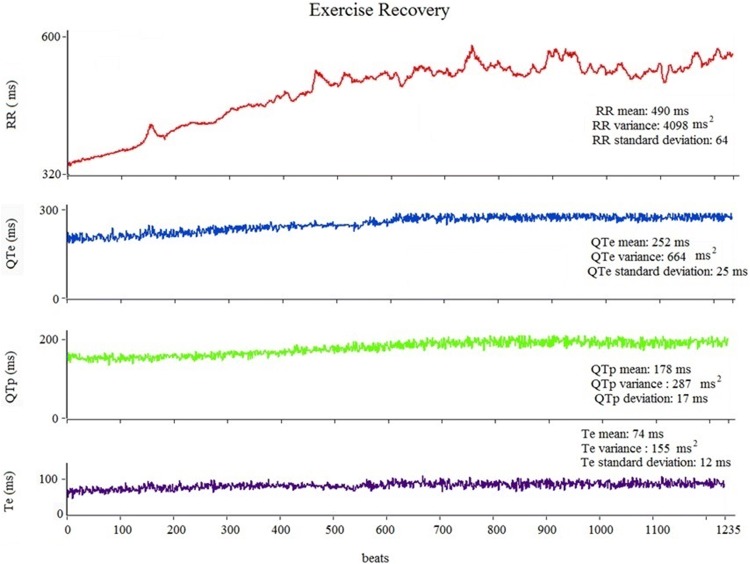
Baseline and after 6 months of testosterone replacement therapy, 14 hypogonadal patients and 10 age-matched controls underwent a short-term ECG recordings at rest and immediately after a maximal exercise test. The following ECG parameters have been collected: QTe (the interval between the q wave the end of T wave), QTp (the interval between the q wave and the peak of T wave), and Te (the interval between the peak and the end of T wave).
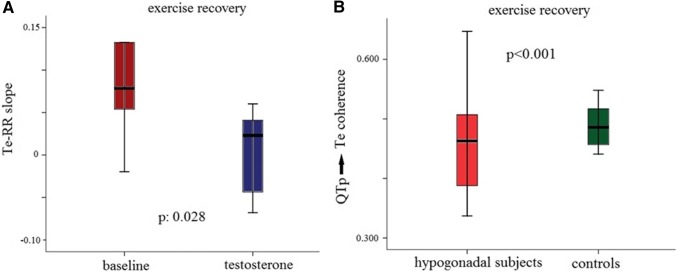
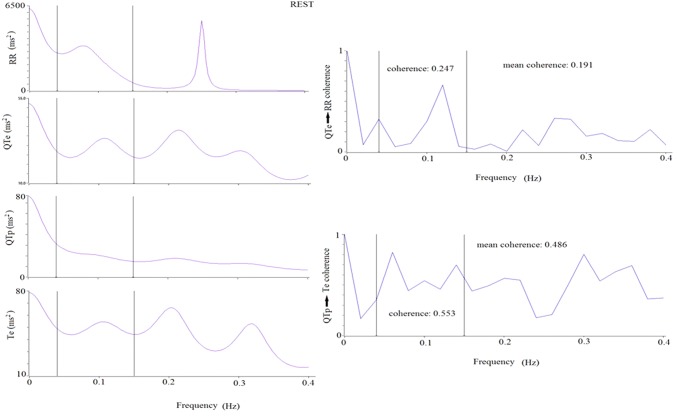
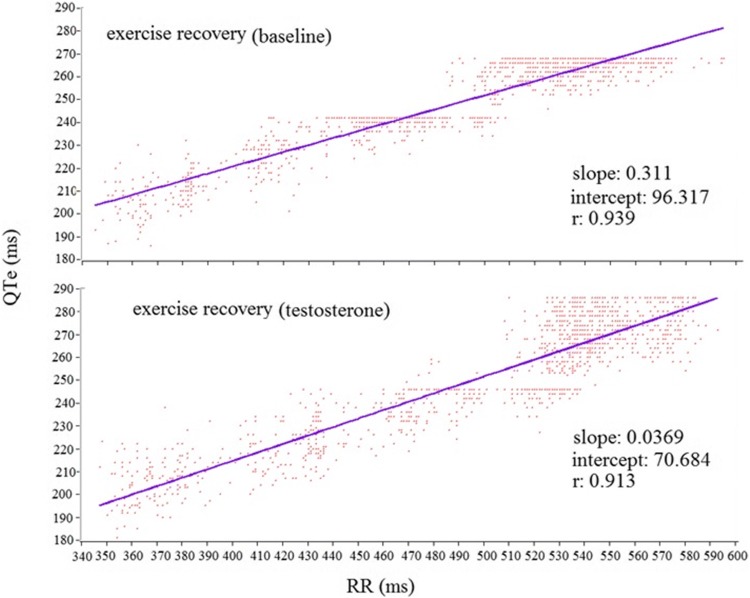
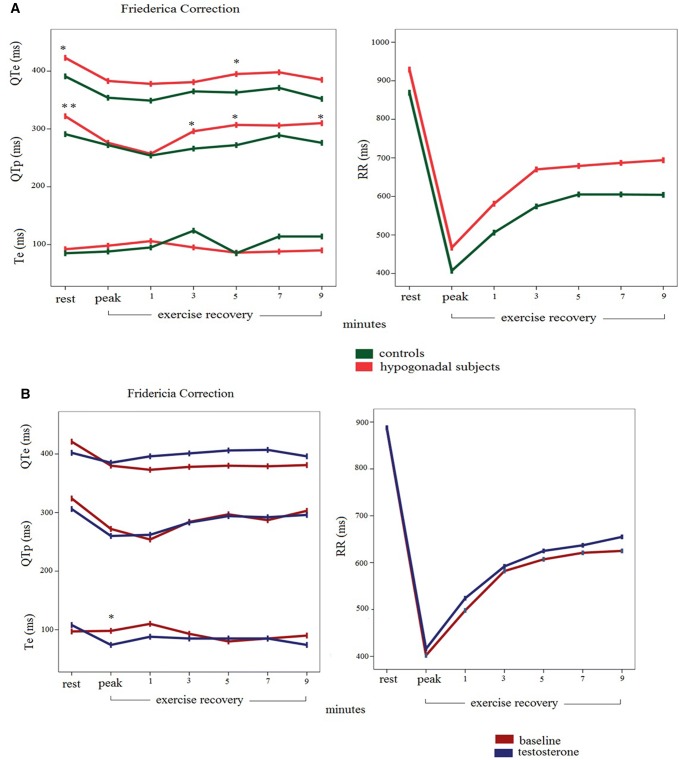
At baseline, in the hypogonadal patients, corrected QTe and QTp values were longer at rest than in the controls at rest (p < 0.05), whereas, during the recovery phase, only the QTp remained significantly longer (p < 0.05). After TRT, hypogonadal patients showed an improvement only in Te (p < 0.05). Conversely, any difference between hypogonadal patients and control subjects was found with respect to the markers of temporal dispersion of repolarization phases, except for a worse QTp → Te coherence (p = 0.001) obtained during the recovery phase.
In conclusion, at rest, hypogonadal patients suffer from a stable increase in the myocardial repolarization phase without an increase in its temporal dispersion and, hence, the SCD risk seems to be low.
有证据表明,雄激素缺乏与心源性猝死(SCD)有关。我们的目的是分析性腺功能减退症患者在基线或接受睾酮替代治疗(TRT)后,其复极阶段的一些心电图(ECG)标志物。
14 名性腺功能减退症患者和 10 名年龄匹配的对照组在基线和接受 6 个月 TRT 后,分别在静息状态和最大运动试验后立即进行了短期心电图记录。收集了以下心电图参数:QTc(q 波结束与 T 波结束之间的间隔)、QTp(q 波与 T 波峰值之间的间隔)和 Te(T 波峰值与结束之间的间隔)。
在基线时,与对照组相比,性腺功能减退症患者的校正 QTc 和 QTp 值在静息时更长(p < 0.05),而在恢复期仅 QTp 仍显著延长(p < 0.05)。在接受 TRT 后,性腺功能减退症患者仅在 Te 方面有所改善(p < 0.05)。相反,除恢复期 QTp→Te 一致性较差(p = 0.001)外,性腺功能减退症患者与对照组之间在复极阶段的时间弥散标志物方面没有发现任何差异。
总之,在静息状态下,性腺功能减退症患者的心肌复极阶段稳定增加,而没有增加其时间弥散,因此 SCD 风险似乎较低。