Gheorghe Andrei Cristian Dan, Ciobanu Ana, Hodorogea Andreea Simona, Radavoi George Daniel, Jinga Viorel, Nanea Ioan Tiberiu, Gheorghe Gabriela Silvia
Carol Davila University of Medicine and Pharmacy, Bucharest, Romania.
Department of Internal Medicine and Cardiology, Theodor Burghele Clinical Hospital, Bucharest, Romania.
Cardiovasc Toxicol. 2020 Aug;20(4):390-400. doi: 10.1007/s12012-020-09566-6.
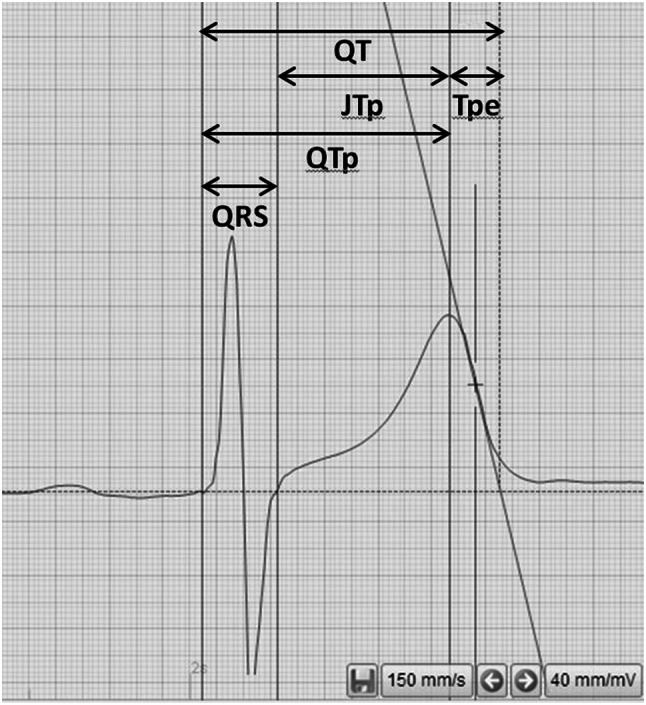
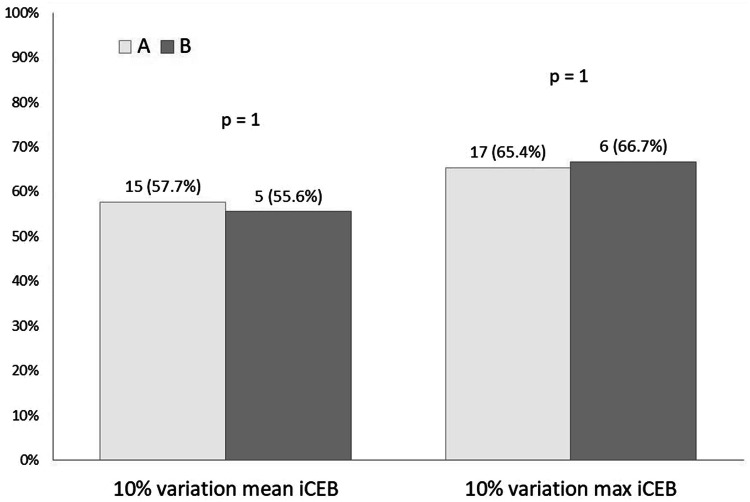
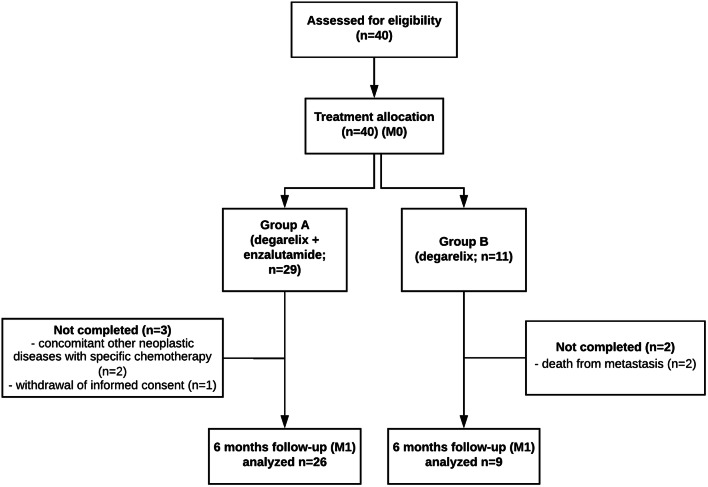
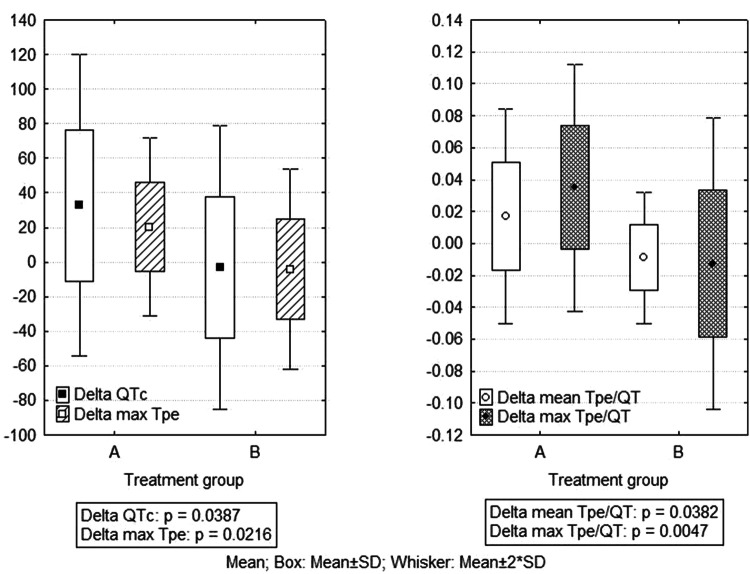
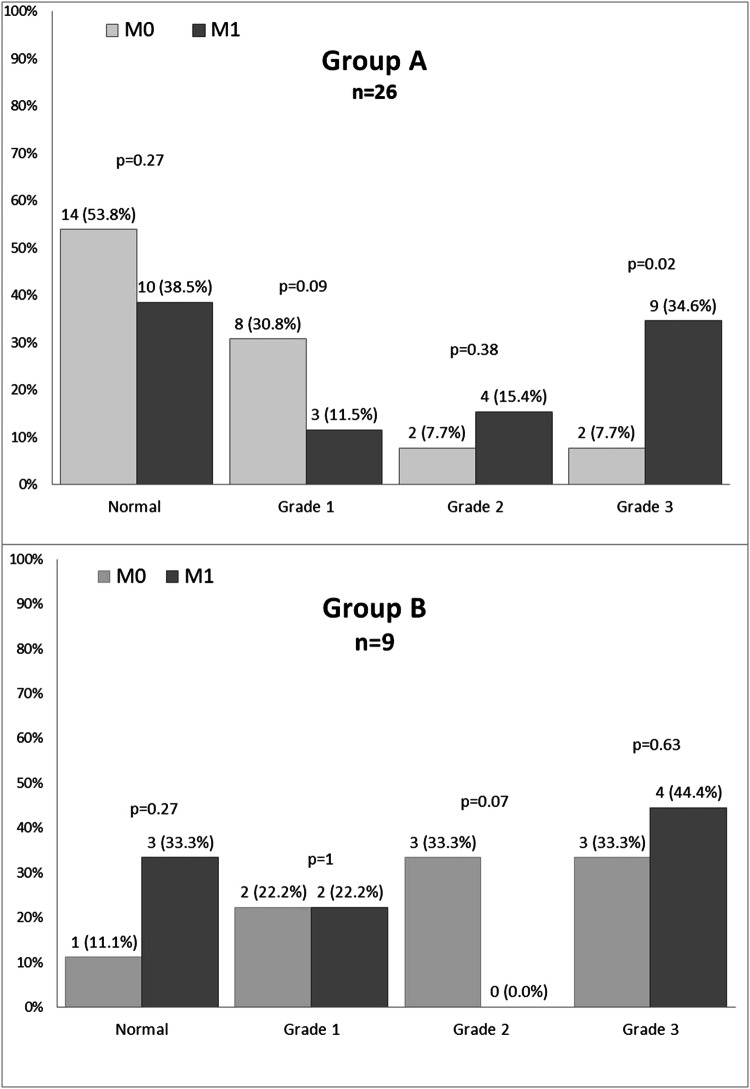
We assessed the effects of antiandrogen therapy on ECG parameters of ventricular repolarization related to arrhythmic risk in 35 patients aged 70.3 ± 7 years with advanced prostate cancer treated with degarelix associated with enzalutamide (group A, 26 patients) or degarelix monotherapy (group B, 9 patients). We analyzed Fridericia corrected Q-T interval (QTc), Q-T dispersion (QTd), J-Tpeak interval (JTp), mean and maximum Tpeak-Tend interval (Tpe) and Tpe/QT ratio, Tpeak-Tend dispersion (Tped), index of cardio-electrophysiological balance (iCEB) from ECG tracings, and occurrence of ventricular premature beats (VPB) recorded by Holter ECG, before initiation of medication (M0) and after 6 months of treatment (M1). The groups had similar demographics except for a higher prevalence of prior myocardial infarction in group B (p = 0.01). All patients had low serum testosterone at M1. Baseline QTc, QTd, maxTpe/QT, meanTpe, maxTpe, Tped values were higher in B compared to A. They had a significant prolongation at M1 only in A. 20 patients in A and 6 in B had a 10% prolongation or decrease of iCEB (p = 0.66). In 5 patients, VPB severity increased from non-complex to complex: 3 in A and 2 in B (p = 0.31), but no sustained ventricular arrhythmia was registered. In conclusion, after 6 months of treatment, patients with hypogonadism on degarelix associated with enzalutamide had significant prolongation of QTc, QTd, maxTpe, meanTpe/QT, maxTpe/QT, Tped compared to patients on degarelix alone. The proportion of patients with 10% iCEB variation was similar between groups. There was no record of severe arrhythmias during the first 6 months of treatment.
我们评估了抗雄激素治疗对35例年龄为70.3±7岁的晚期前列腺癌患者心室复极心电图参数的影响,这些患者接受了地加瑞克联合恩杂鲁胺治疗(A组,26例患者)或地加瑞克单药治疗(B组,9例患者)。我们分析了用药前(M0)和治疗6个月后(M1)心电图描记中的弗里德里西亚校正QT间期(QTc)、QT离散度(QTd)、J-Tpeak间期(JTp)、平均和最大Tpeak-Tend间期(Tpe)以及Tpe/QT比值、Tpeak-Tend离散度(Tped)、心脏电生理平衡指数(iCEB),并分析了动态心电图记录的室性早搏(VPB)的发生情况。除B组既往心肌梗死患病率较高外(p = 0.01),两组的人口统计学特征相似。所有患者在M1时血清睾酮水平均较低。与A组相比,B组的基线QTc、QTd、maxTpe/QT、meanTpe、maxTpe、Tped值更高。仅A组在M1时有显著延长。A组20例患者和B组6例患者的iCEB延长或降低了10%(p = 0.66)。5例患者的VPB严重程度从非复杂性增加到复杂性:A组3例,B组2例(p = 0.31),但未记录到持续性室性心律失常。总之,治疗6个月后,与单独使用地加瑞克的患者相比,接受地加瑞克联合恩杂鲁胺治疗的性腺功能减退患者的QTc、QTd、maxTpe、meanTpe/QT、maxTpe/QT、Tped有显著延长。两组间iCEB变化10%的患者比例相似。治疗的前6个月未记录到严重心律失常。