• 文献检索
  • 文档翻译
  • 深度研究
  • 学术资讯
  • Suppr Zotero 插件Zotero 插件
  • 邀请有礼
  • 套餐&价格
  • 历史记录
应用&插件
Suppr Zotero 插件Zotero 插件浏览器插件Mac 客户端Windows 客户端微信小程序
定价
高级版会员购买积分包购买API积分包
服务
文献检索文档翻译深度研究API 文档MCP 服务
关于我们
关于 Suppr公司介绍联系我们用户协议隐私条款
关注我们

Suppr 超能文献

核心技术专利:CN118964589B侵权必究
粤ICP备2023148730 号-1Suppr @ 2026

文献检索

告别复杂PubMed语法,用中文像聊天一样搜索,搜遍4000万医学文献。AI智能推荐,让科研检索更轻松。

立即免费搜索

文件翻译

保留排版,准确专业,支持PDF/Word/PPT等文件格式,支持 12+语言互译。

免费翻译文档

深度研究

AI帮你快速写综述,25分钟生成高质量综述,智能提取关键信息,辅助科研写作。

立即免费体验

利用基于科学的模拟研究,调查人类行星探索的舱外活动科学操作概念和能力。

Using Science-Driven Analog Research to Investigate Extravehicular Activity Science Operations Concepts and Capabilities for Human Planetary Exploration.

机构信息

1 KBRwyle, Houston, Texas.

2 NASA Johnson Space Center, Houston, Texas.

出版信息

Astrobiology. 2019 Mar;19(3):300-320. doi: 10.1089/ast.2018.1861.

DOI:10.1089/ast.2018.1861
PMID:30840499
原文链接:https://pmc.ncbi.nlm.nih.gov/articles/PMC6442238/
Abstract

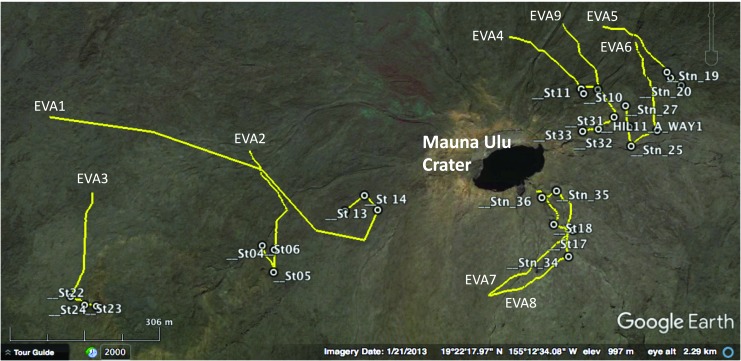
Biologic Analog Science Associated with Lava Terrains (BASALT) is a science-driven exploration program seeking to determine the best tools, techniques, training requirements, and execution strategies for conducting Mars-relevant field science under spaceflight mission conditions. BASALT encompasses Science, Science Operations, and Technology objectives. This article outlines the BASALT Science Operations background, strategic research questions, study design, and a portion of the results from the second field test. BASALT field tests are used to iteratively develop, integrate, test, evaluate, and refine new concepts of operations (ConOps) and capabilities that enable efficient and productive science. This article highlights the ConOps investigated during BASALT in light of future planetary extravehicular activity (EVA), which will focus on scientific exploration and discovery, and serves as an introduction to integrating exploration flexibility with operational rigor, the value of tactical and strategic science planning and execution, and capabilities that enable and enhance future science EVA operations.

摘要

与熔岩地形相关的生物模拟科学(BASALT)是一个以科学为导向的探索计划,旨在确定在太空任务条件下进行与火星相关的实地科学研究的最佳工具、技术、培训要求和执行策略。BASALT 包含科学、科学操作和技术目标。本文概述了 BASALT 科学操作背景、战略研究问题、研究设计以及第二次现场测试的部分结果。BASALT 现场测试用于反复开发、集成、测试、评估和改进新的操作概念(ConOps)和能力,从而实现高效和富有成效的科学研究。本文重点介绍了 BASALT 中研究的 ConOps,以便为未来的行星舱外活动(EVA)提供参考,未来的 EVA 将侧重于科学探索和发现,并作为将探索灵活性与操作严谨性相结合、战术和战略科学规划和执行的价值以及能够实现和增强未来科学 EVA 操作的能力的介绍。
https://cdn.ncbi.nlm.nih.gov/pmc/blobs/4554/6442238/b0798da43081/fig-5.jpg
https://cdn.ncbi.nlm.nih.gov/pmc/blobs/4554/6442238/bdffbc9c155e/fig-1.jpg
https://cdn.ncbi.nlm.nih.gov/pmc/blobs/4554/6442238/63eea9bf2cc5/fig-2.jpg
https://cdn.ncbi.nlm.nih.gov/pmc/blobs/4554/6442238/a120476091b1/fig-3.jpg
https://cdn.ncbi.nlm.nih.gov/pmc/blobs/4554/6442238/06f961426755/fig-4.jpg
https://cdn.ncbi.nlm.nih.gov/pmc/blobs/4554/6442238/b0798da43081/fig-5.jpg
https://cdn.ncbi.nlm.nih.gov/pmc/blobs/4554/6442238/bdffbc9c155e/fig-1.jpg
https://cdn.ncbi.nlm.nih.gov/pmc/blobs/4554/6442238/63eea9bf2cc5/fig-2.jpg
https://cdn.ncbi.nlm.nih.gov/pmc/blobs/4554/6442238/a120476091b1/fig-3.jpg
https://cdn.ncbi.nlm.nih.gov/pmc/blobs/4554/6442238/06f961426755/fig-4.jpg
https://cdn.ncbi.nlm.nih.gov/pmc/blobs/4554/6442238/b0798da43081/fig-5.jpg

相似文献

1
Using Science-Driven Analog Research to Investigate Extravehicular Activity Science Operations Concepts and Capabilities for Human Planetary Exploration.利用基于科学的模拟研究,调查人类行星探索的舱外活动科学操作概念和能力。
Astrobiology. 2019 Mar;19(3):300-320. doi: 10.1089/ast.2018.1861.
2
Assessing the Acceptability of Science Operations Concepts and the Level of Mission Enhancement of Capabilities for Human Mars Exploration Extravehicular Activity.评估科学操作概念的可接受性和增强人类火星探索舱外活动能力的任务水平。
Astrobiology. 2019 Mar;19(3):321-346. doi: 10.1089/ast.2018.1912.
3
Opportunities and Challenges of Promoting Scientific Dialog throughout Execution of Future Science-Driven Extravehicular Activity.促进未来以科学为驱动的舱外活动执行过程中的科学对话的机遇与挑战。
Astrobiology. 2019 Mar;19(3):426-439. doi: 10.1089/ast.2018.1901.
4
Future Needs for Science-Driven Geospatial and Temporal Extravehicular Activity Planning and Execution.未来对科学驱动的地理空间和时间舱外活动规划和执行的需求。
Astrobiology. 2019 Mar;19(3):440-461. doi: 10.1089/ast.2018.1838.
5
The BASALT Research Program: Designing and Developing Mission Elements in Support of Human Scientific Exploration of Mars.BASALT 研究计划:设计和开发任务要素,以支持人类对火星的科学探索。
Astrobiology. 2019 Mar;19(3):245-259. doi: 10.1089/ast.2018.1869.
6
Strategic Planning Insights for Future Science-Driven Extravehicular Activity on Mars.面向未来火星科学驱动舱外活动的战略规划洞察。
Astrobiology. 2019 Mar;19(3):347-368. doi: 10.1089/ast.2018.1850.
7
Developing Future Deep-Space Telecommunication Architectures: A Historical Look at the Benefits of Analog Research on the Development of Solar System Internetworking for Future Human Spaceflight.发展未来深空通信架构:模拟研究对太阳系内联网发展为未来人类航天应用的历史回顾。
Astrobiology. 2019 Mar;19(3):462-477. doi: 10.1089/ast.2018.1915.
8
A Flexible Telecommunication Architecture for Human Planetary Exploration Based on the BASALT Science-Driven Mars Analog.基于 BASALT 科学驱动的火星模拟的人类行星探索的灵活通信架构。
Astrobiology. 2019 Mar;19(3):478-496. doi: 10.1089/ast.2018.1906.
9
Developing Intra-EVA Science Support Team Practices for a Human Mission to Mars.发展人类火星任务的舱内 EVA 科学支援团队实践。
Astrobiology. 2019 Mar;19(3):387-400. doi: 10.1089/ast.2018.1846.
10
Tactical Scientific Decision-Making during Crewed Astrobiology Mars Missions.载人火星生物任务中的战术科学决策
Astrobiology. 2019 Mar;19(3):369-386. doi: 10.1089/ast.2018.1837.

引用本文的文献

1
The BASALT Research Program: Designing and Developing Mission Elements in Support of Human Scientific Exploration of Mars.BASALT 研究计划:设计和开发任务要素,以支持人类对火星的科学探索。
Astrobiology. 2019 Mar;19(3):245-259. doi: 10.1089/ast.2018.1869.
2
Opportunities and Challenges of Promoting Scientific Dialog throughout Execution of Future Science-Driven Extravehicular Activity.促进未来以科学为驱动的舱外活动执行过程中的科学对话的机遇与挑战。
Astrobiology. 2019 Mar;19(3):426-439. doi: 10.1089/ast.2018.1901.
3
Developing Intra-EVA Science Support Team Practices for a Human Mission to Mars.

本文引用的文献

1
The BASALT Research Program: Designing and Developing Mission Elements in Support of Human Scientific Exploration of Mars.BASALT 研究计划:设计和开发任务要素,以支持人类对火星的科学探索。
Astrobiology. 2019 Mar;19(3):245-259. doi: 10.1089/ast.2018.1869.
2
Opportunities and Challenges of Promoting Scientific Dialog throughout Execution of Future Science-Driven Extravehicular Activity.促进未来以科学为驱动的舱外活动执行过程中的科学对话的机遇与挑战。
Astrobiology. 2019 Mar;19(3):426-439. doi: 10.1089/ast.2018.1901.
3
Developing Intra-EVA Science Support Team Practices for a Human Mission to Mars.
发展人类火星任务的舱内 EVA 科学支援团队实践。
Astrobiology. 2019 Mar;19(3):387-400. doi: 10.1089/ast.2018.1846.
4
Assessing the Acceptability of Science Operations Concepts and the Level of Mission Enhancement of Capabilities for Human Mars Exploration Extravehicular Activity.评估科学操作概念的可接受性和增强人类火星探索舱外活动能力的任务水平。
Astrobiology. 2019 Mar;19(3):321-346. doi: 10.1089/ast.2018.1912.
5
Requirements for Portable Instrument Suites during Human Scientific Exploration of Mars.火星载人科学探索中便携式仪器套件的要求。
Astrobiology. 2019 Mar;19(3):401-425. doi: 10.1089/ast.2018.1841.
6
Future Needs for Science-Driven Geospatial and Temporal Extravehicular Activity Planning and Execution.未来对科学驱动的地理空间和时间舱外活动规划和执行的需求。
Astrobiology. 2019 Mar;19(3):440-461. doi: 10.1089/ast.2018.1838.
7
Developing Future Deep-Space Telecommunication Architectures: A Historical Look at the Benefits of Analog Research on the Development of Solar System Internetworking for Future Human Spaceflight.发展未来深空通信架构:模拟研究对太阳系内联网发展为未来人类航天应用的历史回顾。
Astrobiology. 2019 Mar;19(3):462-477. doi: 10.1089/ast.2018.1915.
8
Tactical Scientific Decision-Making during Crewed Astrobiology Mars Missions.载人火星生物任务中的战术科学决策
Astrobiology. 2019 Mar;19(3):369-386. doi: 10.1089/ast.2018.1837.
9
A Low-Diversity Microbiota Inhabits Extreme Terrestrial Basaltic Terrains and Their Fumaroles: Implications for the Exploration of Mars.一种低多样性微生物群栖息在极端的陆地玄武岩地形及其喷气孔中:对火星探索的启示。
Astrobiology. 2019 Mar;19(3):284-299. doi: 10.1089/ast.2018.1870.
10
Strategic Planning Insights for Future Science-Driven Extravehicular Activity on Mars.面向未来火星科学驱动舱外活动的战略规划洞察。
Astrobiology. 2019 Mar;19(3):347-368. doi: 10.1089/ast.2018.1850.
发展人类火星任务的舱内 EVA 科学支援团队实践。
Astrobiology. 2019 Mar;19(3):387-400. doi: 10.1089/ast.2018.1846.
4
Assessing the Acceptability of Science Operations Concepts and the Level of Mission Enhancement of Capabilities for Human Mars Exploration Extravehicular Activity.评估科学操作概念的可接受性和增强人类火星探索舱外活动能力的任务水平。
Astrobiology. 2019 Mar;19(3):321-346. doi: 10.1089/ast.2018.1912.
5
Requirements for Portable Instrument Suites during Human Scientific Exploration of Mars.火星载人科学探索中便携式仪器套件的要求。
Astrobiology. 2019 Mar;19(3):401-425. doi: 10.1089/ast.2018.1841.
6
Future Needs for Science-Driven Geospatial and Temporal Extravehicular Activity Planning and Execution.未来对科学驱动的地理空间和时间舱外活动规划和执行的需求。
Astrobiology. 2019 Mar;19(3):440-461. doi: 10.1089/ast.2018.1838.
7
Developing Future Deep-Space Telecommunication Architectures: A Historical Look at the Benefits of Analog Research on the Development of Solar System Internetworking for Future Human Spaceflight.发展未来深空通信架构:模拟研究对太阳系内联网发展为未来人类航天应用的历史回顾。
Astrobiology. 2019 Mar;19(3):462-477. doi: 10.1089/ast.2018.1915.
8
Tactical Scientific Decision-Making during Crewed Astrobiology Mars Missions.载人火星生物任务中的战术科学决策
Astrobiology. 2019 Mar;19(3):369-386. doi: 10.1089/ast.2018.1837.
9
A Flexible Telecommunication Architecture for Human Planetary Exploration Based on the BASALT Science-Driven Mars Analog.基于 BASALT 科学驱动的火星模拟的人类行星探索的灵活通信架构。
Astrobiology. 2019 Mar;19(3):478-496. doi: 10.1089/ast.2018.1906.
10
Strategic Planning Insights for Future Science-Driven Extravehicular Activity on Mars.面向未来火星科学驱动舱外活动的战略规划洞察。
Astrobiology. 2019 Mar;19(3):347-368. doi: 10.1089/ast.2018.1850.