1 UK Centre for Astrobiology, School of Physics and Astronomy, University of Edinburgh, Edinburgh, UK.
2 Department of Geosciences, Idaho State University, Pocatello, Idaho, USA.
Astrobiology. 2019 Mar;19(3):369-386. doi: 10.1089/ast.2018.1837.
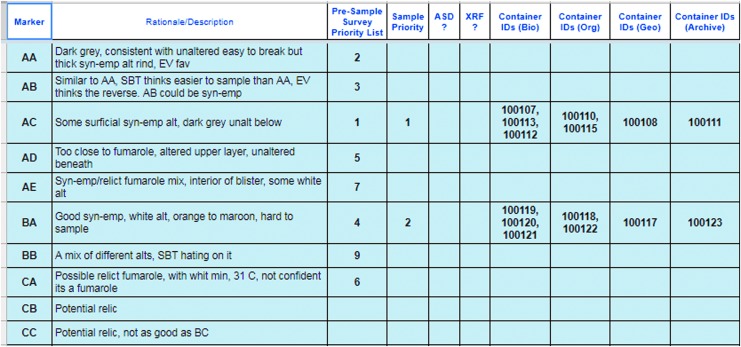
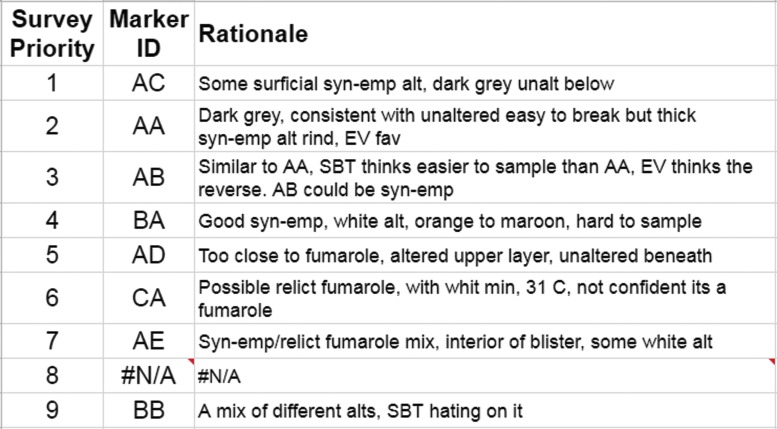
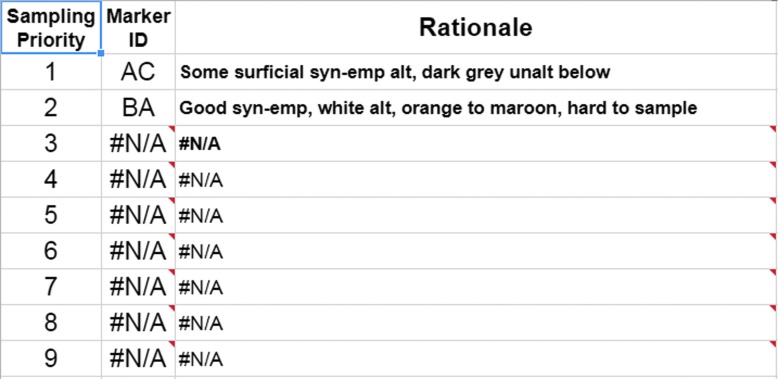
The limitations placed upon human explorers on the surface of Mars will necessitate a methodology for scientific exploration that is different from standard approaches to terrestrial fieldwork and prior crewed exploration of the Moon. In particular, the data transmission limitations and communication latency between Earth and Mars create a unique situation for surface crew in contact with a terrestrial science team. The BASALT research program simulated a series of extravehicular activities (EVAs) in Mars analog terrains under various Mars-relevant bandwidth and latency conditions to investigate how best to approach this problem. Here we discuss tactical decision-making under these conditions, that is, how the crew on Mars interacts with a team of scientists and support personnel on Earth to collect samples of maximum scientific interest. We describe the strategies, protocols, and tools tested in BASALT EVAs and give recommendations on how best to conduct human exploration of Mars with support from Earth-based scientists. We find that even with scientists supporting them, the crew performing the exploration must be trained in the appropriate scientific disciplines in order to provide the terrestrial scientists with enough information to make decisions, but that with appropriate planning and structure, and tools such as a "dynamic leaderboard," terrestrial scientists can add scientific value to an EVA, even under Mars communication latency.
火星表面对人类探索者的限制将需要一种科学探索方法,这种方法与标准的地面实地考察方法和之前对月球的载人探索不同。特别是,地球和火星之间的数据传输限制和通信延迟为与地球科学团队接触的地面工作人员创造了一个独特的情况。BASALT 研究计划模拟了一系列在火星模拟地形中的舱外活动 (EVA),在各种与火星相关的带宽和延迟条件下,以研究如何最好地解决这个问题。在这里,我们讨论在这些条件下的战术决策,也就是说,火星上的工作人员如何与地球上的一组科学家和支持人员互动,以收集最具科学价值的样本。我们描述了 BASALT EVA 中测试的策略、协议和工具,并就如何在地球科学家的支持下最好地进行火星人类探索提出建议。我们发现,即使有科学家支持,执行探索任务的工作人员也必须接受适当的科学学科培训,以便向地球科学家提供做出决策所需的足够信息,但通过适当的规划和结构,以及使用“动态排行榜”等工具,即使在火星通信延迟的情况下,地球科学家也可以为 EVA 增加科学价值。