Department of Psychological and Brain Sciences, Krieger School of Arts and Sciences, Johns Hopkins University, Baltimore, Maryland, 21218, USA.
Université de Bordeaux, Institut des Maladies Neurodégénératives, UMR 5293, 146 rue Léo-Saignat, F-33000, Bordeaux, France.
Transl Psychiatry. 2019 Mar 6;9(1):109. doi: 10.1038/s41398-019-0445-2.
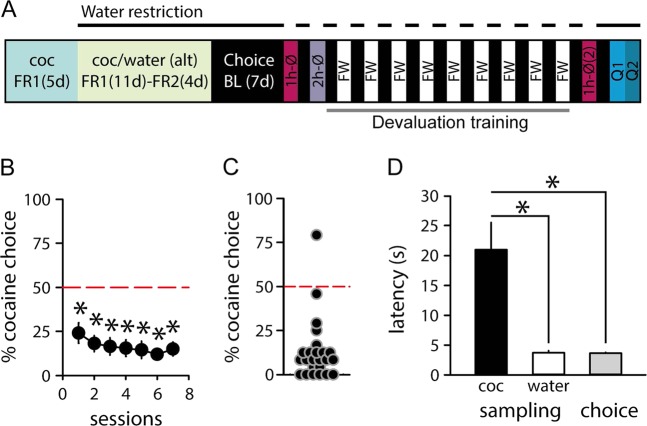
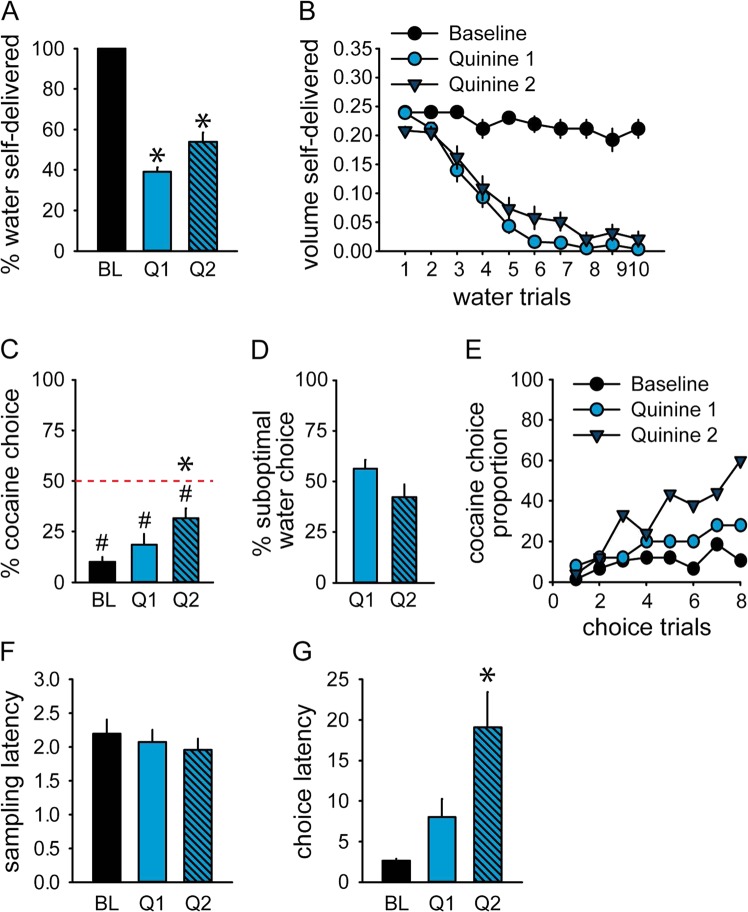
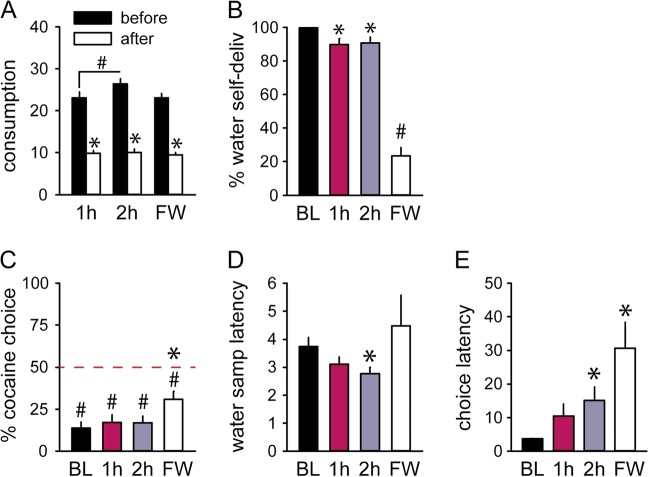
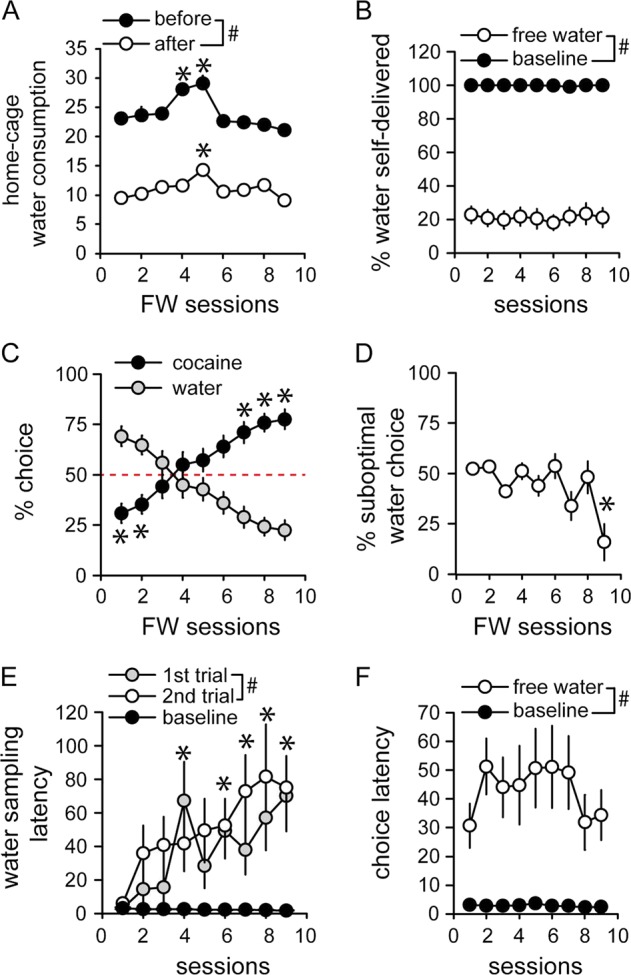
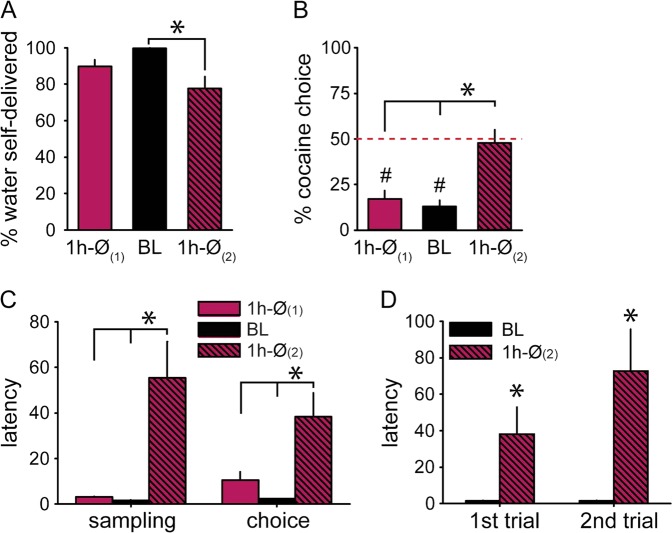
The concept of compulsive cocaine-seeking habits is difficult to reconcile with other evidence showing that humans and even rats remain able to shift their choice away from the drug and toward an alternative nondrug reward, when available. This paradox could dissolve if preference for the nondrug option reflected in fact inflexible habitual decision-making (i.e., fixed in a habitual control mode, with no return to a goal-directed control mode). Previous research in rats has shown that prior drug use can favor habit formation, but whether the resulting habits are inflexible or not is largely unknown. Here we addressed this question by manipulating the value of water in rats that chose between water and cocaine in a discrete-trials procedure. Rats preferred water when thirsty and maintained this preference despite water devaluation by satiation. Only with repeated daily testing under water satiation did they progressively reverse their preference toward cocaine. Additional evidence showed that this progressive reversal of preference reflected in fact new interoceptive discrimination learning. Overall, this study suggests that rats seem to be stuck in a habitual decision-making mode, unable to return to a goal-directed mode upon experiencing a change in options value. It also reveals that inflexible decision-making does not necessarily promote drug choice, but can also under some circumstances favor abstinence.
强迫性可卡因寻求习惯的概念很难与其他证据相协调,这些证据表明,当有可用的替代非药物奖励时,人类甚至老鼠仍然能够将其选择从药物转移到替代非药物奖励上。如果对非药物选择的偏好实际上反映了僵化的习惯性决策(即固定在习惯性控制模式下,没有回归到目标导向控制模式),那么这种悖论就可以消除。先前在大鼠中的研究表明,先前的药物使用可以促进习惯的形成,但由此产生的习惯是否僵化还很大程度上未知。在这里,我们通过在离散试验程序中在水和可卡因之间进行选择的大鼠来操纵水的价值来解决这个问题。当口渴时,大鼠更喜欢水,并且即使通过饱食使水贬值,它们仍保持这种偏好。只有在反复进行每日水饱和测试下,它们才会逐渐将偏好转向可卡因。其他证据表明,这种偏好的逐渐逆转实际上反映了新的内感受性辨别学习。总的来说,这项研究表明,大鼠似乎陷入了习惯性决策模式,在经历了选择价值的变化后,无法回到目标导向模式。它还表明,不灵活的决策不一定会促进药物选择,但在某些情况下也可以促进禁欲。