Rex Julia, Lutz Anna, Faletti Laura E, Albrecht Ute, Thomas Maria, Bode Johannes G, Borner Christoph, Sawodny Oliver, Merfort Irmgard
Institute for System Dynamics, University of Stuttgart, Stuttgart, Germany.
Department of Pharmaceutical Biology and Biotechnology, Albert Ludwigs University Freiburg, Freiburg, Germany.
Front Physiol. 2019 Feb 20;10:117. doi: 10.3389/fphys.2019.00117. eCollection 2019.
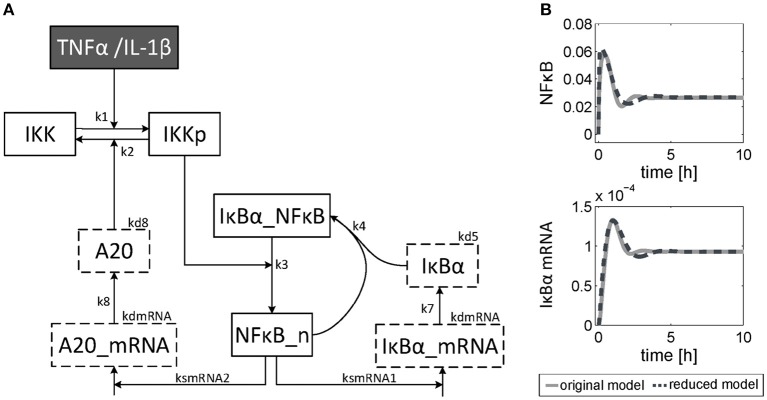
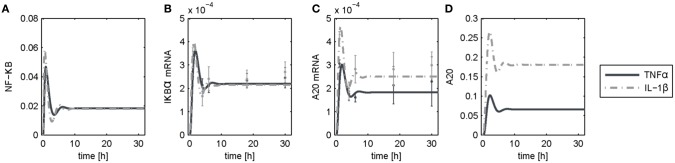
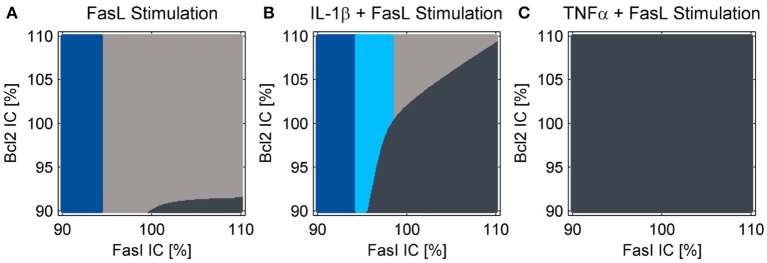
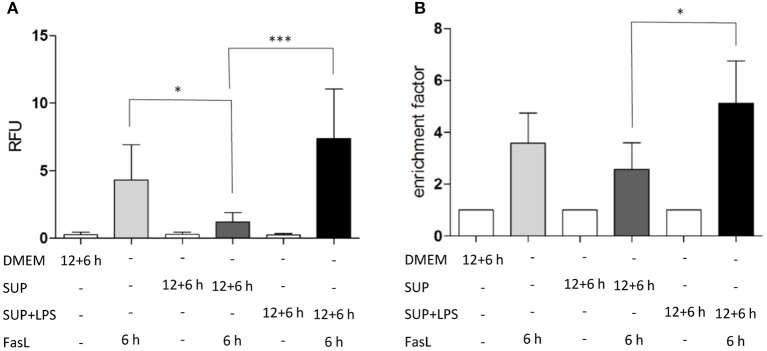
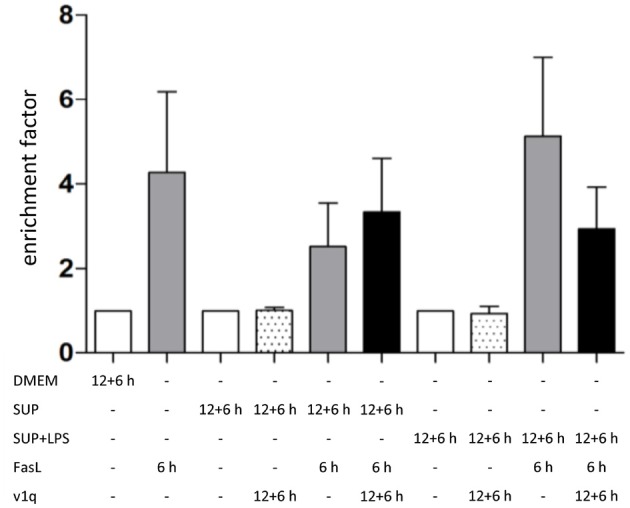
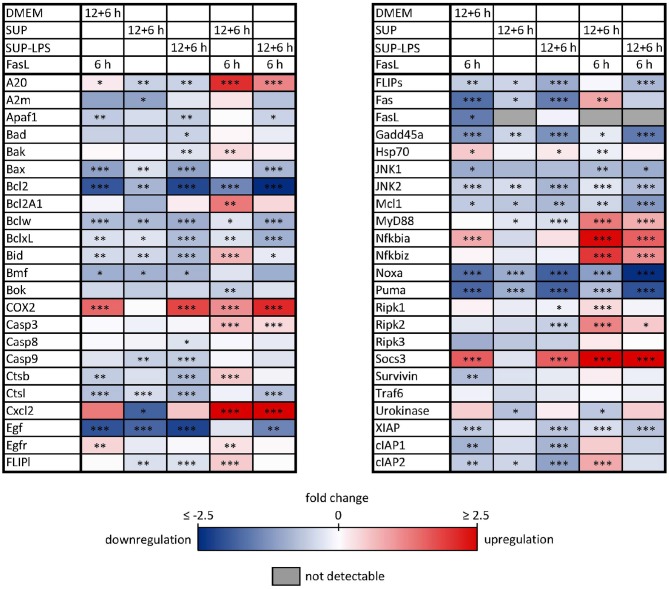
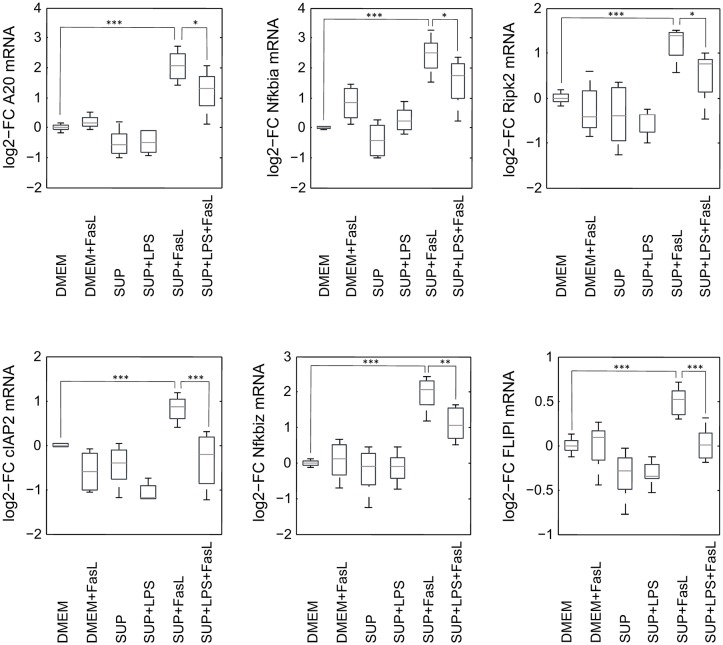
Macrophage-derived cytokines largely influence the behavior of hepatocytes during an inflammatory response. We previously reported that both TNFα and IL-1β, which are released by macrophages upon LPS stimulation, affect Fas ligand (FasL)-induced apoptotic signaling. Whereas TNFα preincubation leads to elevated levels of caspase-3 activity and cell death, pretreatment with IL-1β induces increased caspase-3 activity but keeps cells alive. We now report that IL-1β and TNFα differentially influence NF-κB activity resulting in a differential upregulation of target genes, which may contribute to the distinct effects on cell viability. A reduced NF-κB activation model was established to further investigate the molecular mechanisms which determine the distinct cell fate decisions after IL-1β and TNFα stimulation. To study this aspect in a more physiological setting, we used supernatants from LPS-stimulated bone marrow-derived macrophages (BMDMs). The treatment of hepatocytes with the BMDM supernatant, which contains both IL-1β and TNFα, sensitized to FasL-induced caspase-3 activation and cell death. However, when TNFα action was blocked by neutralizing antibodies, cell viability after stimulation with the BMDM supernatant and FasL increased as compared to single FasL stimulation. This indicates the important role of TNFα in the sensitization of apoptosis in hepatocytes. These results give first insights into the complex interplay between macrophages and hepatocytes which may influence life/death decisions of hepatocytes during an inflammatory reaction of the liver in response to a bacterial infection.
巨噬细胞衍生的细胞因子在炎症反应过程中在很大程度上影响肝细胞的行为。我们之前报道过,巨噬细胞在脂多糖(LPS)刺激下释放的肿瘤坏死因子α(TNFα)和白细胞介素-1β(IL-1β)均会影响Fas配体(FasL)诱导的凋亡信号传导。TNFα预孵育会导致半胱天冬酶-3(caspase-3)活性水平升高和细胞死亡,而用IL-1β预处理会诱导caspase-3活性增加但使细胞存活。我们现在报道,IL-1β和TNFα对核因子κB(NF-κB)活性的影响不同,导致靶基因的上调存在差异,这可能有助于对细胞活力产生不同的影响。建立了一个NF-κB激活降低模型,以进一步研究决定IL-1β和TNFα刺激后不同细胞命运决定的分子机制。为了在更生理的环境中研究这一方面,我们使用了脂多糖刺激的骨髓来源巨噬细胞(BMDM)的上清液。用同时含有IL-1β和TNFα的BMDM上清液处理肝细胞,会使其对FasL诱导的caspase-3激活和细胞死亡更加敏感。然而,当中和抗体阻断TNFα的作用时,与单一FasL刺激相比,用BMDM上清液和FasL刺激后的细胞活力增加。这表明TNFα在肝细胞凋亡致敏中起重要作用。这些结果初步揭示了巨噬细胞与肝细胞之间复杂的相互作用,这可能会影响肝脏在细菌感染炎症反应期间肝细胞的生死抉择。