Department of Experimental Psychology, University of Oxford, Oxford, United Kingdom.
Wellcome Centre for Integrative Neuroimaging, University of Oxford, Oxford, United Kingdom.
Elife. 2019 Mar 7;8:e42816. doi: 10.7554/eLife.42816.
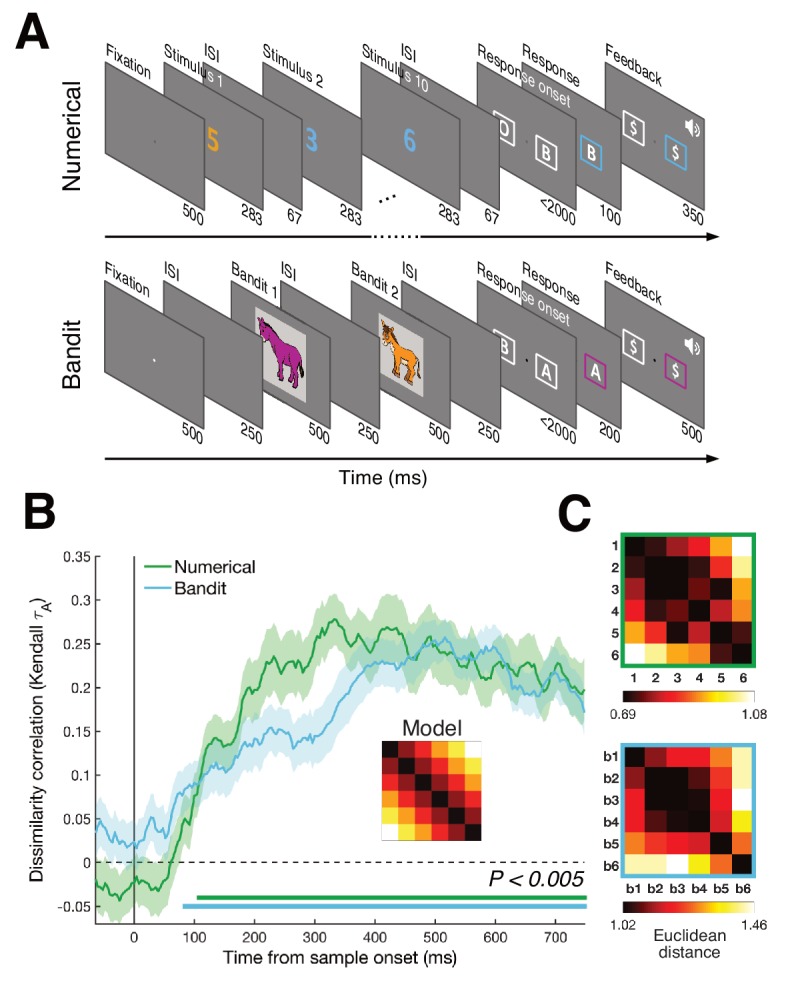
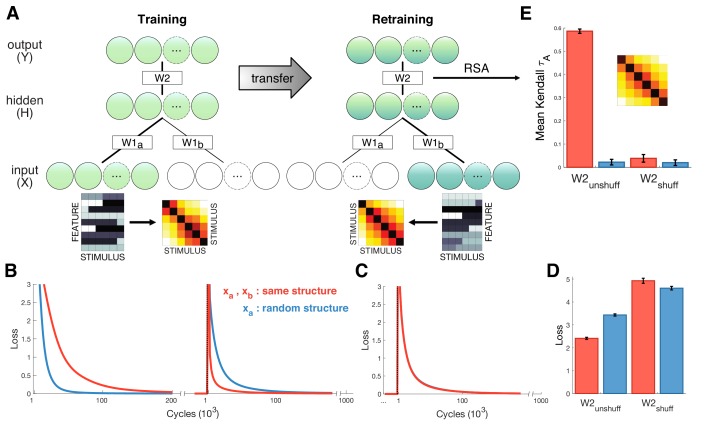
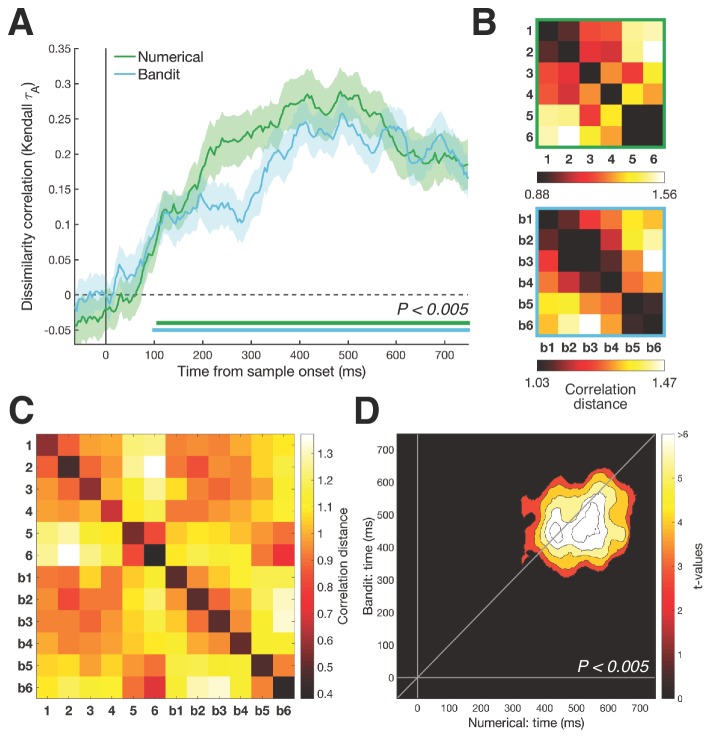
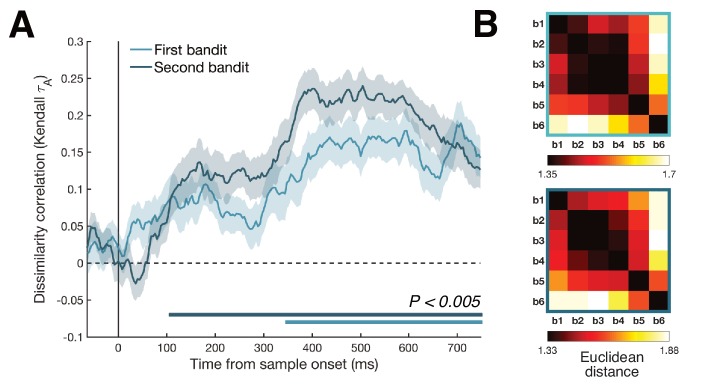
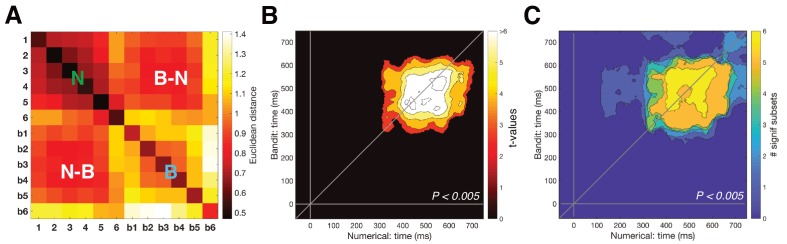
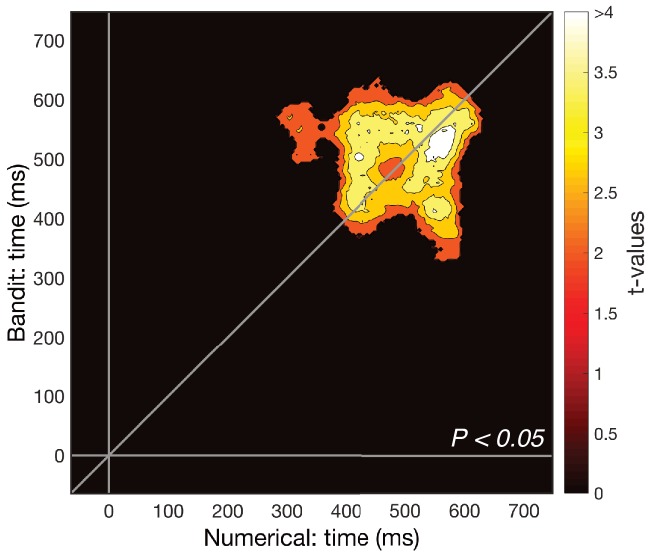
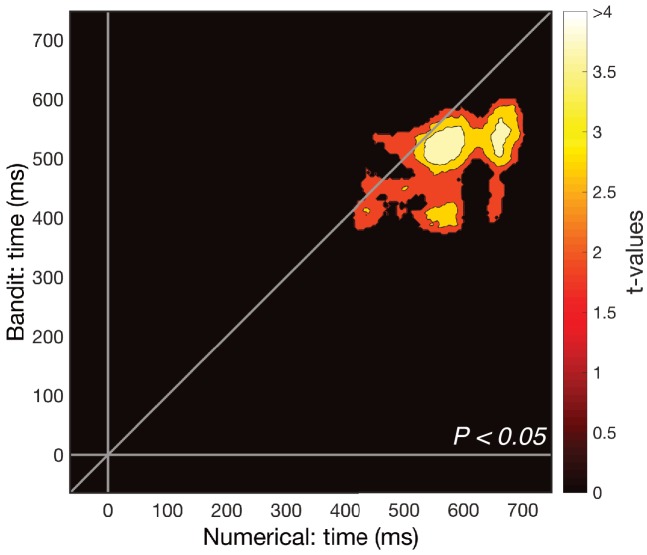
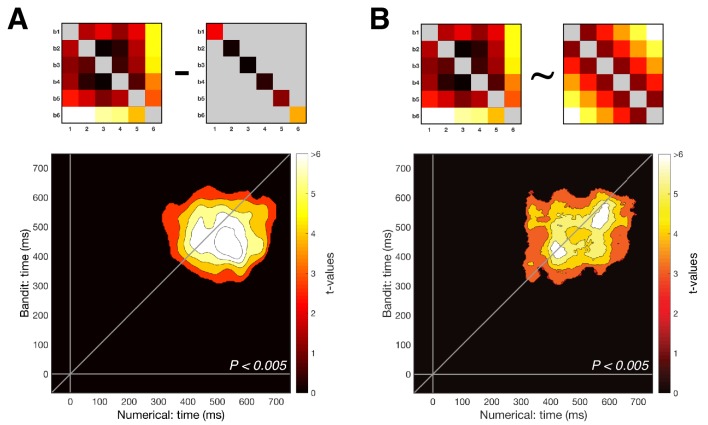
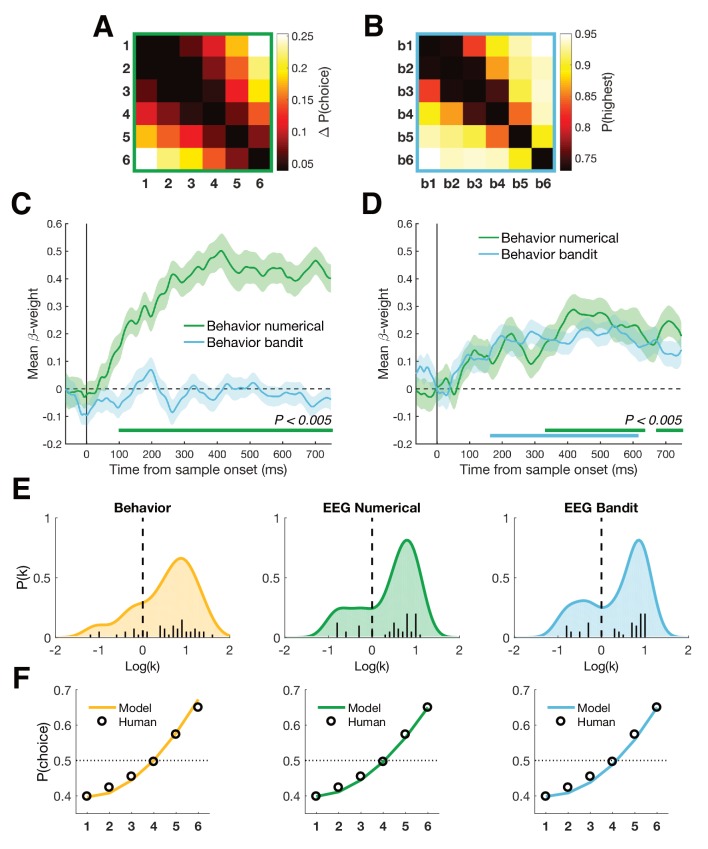
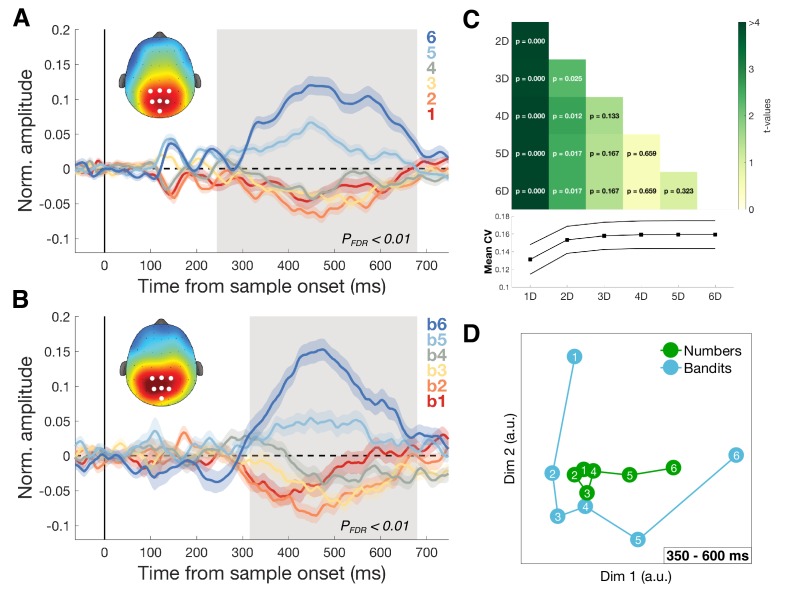
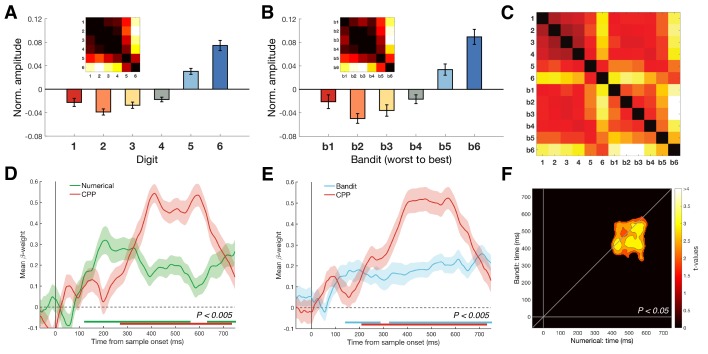
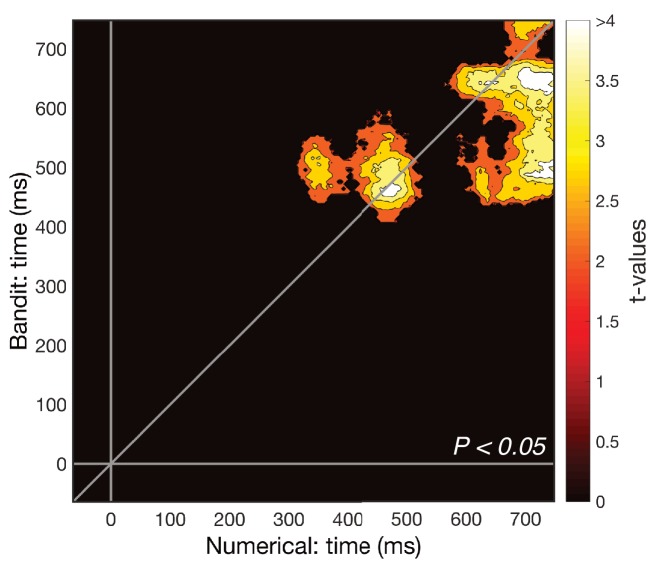
Humans can learn abstract concepts that describe invariances over relational patterns in data. One such concept, known as magnitude, allows stimuli to be compactly represented on a single dimension (i.e. on a mental line). Here, we measured representations of magnitude in humans by recording neural signals whilst they viewed symbolic numbers. During a subsequent reward-guided learning task, the neural patterns elicited by novel complex visual images reflected their payout probability in a way that suggested they were encoded onto the same mental number line, with 'bad' bandits sharing neural representation with 'small' numbers and 'good' bandits with 'large' numbers. Using neural network simulations, we provide a mechanistic model that explains our findings and shows how structural alignment can promote transfer learning. Our findings suggest that in humans, learning about reward probability is accompanied by structural alignment of value representations with neural codes for the abstract concept of magnitude.
人类可以学习描述数据中关系模式不变性的抽象概念。其中一个概念称为“数量”,它允许刺激在单个维度上(即在心理线上)进行紧凑表示。在这里,我们通过记录人类在观看符号数字时的神经信号来测量数量的表示。在随后的奖励引导学习任务中,新的复杂视觉图像引起的神经模式以一种表明它们被编码到相同的心理数字线上的方式反映了它们的支付概率,其中“坏”的赌徒与“小”的数字具有相同的神经表示,而“好”的赌徒与“大”的数字具有相同的神经表示。使用神经网络模拟,我们提供了一个机械模型,解释了我们的发现,并展示了结构对齐如何促进迁移学习。我们的发现表明,在人类中,对奖励概率的学习伴随着价值表示与数量的抽象概念的神经编码的结构对齐。