University of Colorado Anschutz Medical Campus, Department of Medicine, Aurora, CO, United States of America.
ClinImmune Labs Aurora, CO, United States of America.
PLoS One. 2019 Mar 7;14(3):e0213179. doi: 10.1371/journal.pone.0213179. eCollection 2019.
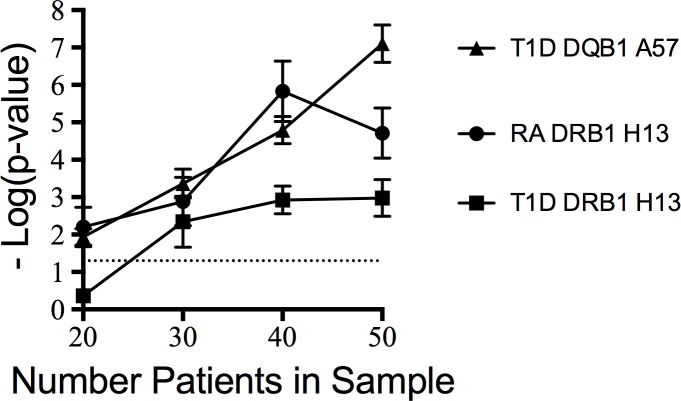
Pulmonary alveolar proteinosis (PAP) is a rare lung disease characterized by the accumulation of pulmonary surfactant in alveolar macrophages and alveoli, resulting in respiratory impairment and an increased risk of opportunistic infections. Autoimmune PAP is an autoimmune lung disease that is caused by autoantibodies directed against granulocyte-macrophage colony-stimulating factor (GM-CSF). A shared feature among many autoimmune diseases is a distinct genetic association to HLA alleles. In the present study, we HLA-typed patients with autoimmune PAP to determine if this disease had any HLA association. We analyzed amino acid and allele associations for HLA-A, B, C, DRB1, DQB1, DPB1, DRB3, DRB4 and DRB5 in 41 autoimmune PAP patients compared to 1000 ethnic-matched controls and did not find any HLA association with autoimmune PAP. Collectively, these data may suggest the absence of a genetic association to the HLA in the development of autoimmune PAP.
肺泡蛋白沉积症(PAP)是一种罕见的肺部疾病,其特征是肺泡巨噬细胞和肺泡中肺表面活性物质的积累,导致呼吸功能障碍和机会性感染的风险增加。自身免疫性 PAP 是一种自身免疫性肺部疾病,由针对粒细胞-巨噬细胞集落刺激因子(GM-CSF)的自身抗体引起。许多自身免疫性疾病的一个共同特征是与 HLA 等位基因有明显的遗传关联。在本研究中,我们对自身免疫性 PAP 患者进行了 HLA 分型,以确定该疾病是否与 HLA 有关。我们分析了 41 例自身免疫性 PAP 患者与 1000 名种族匹配对照者的 HLA-A、B、C、DRB1、DQB1、DPB1、DRB3、DRB4 和 DRB5 氨基酸和等位基因关联,未发现自身免疫性 PAP 与 HLA 有任何关联。综上所述,这些数据可能表明 HLA 与自身免疫性 PAP 的发生无关。