Department of Physiology, Faculty of Medicine, University of Debrecen, 4032 Debrecen, Hungary.
Department of Immunology, Faculty of Medicine, University of Debrecen, 4032 Debrecen, Hungary.
Molecules. 2019 Mar 6;24(5):918. doi: 10.3390/molecules24050918.
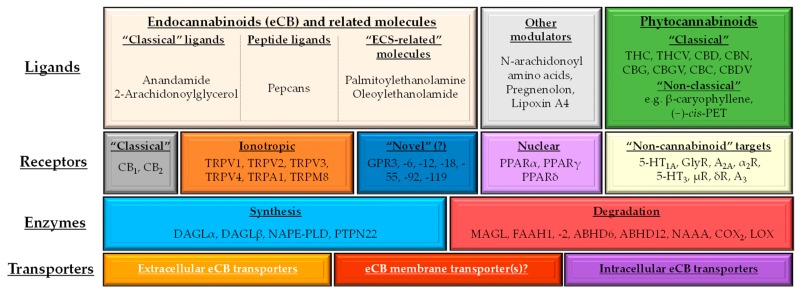
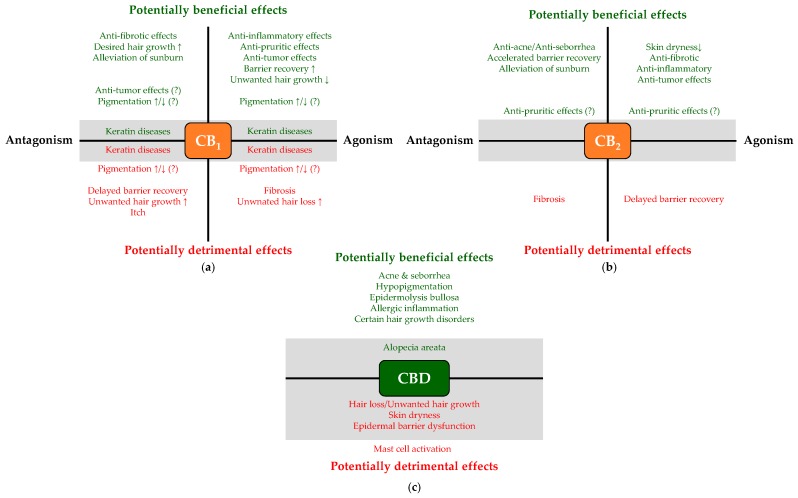
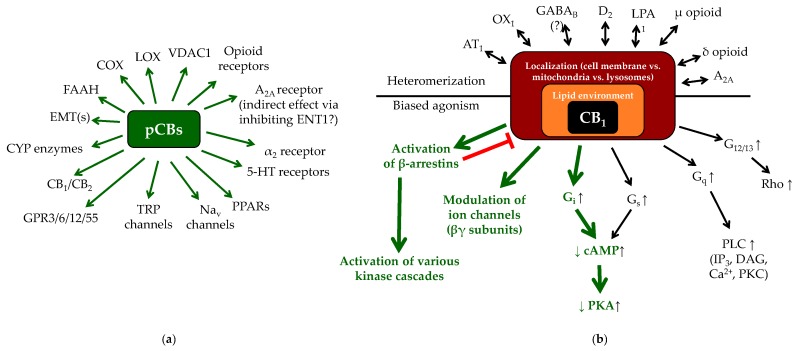
The endocannabinoid system (ECS) has lately been proven to be an important, multifaceted homeostatic regulator, which influences a wide-variety of physiological processes all over the body. Its members, the endocannabinoids (eCBs; e.g., anandamide), the eCB-responsive receptors (e.g., CB₁, CB₂), as well as the complex enzyme and transporter apparatus involved in the metabolism of the ligands were shown to be expressed in several tissues, including the skin. Although the best studied functions over the ECS are related to the central nervous system and to immune processes, experimental efforts over the last two decades have unambiguously confirmed that cutaneous cannabinoid ("c[ut]annabinoid") signaling is deeply involved in the maintenance of skin homeostasis, barrier formation and regeneration, and its dysregulation was implicated to contribute to several highly prevalent diseases and disorders, e.g., atopic dermatitis, psoriasis, scleroderma, acne, hair growth and pigmentation disorders, keratin diseases, various tumors, and itch. The current review aims to give an overview of the available skin-relevant endo- and phytocannabinoid literature with a special emphasis on the putative translational potential, and to highlight promising future research directions as well as existing challenges.
内源性大麻素系统 (ECS) 最近被证明是一种重要的、多方面的体内平衡调节剂,它影响着全身各种生理过程。其成员,内源性大麻素(如花生四烯酸乙醇胺)、内源性大麻素反应受体(如 CB₁、CB₂)以及参与配体代谢的复杂酶和转运体装置,都被发现在包括皮肤在内的几种组织中表达。尽管对 ECS 的研究最多的功能与中枢神经系统和免疫过程有关,但过去二十年的实验努力明确证实,皮肤大麻素(“c[ut]anabinoid”)信号参与了皮肤内稳态、屏障形成和再生的维持,其失调被认为与几种高度流行的疾病和障碍有关,例如特应性皮炎、银屑病、硬皮病、痤疮、毛发生长和色素沉着障碍、角蛋白疾病、各种肿瘤和瘙痒。本综述旨在概述现有的与皮肤相关的内源性和植物大麻素文献,特别强调其潜在的转化潜力,并突出有前途的未来研究方向和现有挑战。