Department of Neurobiology and Anatomy, Drexel University College of Medicine, Philadelphia, PA, United States.
Neuroscience Institute, Georgia State University, Atlanta, GA, United States.
Front Neural Circuits. 2019 Feb 21;13:10. doi: 10.3389/fncir.2019.00010. eCollection 2019.
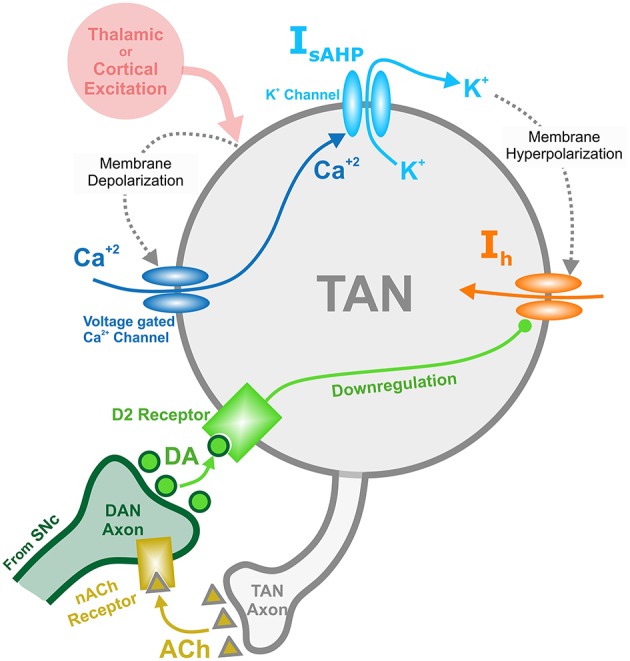
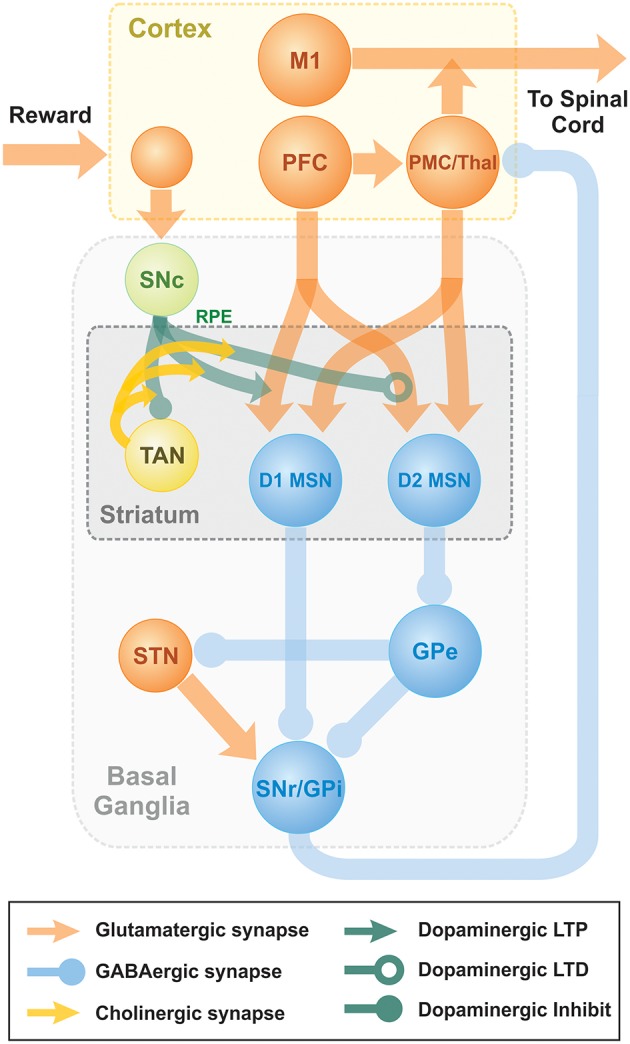
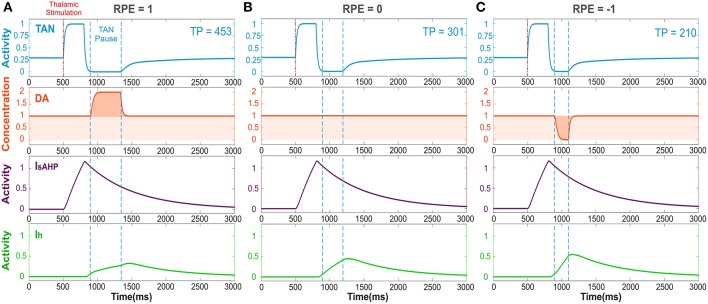
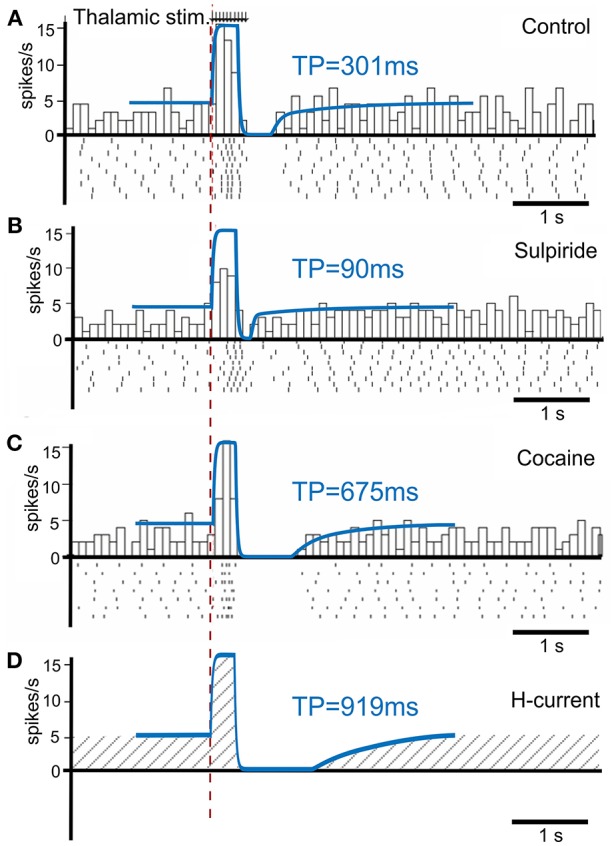
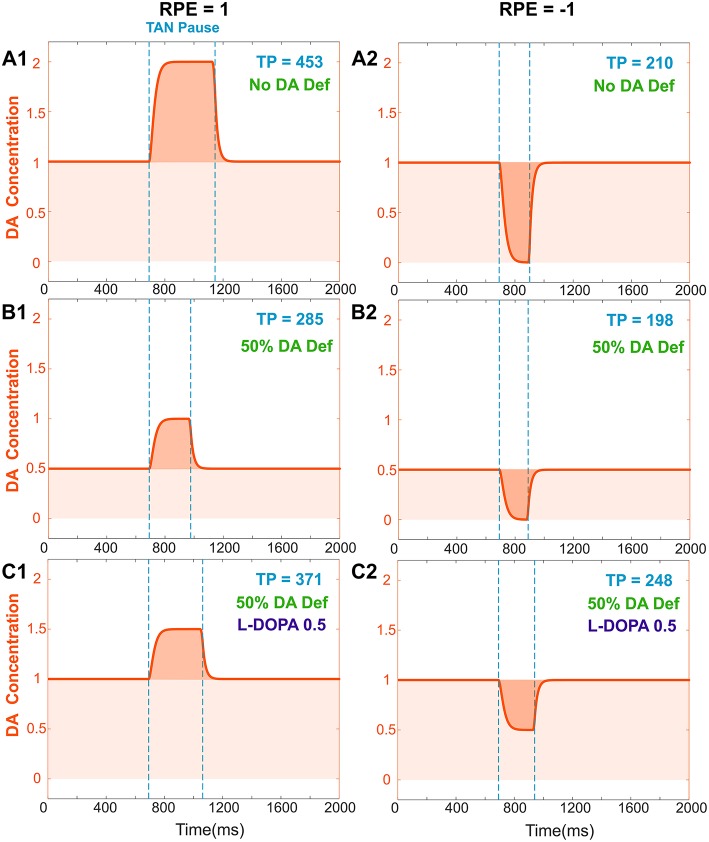
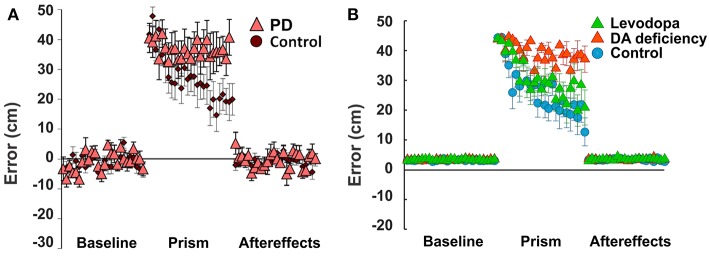
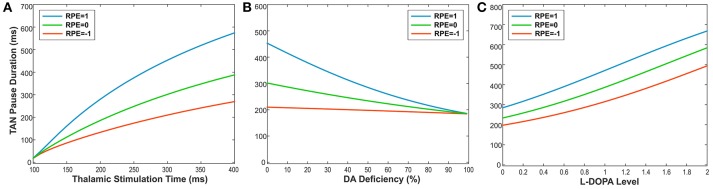
In this study, we explore the functional role of striatal cholinergic interneurons, hereinafter referred to as tonically active neurons (TANs), via computational modeling; specifically, we investigate the mechanistic relationship between TAN activity and dopamine variations and how changes in this relationship affect reinforcement learning in the striatum. TANs pause their tonic firing activity after excitatory stimuli from thalamic and cortical neurons in response to a sensory event or reward information. During the pause striatal dopamine concentration excursions are observed. However, functional interactions between the TAN pause and striatal dopamine release are poorly understood. Here we propose a TAN activity-dopamine relationship model and demonstrate that the TAN pause is likely a time window to gate phasic dopamine release and dopamine variations reciprocally modulate the TAN pause duration. Furthermore, this model is integrated into our previously published model of reward-based motor adaptation to demonstrate how phasic dopamine release is gated by the TAN pause to deliver reward information for reinforcement learning in a timely manner. We also show how TAN-dopamine interactions are affected by striatal dopamine deficiency to produce poor performance of motor adaptation.
在这项研究中,我们通过计算建模探索纹状体胆碱能中间神经元(以下简称持续活动神经元(TAN))的功能作用;具体来说,我们研究了 TAN 活性与多巴胺变化之间的机制关系,以及这种关系的变化如何影响纹状体中的强化学习。TAN 会在来自丘脑和皮质神经元的兴奋性刺激后暂停其持续放电活动,以响应感觉事件或奖励信息。在暂停期间,观察到纹状体多巴胺浓度的波动。然而,TAN 暂停和纹状体多巴胺释放之间的功能相互作用尚不清楚。在这里,我们提出了一个 TAN 活动-多巴胺关系模型,并证明 TAN 暂停很可能是一个门控相位多巴胺释放的时间窗口,并且多巴胺变化相互调节 TAN 暂停持续时间。此外,该模型被整合到我们之前发布的基于奖励的运动适应模型中,以证明相位多巴胺释放如何通过 TAN 暂停及时传递奖励信息,用于强化学习。我们还展示了 TAN-多巴胺相互作用如何受到纹状体多巴胺缺乏的影响,从而导致运动适应表现不佳。