Thorvaldsen Tonje, Lund Lars H
Karolinska Institutet, Department of Medicine Stockholm, Sweden.
Card Fail Rev. 2019 Feb;5(1):24-26. doi: 10.15420/cfr.2018.35.1.
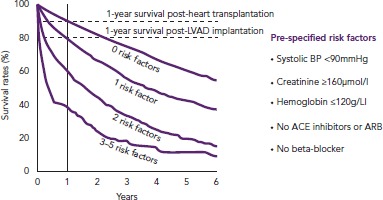
Despite advances in heart failure treatment, advanced heart failure affects 5-10% of people with the condition and is associated with poor prognosis. Selection for heart transplantation and left ventricular assist device implantation is a rigorous and validated process performed by specialised heart failure teams. This entails comprehensive assessment of complex diagnostic tests and risk scores, and selecting patients with the optimal benefit-risk profile. In contrast, referral for advanced heart failure evaluation is an arbitrary and poorly studied process, performed by generalists, and patients are often referred too late or not at all. The study elaborates on the differences between selection and referral and proposes some simple strategies for optimising timely referral for advanced heart failure evaluation.
尽管心力衰竭治疗取得了进展,但晚期心力衰竭仍影响着5%至10%的患者,且预后较差。心脏移植和左心室辅助装置植入的选择是一个由专业心力衰竭团队执行的严格且经过验证的过程。这需要对复杂的诊断测试和风险评分进行全面评估,并选择具有最佳获益风险特征的患者。相比之下,晚期心力衰竭评估的转诊是一个随意且研究不足的过程,由全科医生进行,患者往往转诊过晚或根本没有转诊。该研究阐述了选择和转诊之间的差异,并提出了一些简单的策略,以优化晚期心力衰竭评估的及时转诊。