Fu Hao, Cheng Lingxiao, Jin Yuchen, Cheng Lin, Liu Min, Chen Libo
Department of Nuclear Medicine, Shanghai Jiao Tong University Affiliated Sixth People's Hospital, 600 Yishan Road, Shanghai 200233, China.
Department of Nuclear Medicine, Sir Run Run Shaw Hospital, School of Medicine, Zhejiang University, 3 Qingchun East Road, Hangzhou 310016, Zhejiang, China.
Mol Ther Oncolytics. 2019 Feb 5;12:235-245. doi: 10.1016/j.omto.2019.01.007. eCollection 2019 Mar 29.
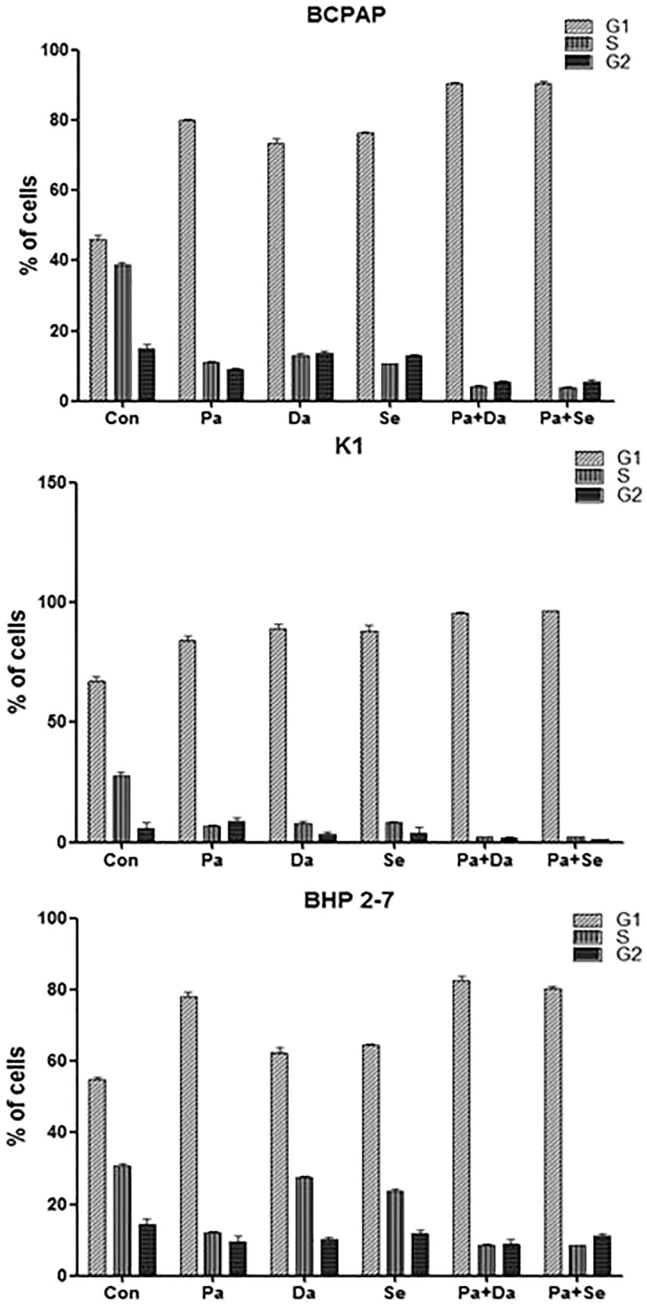
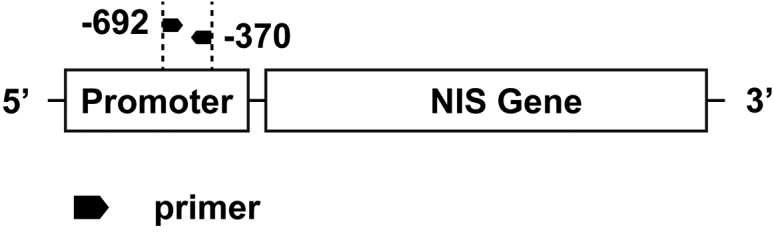
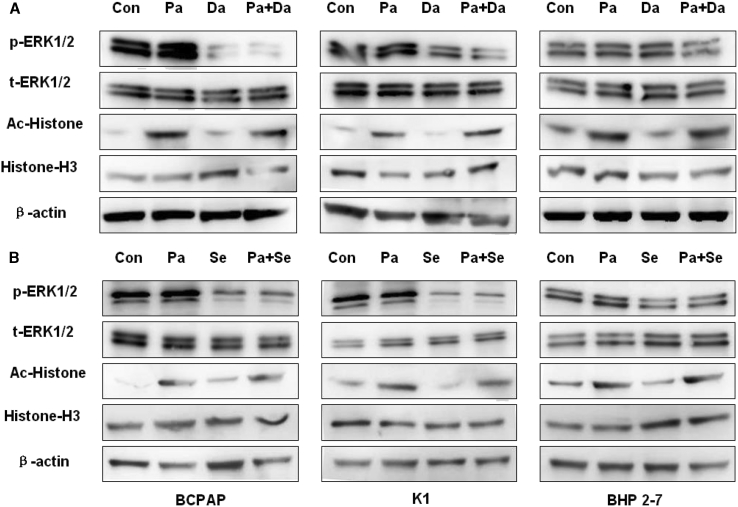
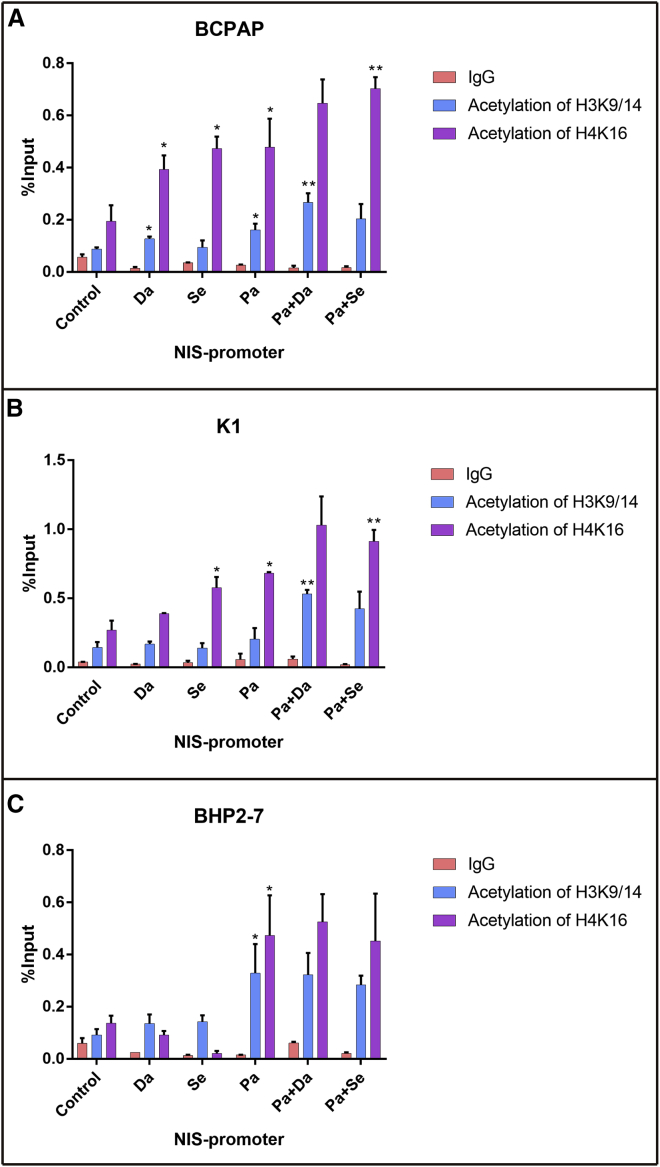
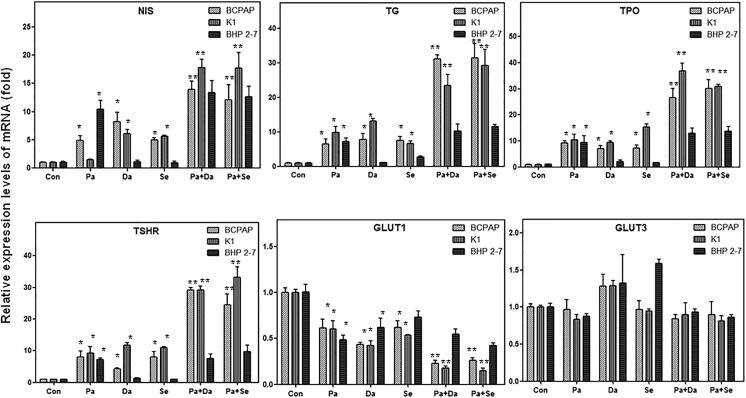
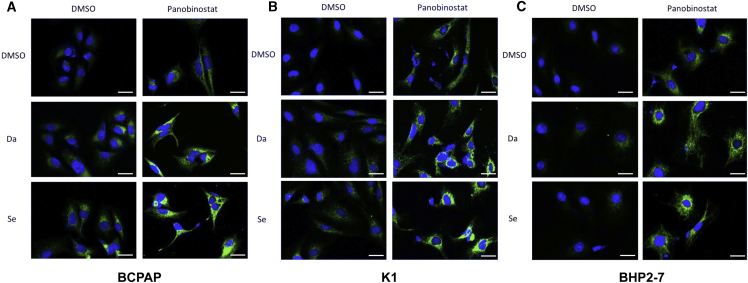
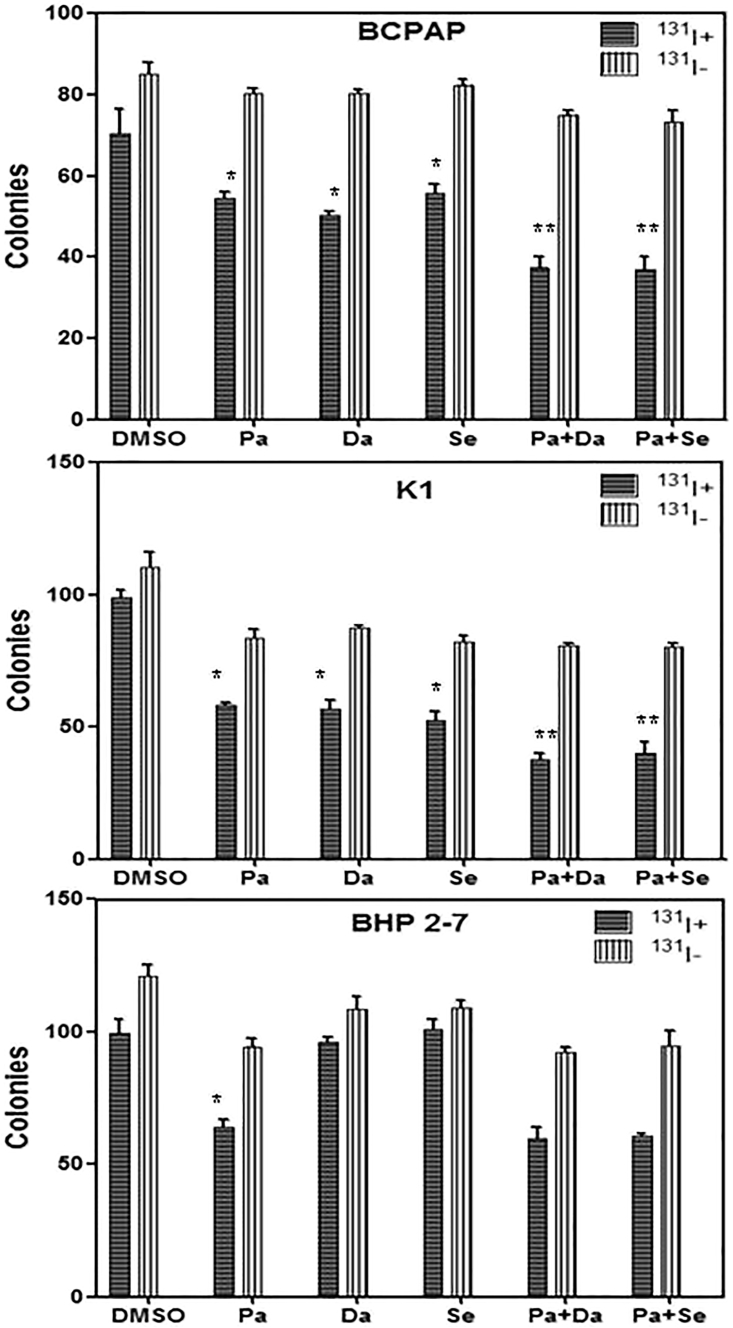
Clinical efficacy of redifferentiation therapy with histone deacetylase inhibitor (HDACi) for lethal radioiodine-refractory papillary thyroid cancer (RR-PTC) is urgently needed to be improved. Given that the impairment of histone acetylation is a mechanism in -mitogen-activated protein kinase (MAPK)-induced aberrant silencing of thyroid iodine-metabolizing genes, dual inhibition of HDAC and MAPK may produce a more favorable effect. In this study, we treated -mutant (BCPAP and K1) and -wild-type (BHP 2-7) cells with HDACi (panobinostat) and MAPK inhibitor (dabrafenib or selumetinib), alone or in combination, and we tested the expression of iodine- and glucose-metabolizing genes, radioiodine uptake and efflux, and toxicity. We found that panobinostat alone increased iodine-metabolizing gene expression, promoted radioiodine uptake and toxicity, and suppressed expression in all the cells. However, MAPKi (dabrafenib or selumetinib) induced these effects only in -mutant cells. Combined treatment with panobinostat and MAPKi (dabrafenib or selumetinib) displayed a more robust -dependent redifferentiation effect than panobinostat alone via further improving the acetylation level of histone at the sodium-iodide symporter () promoter. In conclusion, MAPK inhibitors enhance HDACi-induced redifferentiation in PTC cells harboring , warranting animal and clinical trials.
迫切需要提高组蛋白去乙酰化酶抑制剂(HDACi)对致死性放射性碘难治性乳头状甲状腺癌(RR-PTC)进行再分化治疗的临床疗效。鉴于组蛋白乙酰化受损是丝裂原活化蛋白激酶(MAPK)诱导甲状腺碘代谢基因异常沉默的一种机制,对HDAC和MAPK的双重抑制可能会产生更有利的效果。在本研究中,我们单独或联合使用HDACi(帕比司他)和MAPK抑制剂(达拉非尼或司美替尼)处理BRAF突变型(BCPAP和K1)和BRAF野生型(BHP 2-7)细胞,并检测碘和葡萄糖代谢基因的表达、放射性碘摄取和流出以及毒性。我们发现,单独使用帕比司他可增加碘代谢基因的表达,促进放射性碘摄取和毒性,并抑制所有细胞中的BRAF表达。然而,MAPK抑制剂(达拉非尼或司美替尼)仅在BRAF突变型细胞中诱导这些效应。帕比司他与MAPK抑制剂(达拉非尼或司美替尼)联合治疗通过进一步提高钠碘同向转运体(NIS)启动子处组蛋白的乙酰化水平,比单独使用帕比司他显示出更强的BRAF依赖性再分化效应。总之,MAPK抑制剂可增强HDACi诱导的携带BRAF的PTC细胞的再分化,值得进行动物和临床试验。