Department of Pathobiology, School of Veterinary Medicine, St. George's University, Grenada.
Mass Spectrometry Center, Department of Chemistry, Oregon State University, Corvallis, OR, USA.
Fish Shellfish Immunol. 2019 May;88:301-307. doi: 10.1016/j.fsi.2019.02.065. Epub 2019 Mar 6.
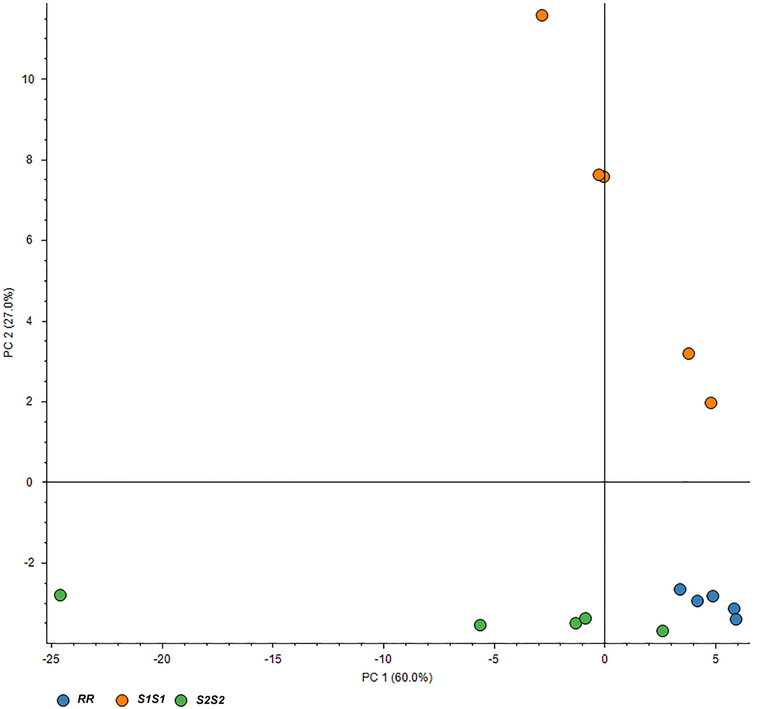
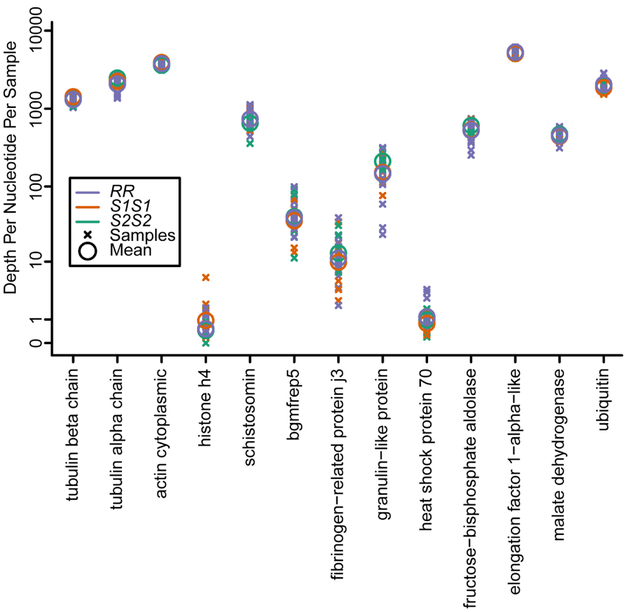
Freshwater snails are obligate intermediate hosts for numerous parasitic trematodes, most notably schistosomes. Schistosomiasis is a devastating human and veterinary illness, which is primarily controlled by limiting the transmission of these parasites from their intermediate snail hosts. Understanding how this transmission occurs, as well as the basic immunobiology of these snails may be important for controlling this disease in the future. Allelic variation in the Guadeloupe resistance complex (GRC) of Biomphalaria glabrata partially determines their susceptibility to parasitic infection, and can influence the microbiome diversity and microbial defenses in the hemolymph of these snails. In the present study, we examine the most abundant proteins present in the hemolymph of snails that are resistant or susceptible to schistosomes, as determined by their GRC genotype. Using proteomic analysis, we found that snails with different GRC genotypes have differentially abundant hemolymph proteins that are not explained by differences in transcription. There are 13 revealed hemolymph proteins that differ significantly between resistant and susceptible genotypes, nearly 40% of which are involved in immune responses. These findings build on the mounting evidence that genes in the GRC region have multiple physiological roles, and likely contribute more extensively to the general immune response than previously believed. These data also raise the intriguing possibility that the GRC region controls resistance to schistosomes, not directly, but indirectly via its effects on the snail's proteome and potentially its microbiome.
淡水蜗牛是许多寄生吸虫的专性中间宿主,尤其是血吸虫。血吸虫病是一种严重的人类和兽医疾病,主要通过限制这些寄生虫从其中间宿主蜗牛传播来控制。了解这种传播方式以及这些蜗牛的基本免疫生物学可能对未来控制这种疾病很重要。瓜德罗普岛抗性复合体(GRC)中 B. glabrata 的等位基因变异部分决定了它们对寄生虫感染的易感性,并可能影响这些蜗牛血液中的微生物多样性和微生物防御。在本研究中,我们检查了通过 GRC 基因型确定对血吸虫具有抗性或易感性的蜗牛血液中最丰富的蛋白质。使用蛋白质组学分析,我们发现具有不同 GRC 基因型的蜗牛具有血液中差异丰富的蛋白质,而这些蛋白质的转录差异无法解释。在抗性和易感基因型之间有 13 种明显不同的血液蛋白,其中近 40%与免疫反应有关。这些发现进一步证明了 GRC 区域中的基因具有多种生理作用,并且可能比以前认为的更广泛地参与一般免疫反应。这些数据还提出了一个有趣的可能性,即 GRC 区域通过其对蜗牛蛋白质组和潜在微生物组的影响,间接控制对血吸虫的抗性,而不是直接控制。