College of Pharmacy, Jinan University, 510632, Guangzhou, China.
Guangdong Province Key Laboratory of Pharmacodynamic Constituents of Traditional Chinese Medicine and New Drugs Research, Jinan University, 510632, Guangzhou, China.
Cell Death Dis. 2019 Mar 8;10(3):232. doi: 10.1038/s41419-019-1470-z.
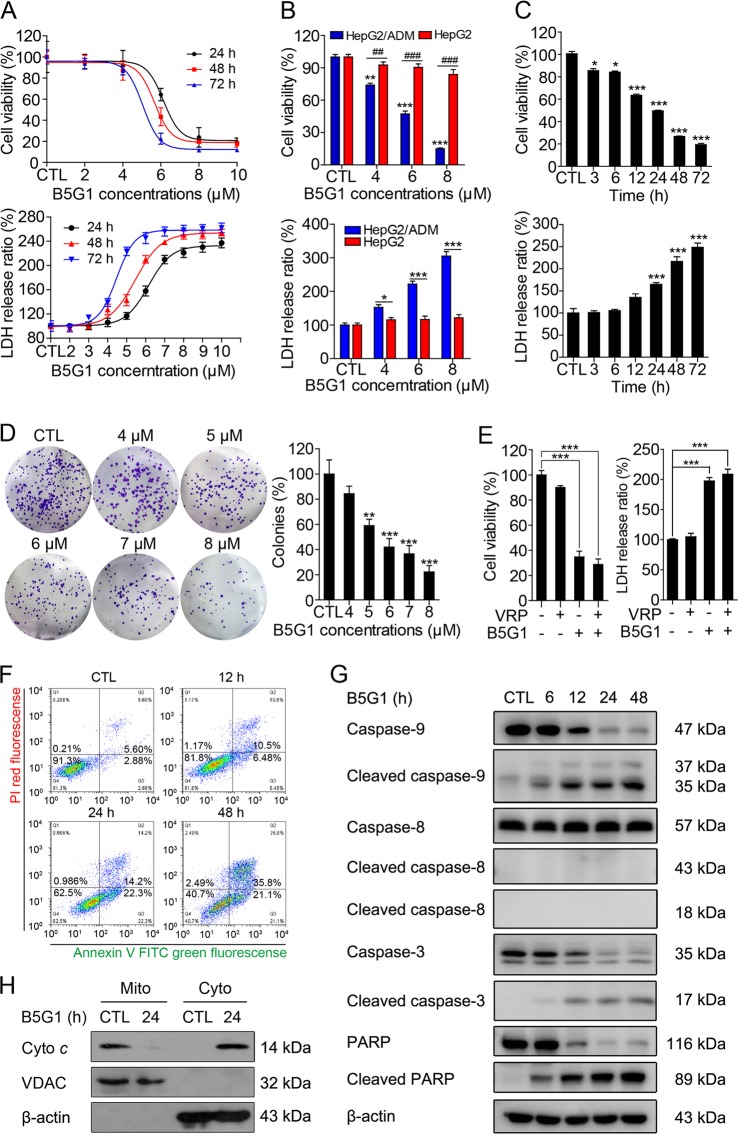
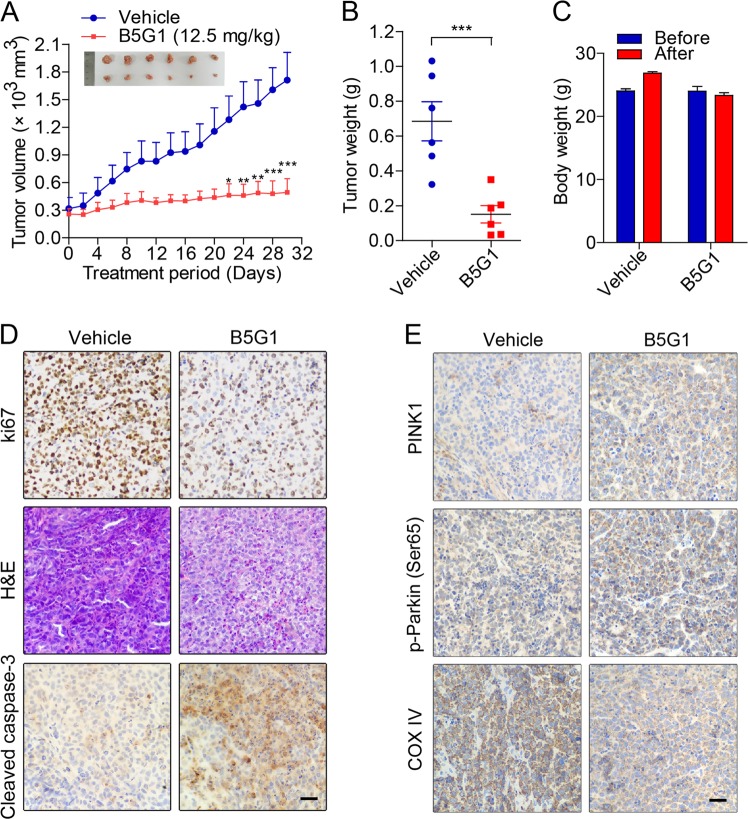
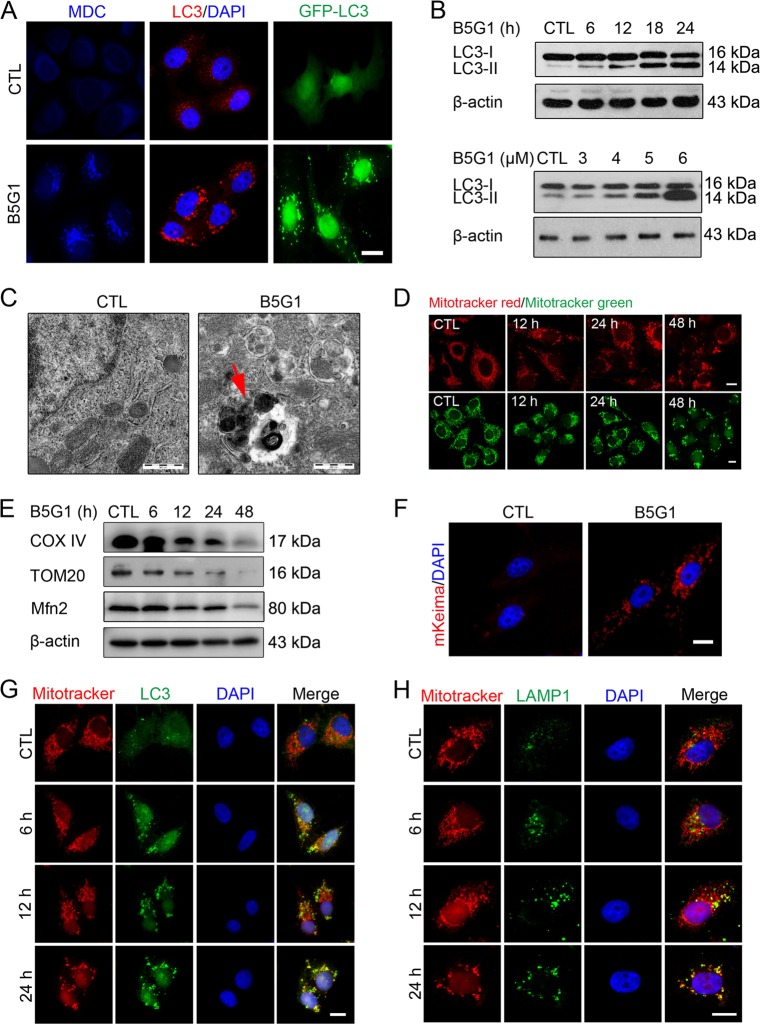
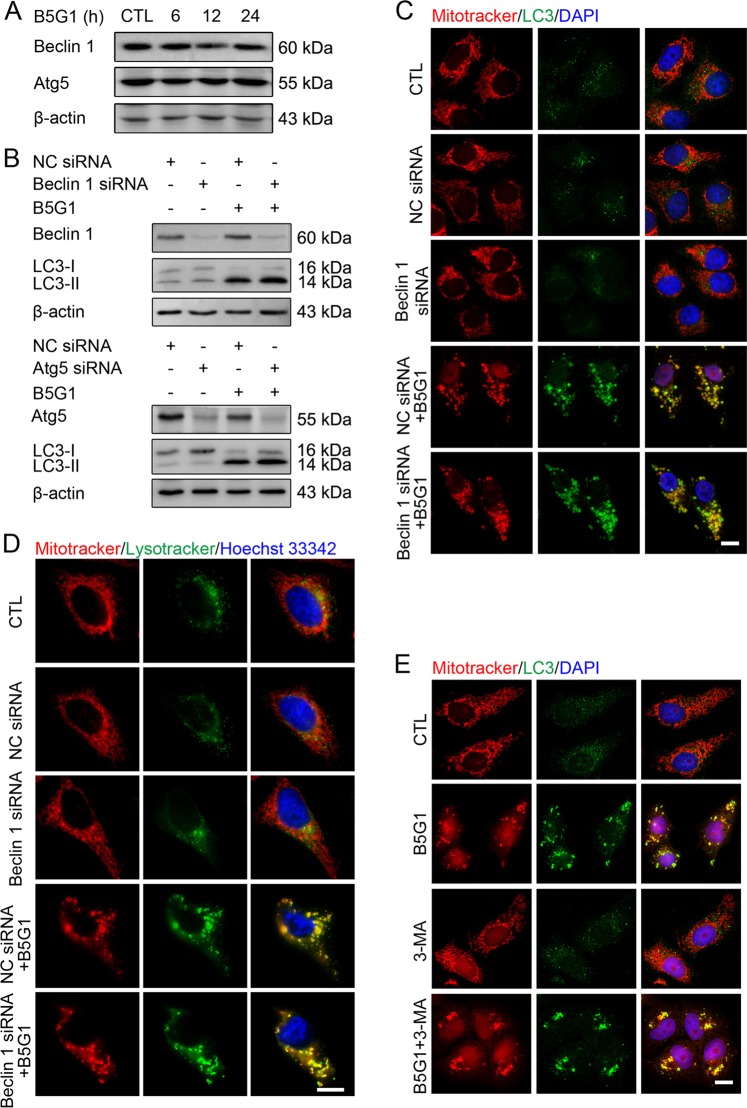
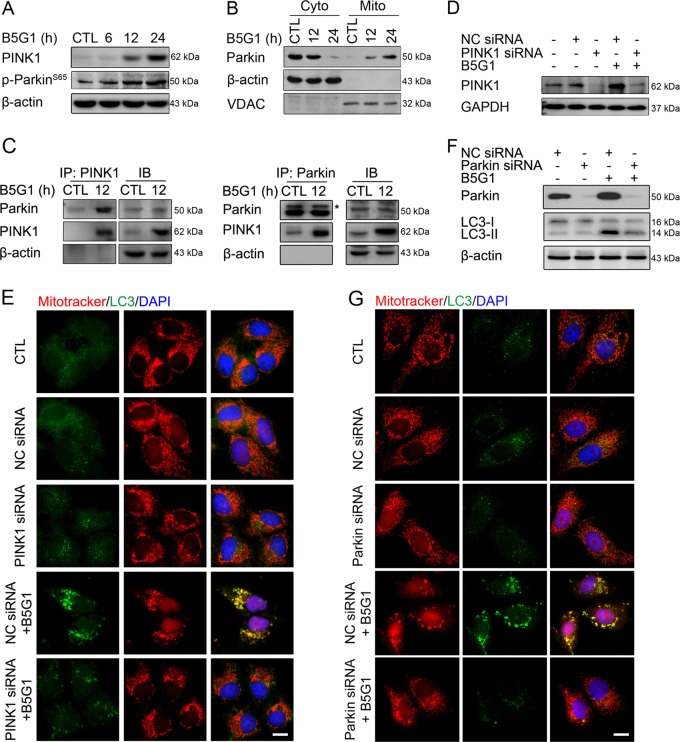
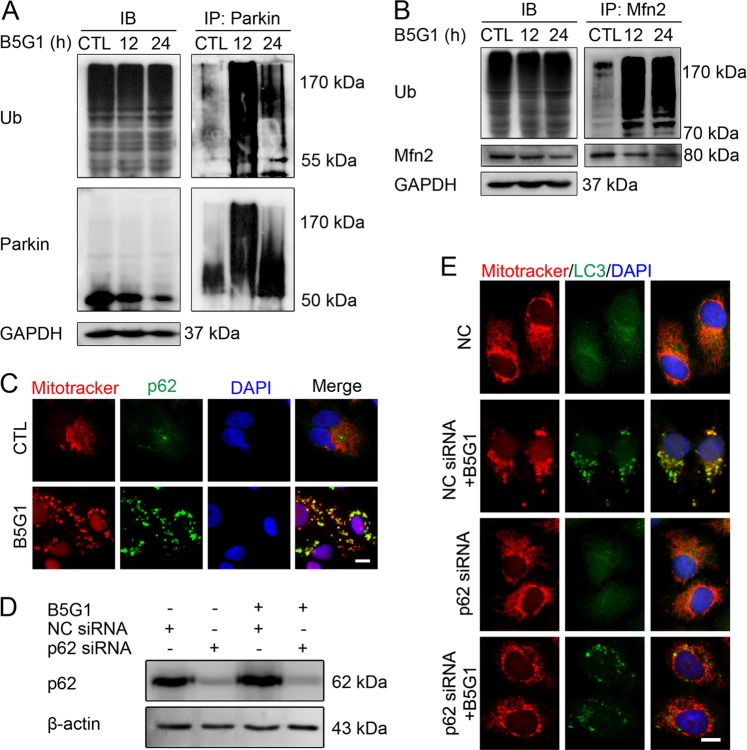
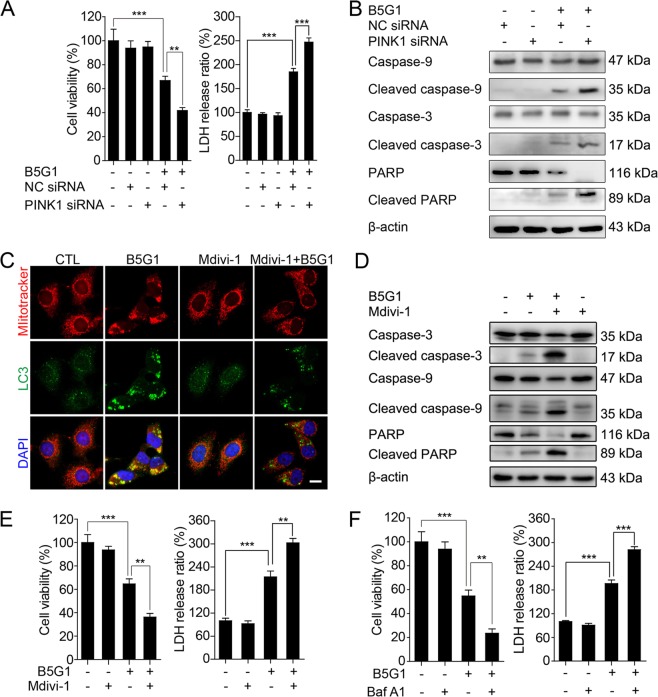
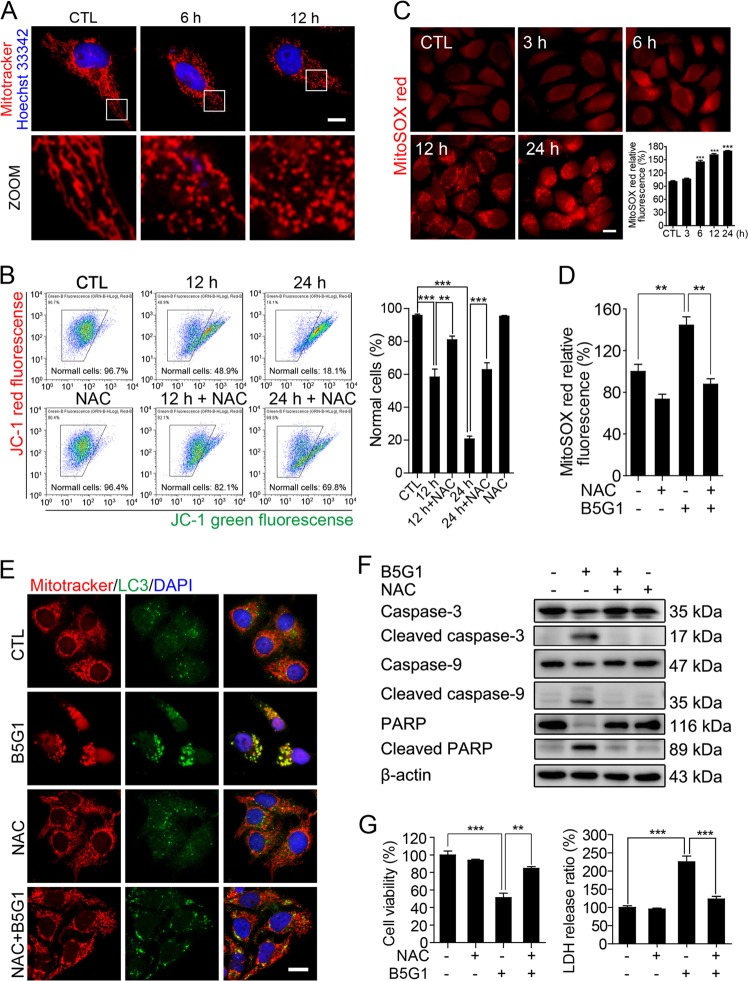
Betulinic acid (BA) and its derivatives are a class of high-profile drug candidates, but their anticancer effects on resistant cancer have rarely been reported. Although a few studies indicated mitophagy is related with drug resistance, its role in different cancer types and anticancer agents treatment remains largely unclear. Here, we find that B5G1, a new derivative of BA, induces cell death in multidrug resistant cancer cells HepG2/ADM and MCF-7/ADR through mitochondrial-apoptosis pathway. B5G1 also triggers mitophagy independent on Atg5/Beclin 1. Further mechanistic study indicates that B5G1 upregulates PTEN-induced putative kinase 1 (PINK1) to recruit Parkin to mitochondria followed by ubiquitination of Mfn2 to initiate mitophagy. Inhibition of mitophagy by PINK1 siRNA, mdivi-1, or bafilomycin A1 (Baf A1) promotes B5G1-induced cell death. In addition, ROS production and mitochondrial damage in B5G1-treated HepG2/ADM cells cause mitochondrial apoptosis and mitophagy. In vivo study shown that B5G1 dramatically inhibits HepG2/ADM xenograft growth accompanied by apoptosis and mitophagy induction. Together, our results provide the first demonstration that B5G1, as a novel mitophagy inducer, has the potential to be developed into a drug candidate for treating multidrug resistant cancer.
白桦脂酸(BA)及其衍生物是一类备受关注的药物候选物,但它们在耐药性癌症中的抗癌作用很少有报道。尽管有几项研究表明自噬与耐药性有关,但自噬在不同癌症类型和抗癌药物治疗中的作用仍不清楚。在这里,我们发现 BA 的一种新衍生物 B5G1 通过线粒体凋亡途径诱导多药耐药癌细胞 HepG2/ADM 和 MCF-7/ADR 死亡。B5G1 还可独立于 Atg5/Beclin 1 触发自噬。进一步的机制研究表明,B5G1 上调 PTEN 诱导的假定激酶 1(PINK1)以募集 Parkin 到线粒体,随后泛素化 Mfn2 以启动自噬。用 PINK1 siRNA、mdivi-1 或巴弗洛霉素 A1(Baf A1)抑制自噬可促进 B5G1 诱导的细胞死亡。此外,B5G1 处理的 HepG2/ADM 细胞中 ROS 的产生和线粒体损伤导致线粒体凋亡和自噬。体内研究表明,B5G1 可显著抑制 HepG2/ADM 异种移植瘤的生长,同时诱导细胞凋亡和自噬。总之,我们的研究结果首次证明,B5G1 作为一种新型自噬诱导剂,有可能被开发成治疗多药耐药性癌症的药物候选物。