Seo Jeongbin, Jung Juneyoung, Jang Dae Sik, Kim Joungmok, Kim Jeong Hee
Department of Life and Nanopharmaceutical Sciences, Graduate School, Kyung Hee University, Seoul 02447, Republic of Korea.
Department of Oral Biochemistry and Molecular Biology, School of Dentistry, Kyung Hee University, Seoul 02447, Republic of Korea.
Biomol Ther (Seoul). 2017 Nov 1;25(6):618-624. doi: 10.4062/biomolther.2016.255.
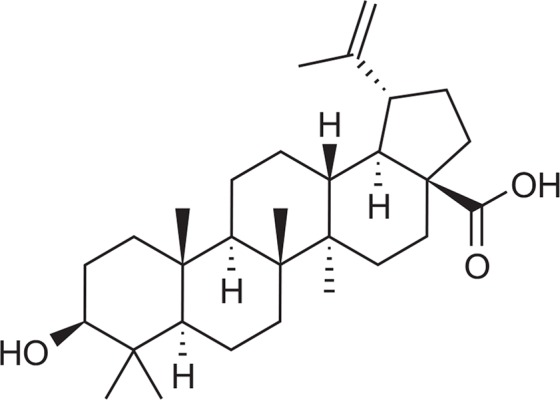
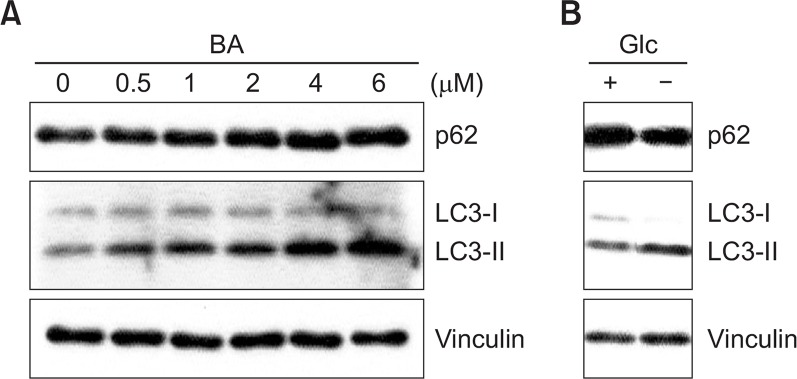
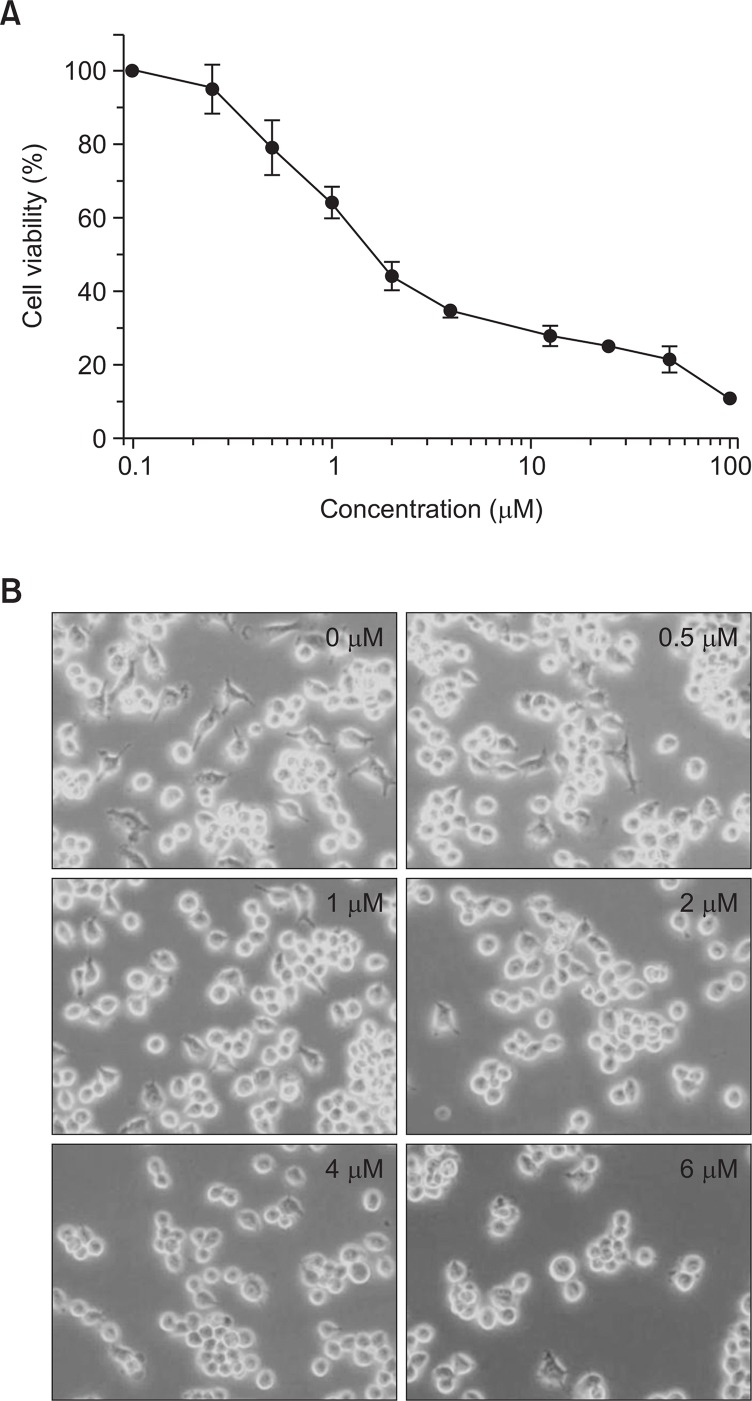
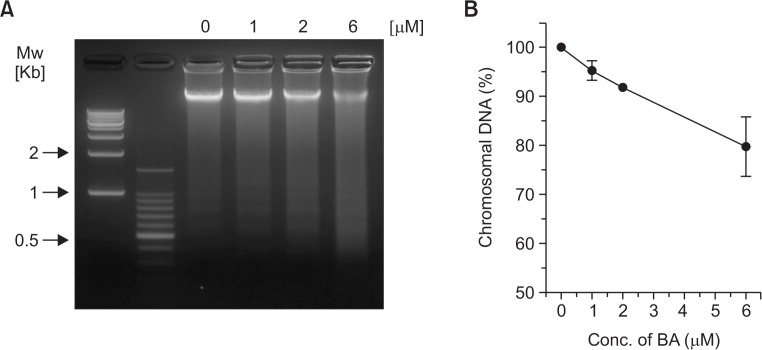
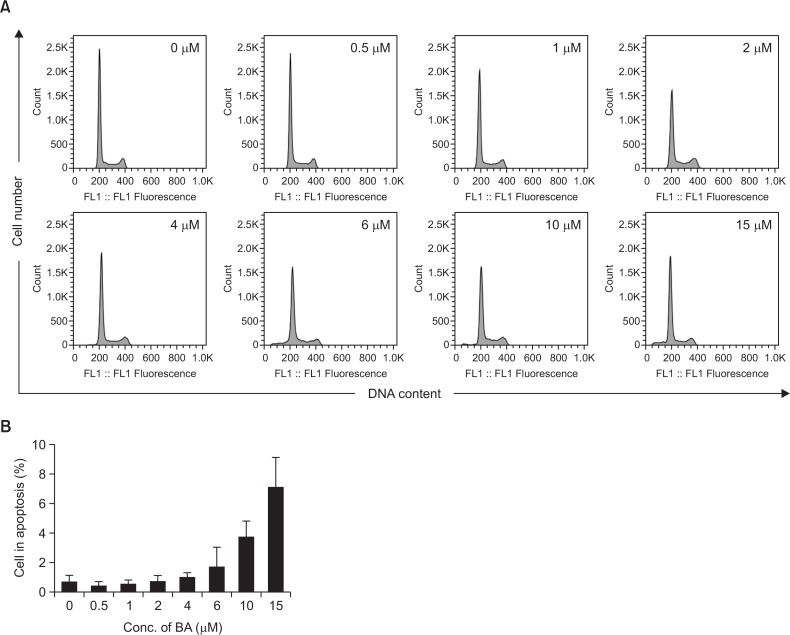
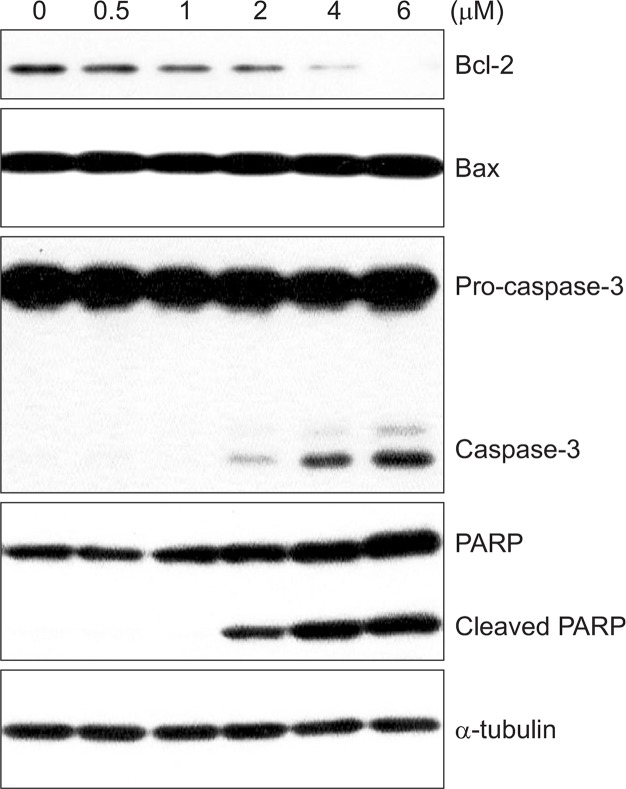
Betulinic acid (BA), a natural pentacyclic triterpene found in many medicinal plants is known to have various biological activity including tumor suppression and anti-inflammatory effects. In this study, the cell-death induction effect of BA was investigated in BV-2 microglia cells. BA was cytotoxic to BV-2 cells with IC₅₀ of approximately 2.0 µM. Treatment of BA resulted in a dose-dependent chromosomal DNA degradation, suggesting that these cells underwent apoptosis. Flow cytometric analysis further confirmed that BA-treated BV-2 cells showed hypodiploid DNA content. BA treatment triggered apoptosis by decreasing Bcl-2 levels, activation of capase-3 protease and cleavage of PARP. In addition, BA treatment induced the accumulation of p62 and the increase in conversion of LC3-I to LC3-II, which are important autophagic flux monitoring markers. The increase in LC3-II indicates that BA treatment induced autophagosome formation, however, accumulation of p62 represents that the downstream autophagy pathway is blocked. It is demonstrated that BA induced cell death of BV-2 cells by inducing apoptosis and inhibiting autophagic flux. These data may provide important new information towards understanding the mechanisms by which BA induce cell death in microglia BV-2 cells.
桦木酸(BA)是一种存在于许多药用植物中的天然五环三萜,已知具有多种生物活性,包括肿瘤抑制和抗炎作用。在本研究中,研究了BA在BV-2小胶质细胞中的细胞死亡诱导作用。BA对BV-2细胞具有细胞毒性,IC₅₀约为2.0 µM。BA处理导致剂量依赖性的染色体DNA降解,表明这些细胞发生了凋亡。流式细胞术分析进一步证实,经BA处理的BV-2细胞显示出亚二倍体DNA含量。BA处理通过降低Bcl-2水平、激活半胱天冬酶-3蛋白酶和切割PARP触发凋亡。此外,BA处理诱导p62的积累以及LC3-I向LC3-II转化的增加,这些是自噬通量监测的重要标志物。LC3-II的增加表明BA处理诱导了自噬体形成,然而,p62的积累表明下游自噬途径被阻断。结果表明,BA通过诱导凋亡和抑制自噬通量诱导BV-2细胞死亡。这些数据可能为理解BA诱导小胶质细胞BV-2细胞死亡的机制提供重要的新信息。