Department of Korean Medical Science, School of Korean Medicine and Healthy Aging Korean Medical Research Center, Pusan National University, Yangsan, Gyeongnam, 50612, Republic of Korea.
Department of Molecular Biology, College of Natural Science, Pusan National University, Geumjeong-gu, Busan, 46241, Republic of Korea.
Sci Rep. 2019 Mar 8;9(1):3969. doi: 10.1038/s41598-019-40617-3.
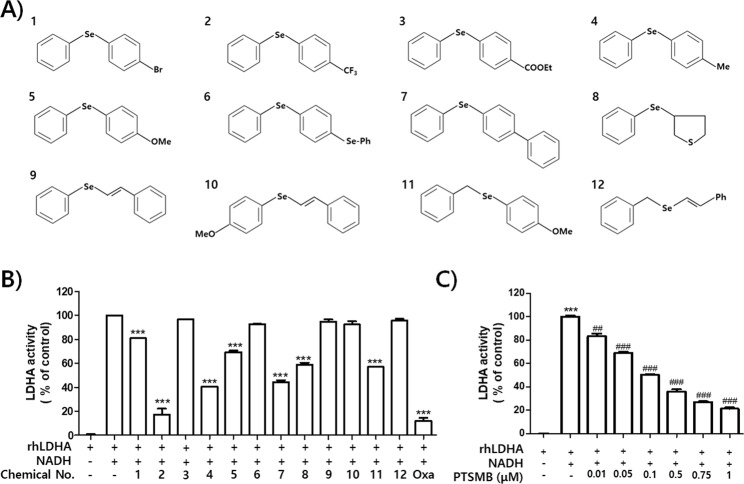
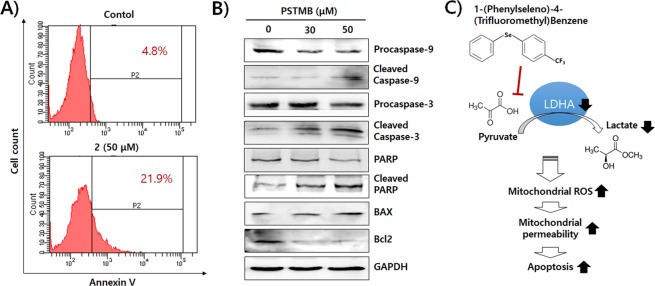
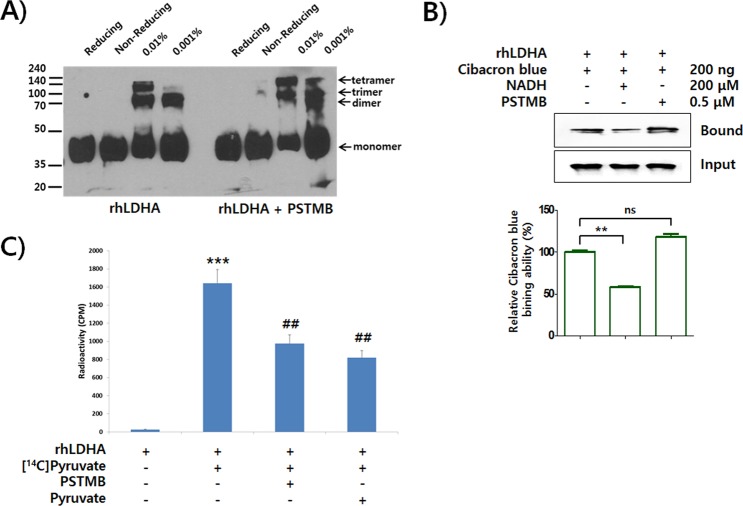
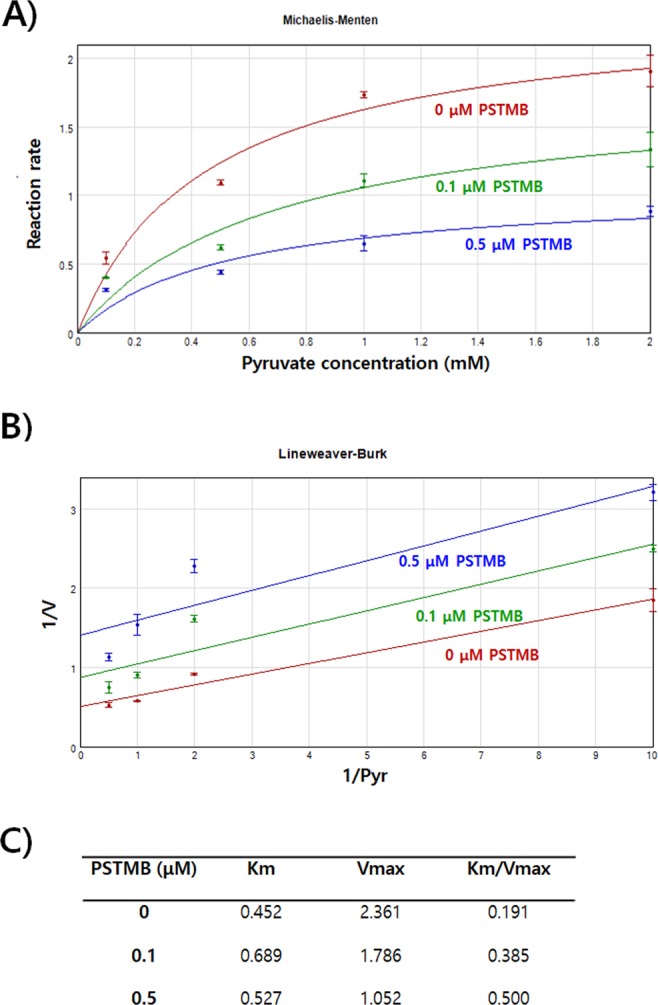
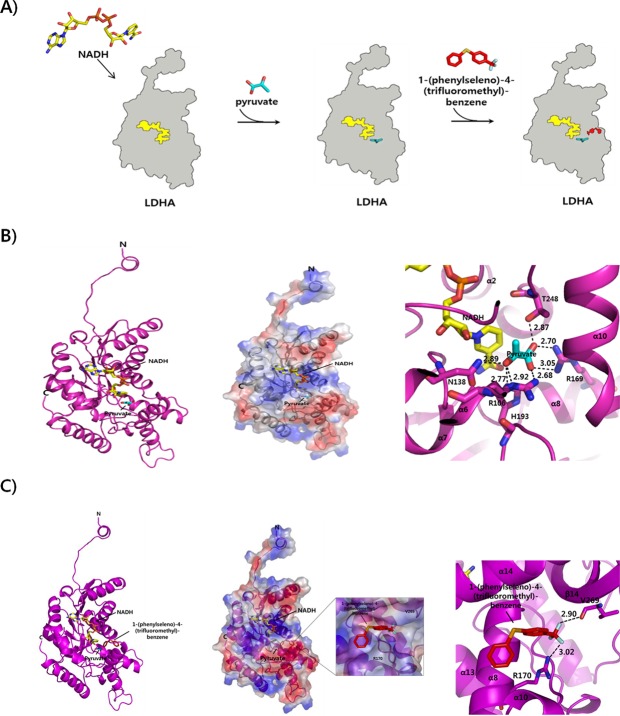
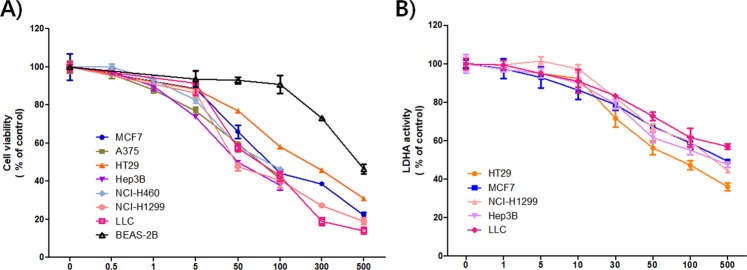
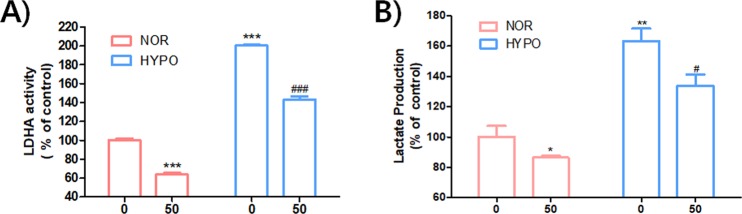
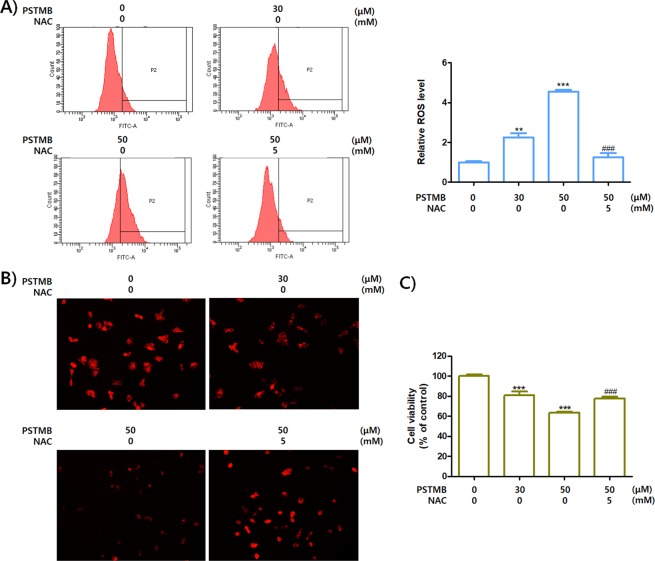
The Warburg effect, wherein cancer cells prefer glycolysis rather than oxidative phosphorylation even under normoxic conditions, is a major characteristic of malignant tumors. Lactate dehydrogenase A (LDHA) is the main enzyme regulating the Warburg effect, and is thus, a major target for novel anti-cancer drug development. Through our ongoing screening of novel inhibitors, we found that several selenobenzene compounds have inhibitory effects on LDHA activity. Among them, 1-(phenylseleno)-4-(trifluoromethyl) benzene (PSTMB) had the most potent inhibitory effect on the enzymatic activity of LDHA. The results from biochemical assays and computational modeling showed that PSTMB inhibited LDHA activity. In addition, PSTMB inhibited the growth of several tumor cell lines, including NCI-H460, MCF-7, Hep3B, A375, HT29, and LLC. In HT29 human colon cancer cells, PSTMB dose-dependently inhibited the viability of the cells and activity of LDHA, without affecting the expression of LDHA. Under both normoxic and hypoxic conditions, PSTMB effectively reduced LDHA activity and lactate production. Furthermore, PSTMB induced mitochondria-mediated apoptosis of HT29 cells via production of reactive oxygen species. These results suggest that PSTMB may be a novel candidate for development of anti-cancer drugs by targeting cancer metabolism.
瓦博格效应(Warburg effect),即在常氧条件下,癌细胞更倾向于糖酵解而不是氧化磷酸化,这是恶性肿瘤的主要特征之一。乳酸脱氢酶 A(LDHA)是调节瓦博格效应的主要酶,因此是新型抗癌药物开发的主要靶点。通过我们正在进行的新型抑制剂筛选,我们发现几种硒苯化合物对 LDHA 活性具有抑制作用。其中,1-(苯硒基)-4-(三氟甲基)苯(PSTMB)对 LDHA 的酶活性抑制作用最强。生化测定和计算建模结果表明,PSTMB 抑制了 LDHA 的活性。此外,PSTMB 抑制了包括 NCI-H460、MCF-7、Hep3B、A375、HT29 和 LLC 在内的几种肿瘤细胞系的生长。在 HT29 人结肠癌细胞中,PSTMB 呈剂量依赖性地抑制细胞活力和 LDHA 活性,而不影响 LDHA 的表达。在常氧和缺氧条件下,PSTMB 均可有效降低 LDHA 活性和乳酸的产生。此外,PSTMB 通过产生活性氧诱导 HT29 细胞线粒体介导的细胞凋亡。这些结果表明,PSTMB 可能是通过靶向肿瘤代谢开发抗癌药物的新型候选药物。