Centre of Biological Engineering, University of Minho (CEB), Campus de Gualtar, 4710-057, Braga, Portugal.
MIT-Portugal Program, Lisbon, Portugal.
Sci Rep. 2019 Mar 8;9(1):3958. doi: 10.1038/s41598-019-40562-1.
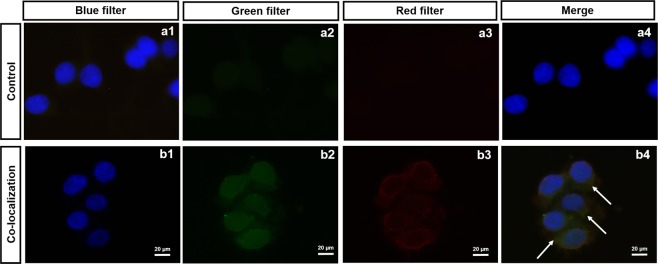
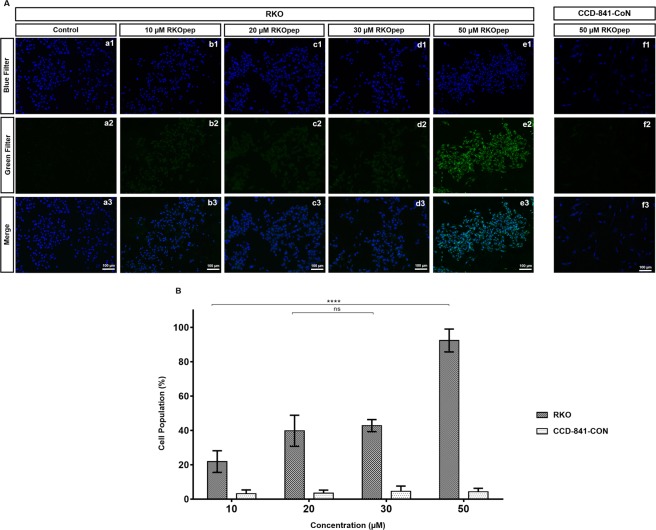
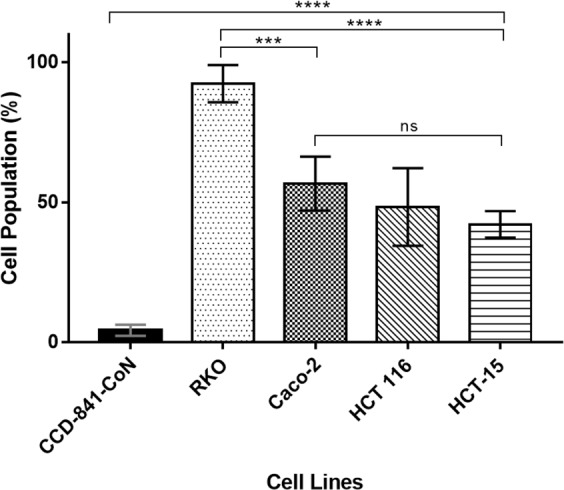
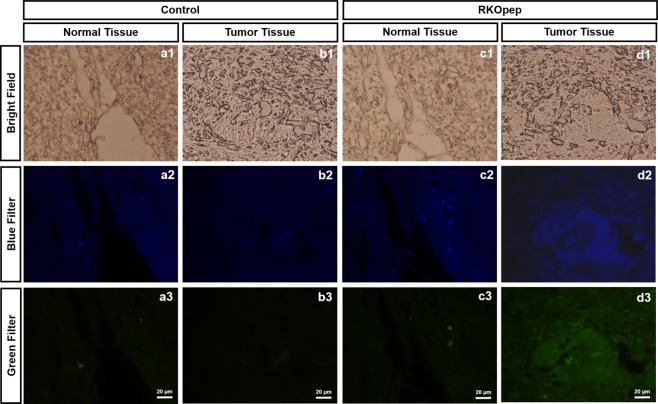
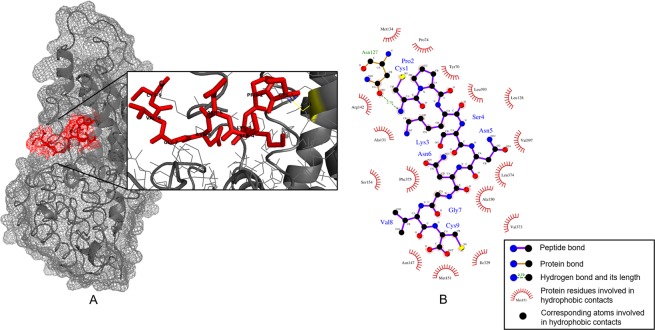
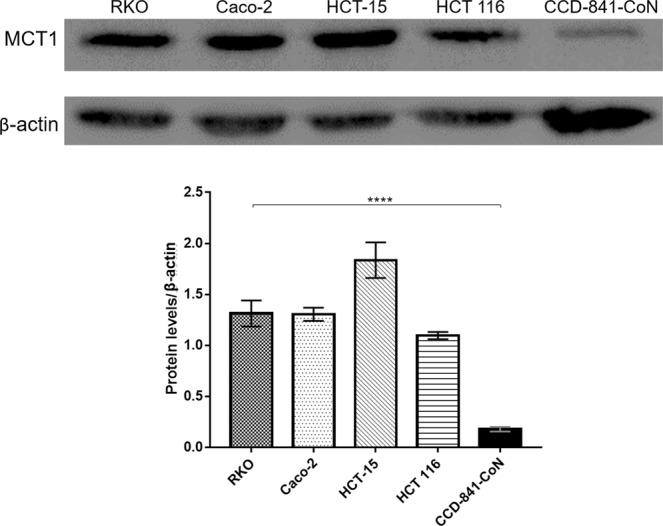
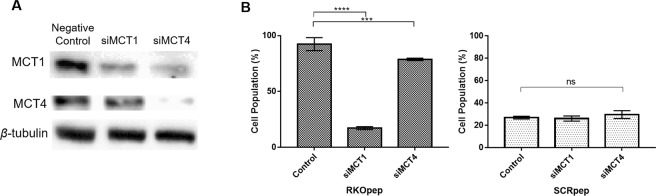
Colorectal cancer is frequently diagnosed at an advanced stage due to the absence of early clinical indicators. Hence, the identification of new targeting molecules is crucial for an early detection and development of targeted therapies. This study aimed to identify and characterize novel peptides specific for the colorectal cancer cell line RKO using a phage-displayed peptide library. After four rounds of selection plus a negative step with normal colorectal cells, CCD-841-CoN, there was an obvious phage enrichment that specifically bound to RKO cells. Cell-based enzyme-linked immunosorbent assay (ELISA) was performed to assess the most specific peptides leading to the selection of the peptide sequence CPKSNNGVC. Through fluorescence microscopy and cytometry, the synthetic peptide RKOpep was shown to specifically bind to RKO cells, as well as to other human colorectal cancer cells including Caco-2, HCT 116 and HCT-15, but not to the normal non-cancer cells. Moreover, it was shown that RKOpep specifically targeted human colorectal cancer cell tissues. A bioinformatics analysis suggested that the RKOpep targets the monocarboxylate transporter 1, which has been implicated in colorectal cancer progression and prognosis, proven through gene knockdown approaches and shown by immunocytochemistry co-localization studies. The peptide herein identified can be a potential candidate for targeted therapies for colorectal cancer.
由于缺乏早期临床指标,结直肠癌常常在晚期才被诊断出来。因此,寻找新的靶向分子对于早期检测和开发靶向治疗至关重要。本研究旨在利用噬菌体展示肽文库,鉴定和表征针对结直肠癌细胞系 RKO 的新型肽。经过四轮筛选加一轮与正常结直肠细胞 CCD-841-CoN 的阴性筛选后,出现了对 RKO 细胞具有明显特异性结合的噬菌体富集。通过细胞酶联免疫吸附测定(ELISA)评估了最具特异性的肽,从而选择出了肽序列 CPKSNNGVC。通过荧光显微镜和流式细胞术,合成肽 RKOpep 被证明可以特异性结合 RKO 细胞,以及其他人类结直肠癌细胞,包括 Caco-2、HCT 116 和 HCT-15,但不能与正常非癌细胞结合。此外,研究表明 RKOpep 可以特异性靶向人类结直肠癌细胞组织。生物信息学分析表明,RKOpep 靶向单羧酸转运蛋白 1,该蛋白与结直肠癌的进展和预后有关,通过基因敲低方法和免疫细胞化学共定位研究得到证实。本文鉴定的肽可能是结直肠癌靶向治疗的潜在候选药物。