Department of Gynecology, Goethe-University, Frankfurt am Main.
State Key Laboratory of Biotherapy, Department of Obstetrics and Gynecology, West China Second Hospital, Sichuan University, Chengdu, 610041, P. R. China.
Neoplasia. 2019 Apr;21(4):363-375. doi: 10.1016/j.neo.2019.01.007. Epub 2019 Mar 7.
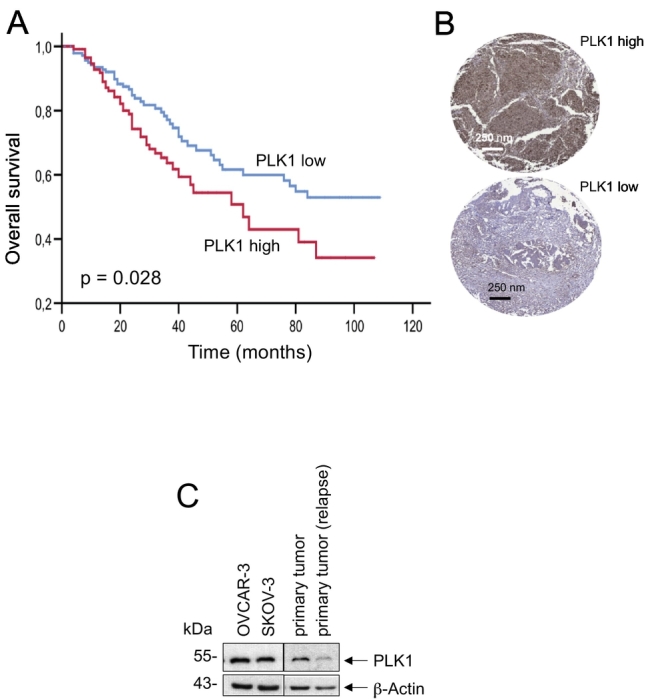
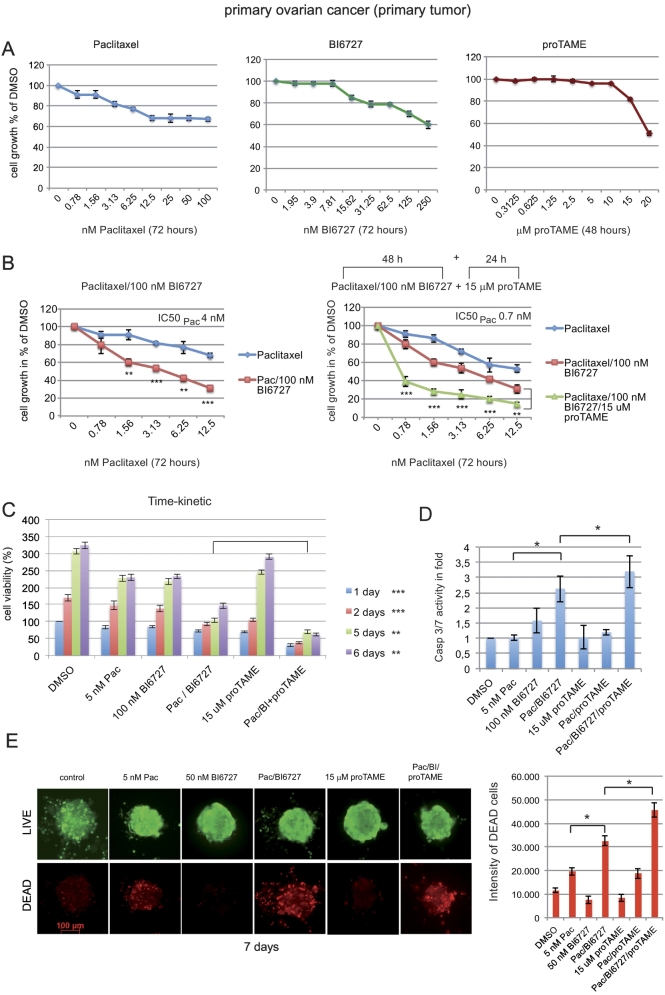
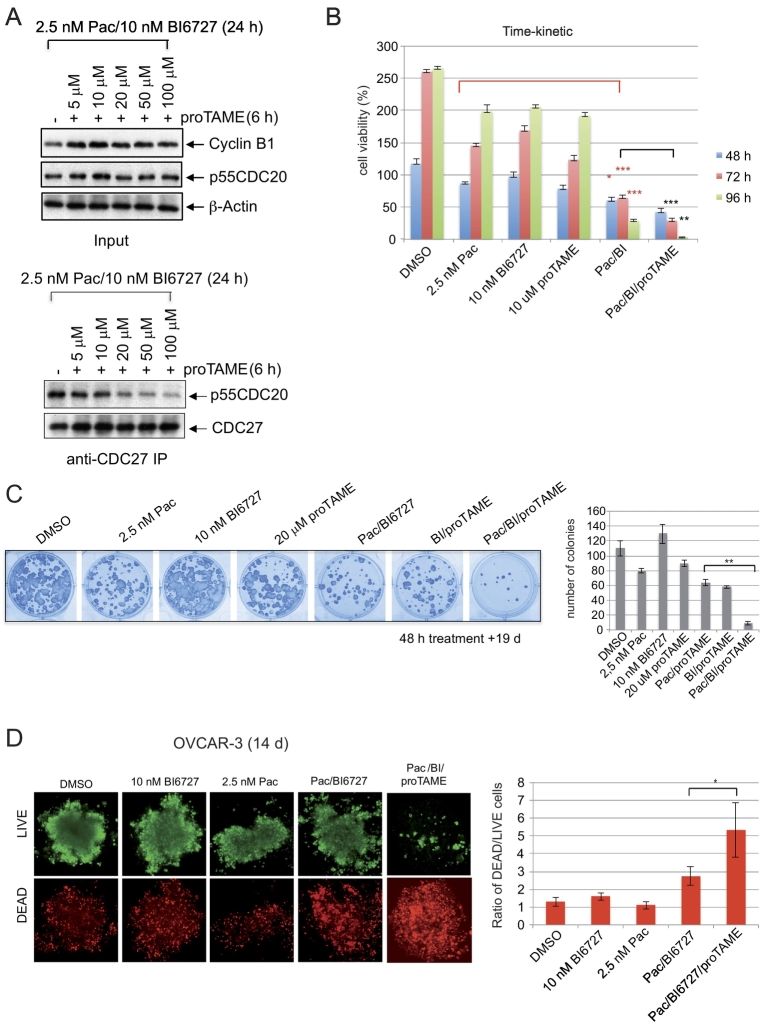
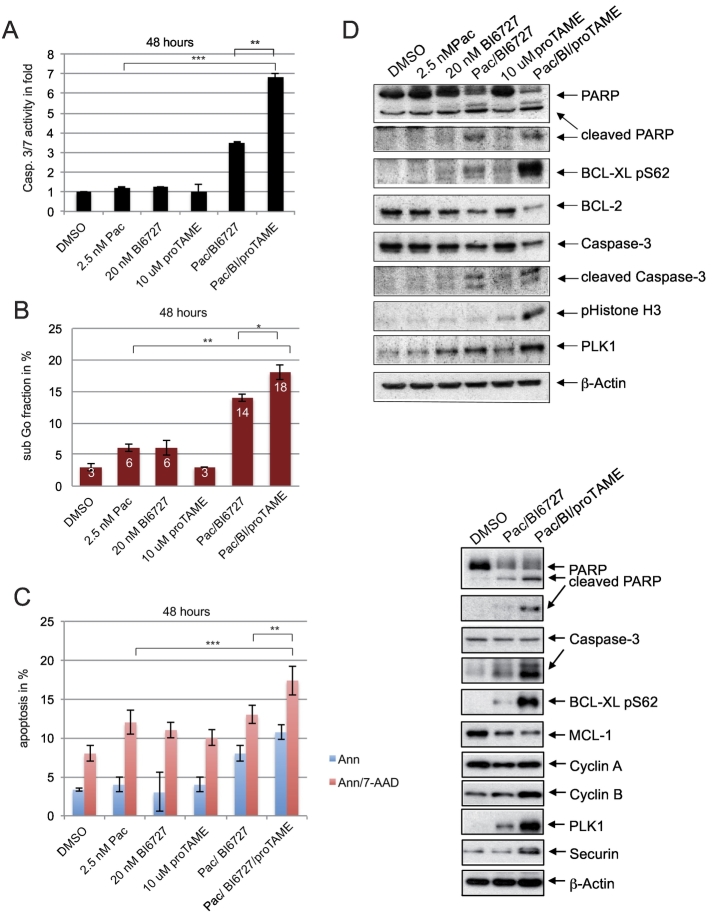
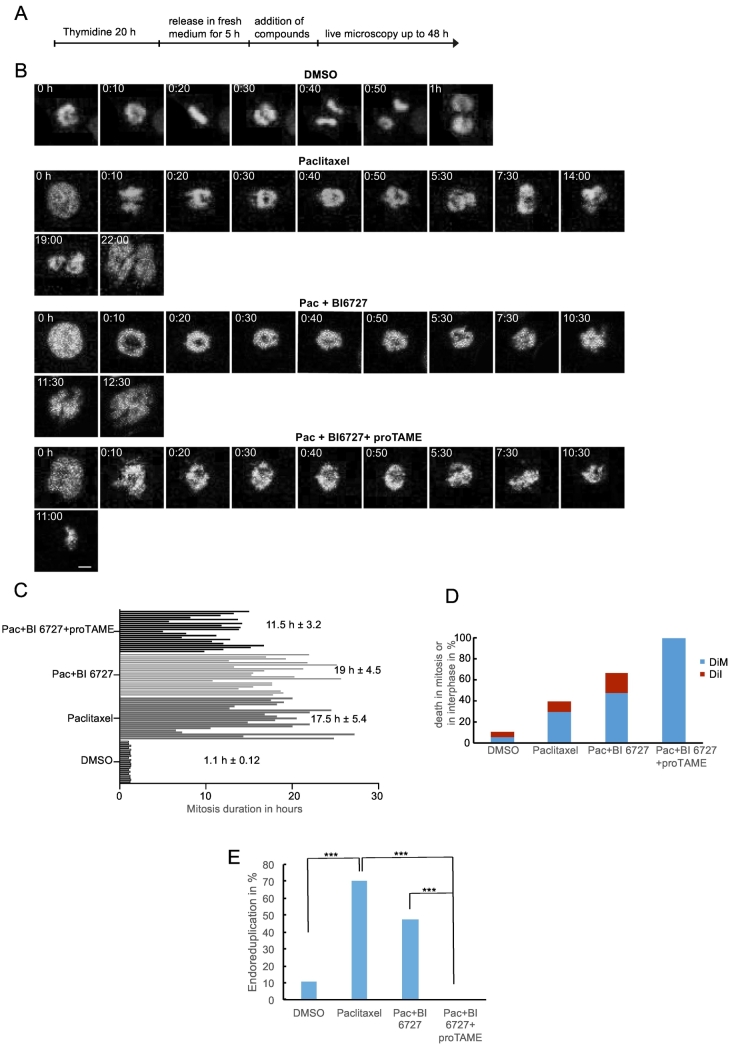
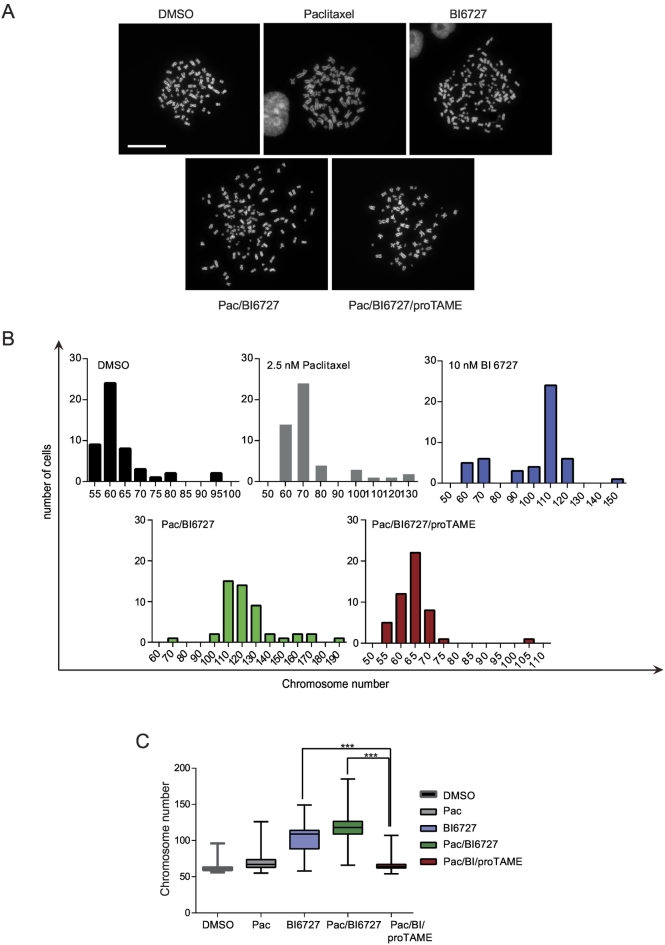
Paclitaxel is a frontline drug for the treatment of epithelial ovarian cancer (EOC). However, following paclitaxel-platinum based chemotherapy, tumor recurrence occurs in most ovarian cancer patients. Chromosomal instability (CIN) is a hallmark of cancer and represents genetic variation fueling tumor adaptation to cytotoxic effects of anticancer drugs. In this study, our Kaplan-Meier analysis including 263 ovarian cancer patients (stages I/II) revealed that high Polo-like kinase (PLK) 1 expression correlates with bad prognosis. To evaluate the role of PLK1 as potential cancer target within a combinatorial trial, we induced strong mitotic arrest in ovarian cancer cell lines by synergistically co-targeting microtubules (paclitaxel) and PLK1 (BI6727) followed by pharmaceutical inhibition of the Anaphase-Promoting Complex (APC/C) using proTAME. In short- and long-term experiments, this triple treatment strongly activated apoptosis in cell lines and primary ovarian cells derived from cancer patients. Mechanistically, BI6727/paclitaxel/proTAME stabilize Cyclin B1 and trigger mitotic arrest, which initiates mitochondrial apoptosis by inactivation of antiapoptotic BCL-2 family proteins, followed by activation of caspase-dependent effector pathways. This triple treatment prevented endoreduplication and reduced CIN, two mechanisms that are associated with aggressive tumors and the acquisition of drug resistance. This "two-punch strategy" (strong mitotic arrest followed by blocking mitotic exit) has important implications for developing paclitaxel-based combinatorial treatments in ovarian cancer.
紫杉醇是治疗上皮性卵巢癌(EOC)的一线药物。然而,在紫杉醇-铂类化疗后,大多数卵巢癌患者的肿瘤复发。染色体不稳定性(CIN)是癌症的一个标志,代表着促进肿瘤适应抗癌药物细胞毒性作用的遗传变异。在这项研究中,我们的 Kaplan-Meier 分析包括 263 名卵巢癌患者(I/II 期)表明,高 Polo 样激酶(PLK)1 表达与预后不良相关。为了评估 PLK1 作为组合试验中潜在癌症靶点的作用,我们通过协同靶向微管(紫杉醇)和 PLK1(BI6727)诱导卵巢癌细胞系中的强烈有丝分裂阻滞,然后使用 proTAME 抑制后期促进复合物(APC/C)。在短期和长期实验中,这种三联治疗在细胞系和源自癌症患者的原代卵巢细胞中强烈激活了细胞凋亡。从机制上讲,BI6727/紫杉醇/proTAME 稳定细胞周期蛋白 B1 并引发有丝分裂阻滞,通过失活抗凋亡 BCL-2 家族蛋白引发线粒体凋亡,随后激活 caspase 依赖性效应途径。这种三联治疗防止了内复制和减少 CIN,这两种机制与侵袭性肿瘤和获得耐药性有关。这种“两拳策略”(强烈的有丝分裂阻滞,随后阻断有丝分裂退出)对开发基于紫杉醇的卵巢癌组合治疗具有重要意义。