Weaver Beth A
Department of Cell and Regenerative Biology and Carbone Cancer Center, University of Wisconsin, Madison, WI 53705
Mol Biol Cell. 2014 Sep 15;25(18):2677-81. doi: 10.1091/mbc.E14-04-0916.
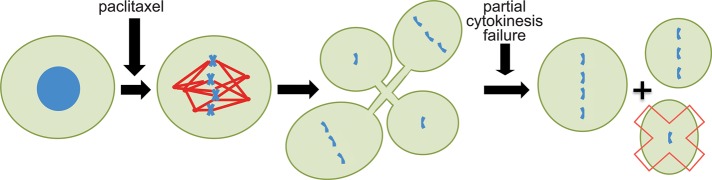
Taxol (generic name paclitaxel) is a microtubule-stabilizing drug that is approved by the Food and Drug Administration for the treatment of ovarian, breast, and lung cancer, as well as Kaposi's sarcoma. It is used off-label to treat gastroesophageal, endometrial, cervical, prostate, and head and neck cancers, in addition to sarcoma, lymphoma, and leukemia. Paclitaxel has long been recognized to induce mitotic arrest, which leads to cell death in a subset of the arrested population. However, recent evidence demonstrates that intratumoral concentrations of paclitaxel are too low to cause mitotic arrest and result in multipolar divisions instead. It is hoped that this insight can now be used to develop a biomarker to identify the ∼50% of patients that will benefit from paclitaxel therapy. Here I discuss the history of paclitaxel and our recently evolved understanding of its mechanism of action.
紫杉醇(通用名:帕罗西汀)是一种微管稳定药物,已被美国食品药品监督管理局批准用于治疗卵巢癌、乳腺癌和肺癌以及卡波西肉瘤。它还被超适应证用于治疗胃食管癌、子宫内膜癌、宫颈癌、前列腺癌和头颈癌,此外还有肉瘤、淋巴瘤和白血病。长期以来,人们一直认为紫杉醇会诱导有丝分裂停滞,从而导致一部分停滞细胞死亡。然而,最近的证据表明,肿瘤内紫杉醇浓度过低,无法引起有丝分裂停滞,反而会导致多极分裂。希望这一见解现在可用于开发一种生物标志物,以识别约50%将从紫杉醇治疗中获益的患者。在此,我将讨论紫杉醇的历史以及我们最近对其作用机制的深入理解。