Zhang Xiaojing, Chen Wei, Yin Ning, Dong Lijia, Fu Ming, Zhan Qimin, Tong Tong
State Key Laboratory of Molecular Oncology, Chinese Academy of Medical Sciences and Peking Union Medical College, Cancer Institute and Cancer Hospital, Beijing 100021, P.R. China.
Department of Oncology, Beijing Chao-Yang Hospital, Capital Medical University, Beijing 100020, P.R. China.
Oncol Lett. 2019 Mar;17(3):2639-2646. doi: 10.3892/ol.2019.9881. Epub 2019 Jan 2.
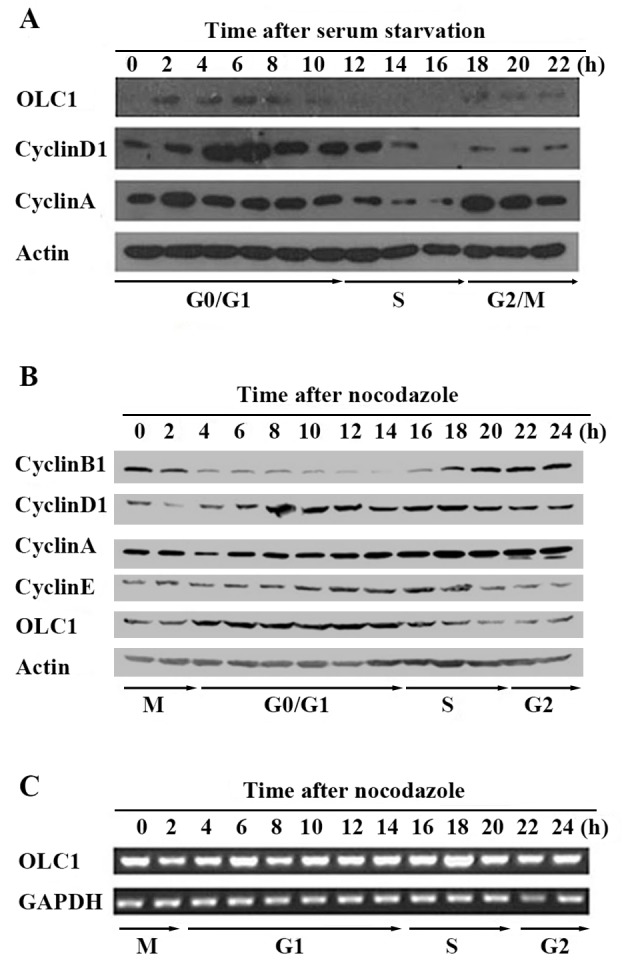
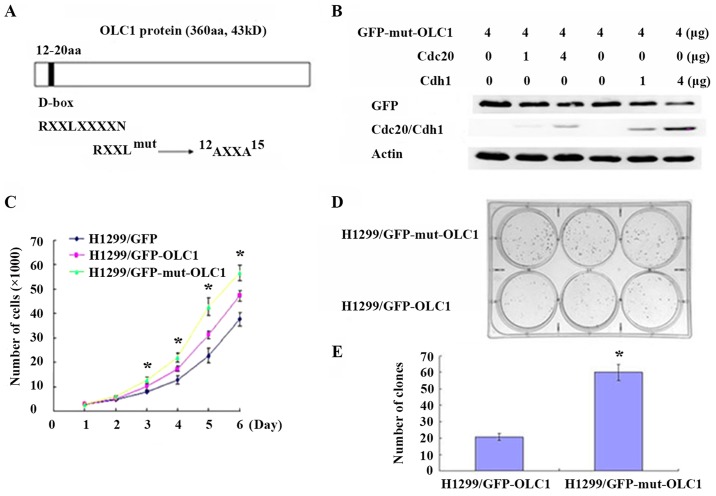
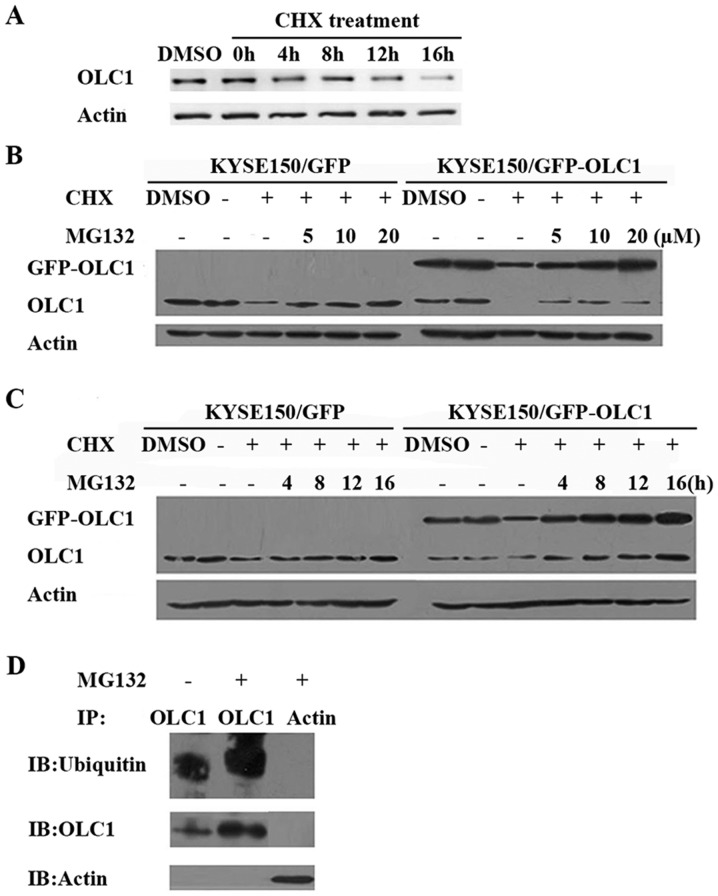
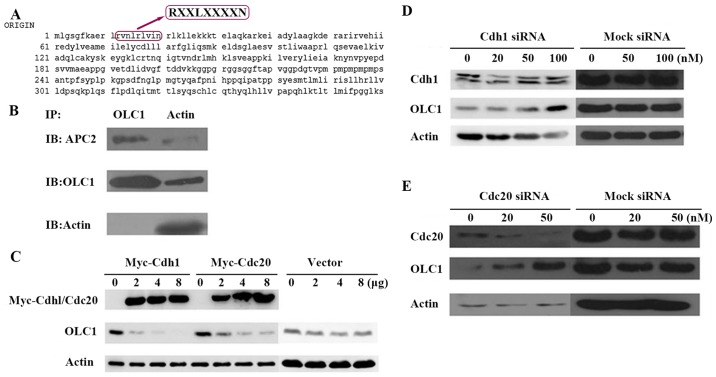
Overexpressed in lung cancer 1 (OLC1) is a potential oncogene overexpressed in human lung cancer and in other types of malignant tumor. The elevated expression of OLC1 contributes to tumor genesis and progression. However, the mechanisms regulating the expression of OLC1 remain unclear. In the present study, using lung and esophageal cancer cell lines, it was demonstrated that OLC1 was a short-lived, cell cycle-dependent protein regulated through the anaphase-promoting complex/cyclosome (APC/c)-ubiquitin pathway by directly interacting with the APC2 subunit. Through the action of two co activator proteins, cadherin 1 (Cdh1) and cell-division cycle protein 20 (Cdc20), the OLC1 protein was ubiquitinated and degraded. Following treatment with a proteasome inhibitor, OLC1 protein levels were elevated. Inversely, the upregulation of Cdh1 and Cdc20 facilitated OLC1 degradation. By inducing point mutations of the assumed degradation motif of OLC1, it was revealed that an intact destruction (D)-box was necessary. As expected, the D-box-mutated OLC1 exhibited a higher capacity for promoting cell growth and clone formation. Collectively, these findings indicate that the expression of the candidate oncogene OLC1 is cell cycle-dependent and is regulated by an APC/c mediated ubiquitin-proteasome pathway.
肺癌过表达基因1(OLC1)是一种在人类肺癌及其他类型恶性肿瘤中过表达的潜在癌基因。OLC1的高表达促进肿瘤发生和进展。然而,调控OLC1表达的机制仍不清楚。在本研究中,利用肺癌和食管癌细胞系,证明OLC1是一种半衰期短、细胞周期依赖性蛋白,通过与后期促进复合物/细胞周期体(APC/c)-泛素途径的APC2亚基直接相互作用进行调控。通过两种共激活蛋白,钙黏蛋白1(Cdh1)和细胞分裂周期蛋白20(Cdc20)的作用使OLC1蛋白泛素化并降解。用蛋白酶体抑制剂处理后,OLC1蛋白水平升高。相反,Cdh1和Cdc20的上调促进OLC1降解。通过诱导OLC1假定降解基序的点突变,发现完整的破坏(D)框是必需的。正如预期的那样,D框突变的OLC1表现出更高的促进细胞生长和克隆形成的能力。总的来说,这些发现表明候选癌基因OLC1的表达是细胞周期依赖性的,并受APC/c介导的泛素-蛋白酶体途径调控。