Antibody Discovery & Protein Engineering, MedImmune, Gaithersburg, MD, 20878, USA.
Cardiovascular & Metabolic Diseases, MedImmune, Gaithersburg, MD, 20878, USA.
Commun Biol. 2019 Mar 7;2:92. doi: 10.1038/s42003-019-0337-2. eCollection 2019.
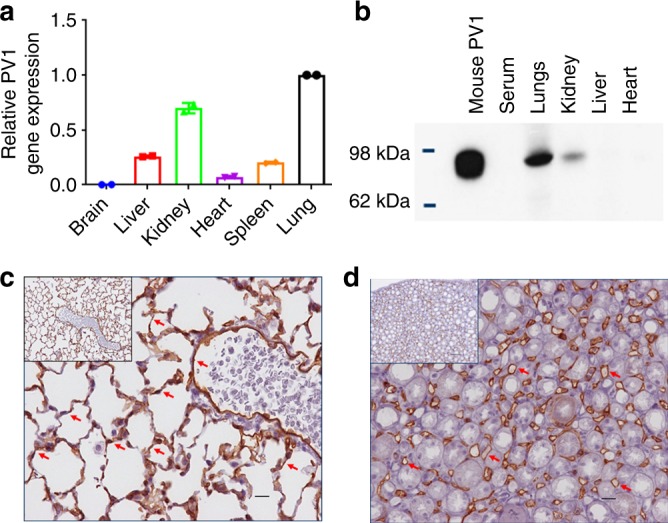
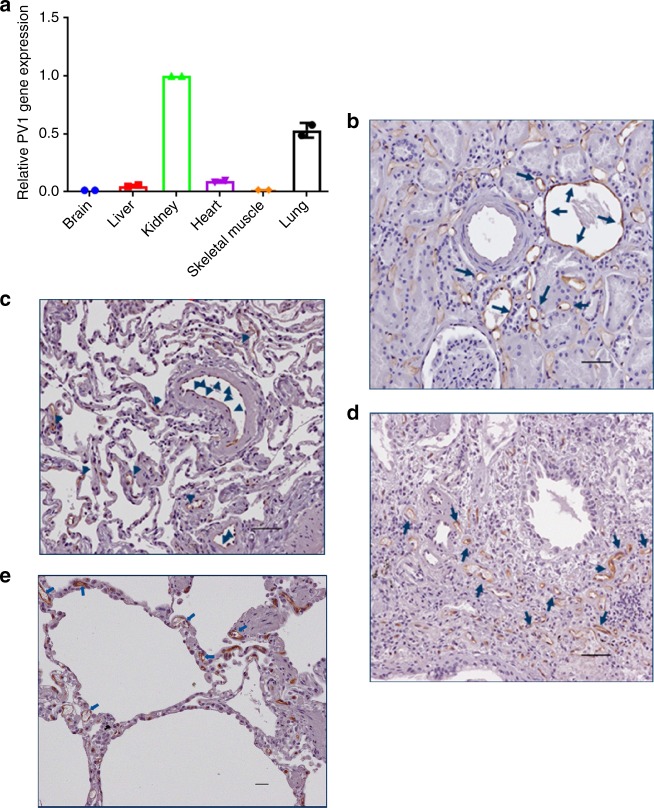
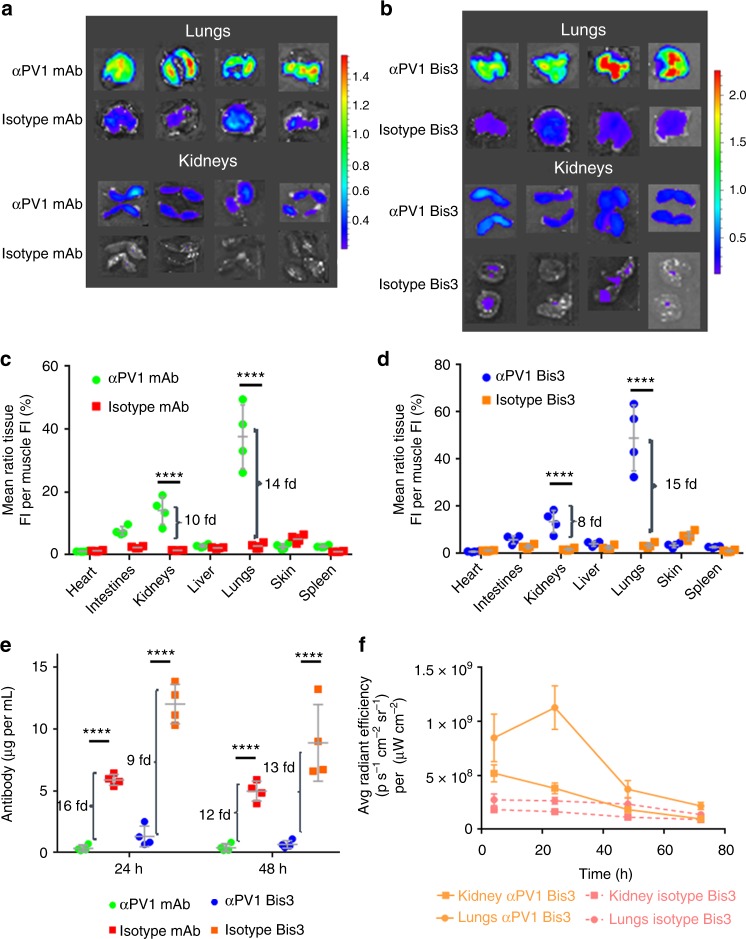
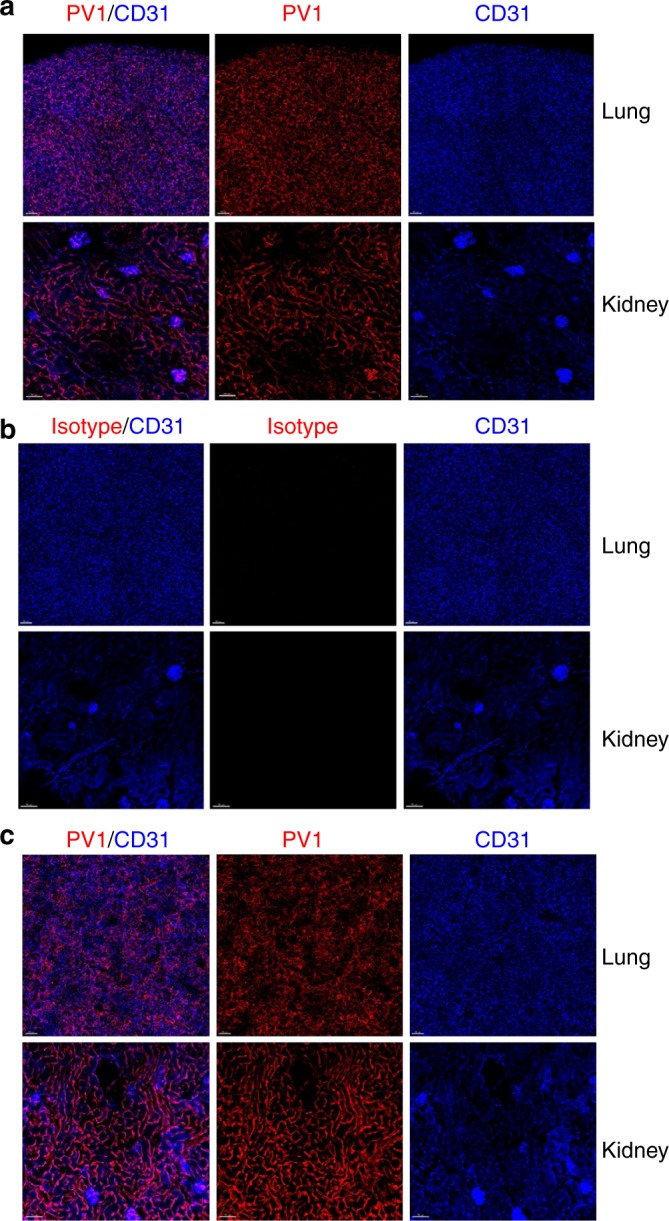
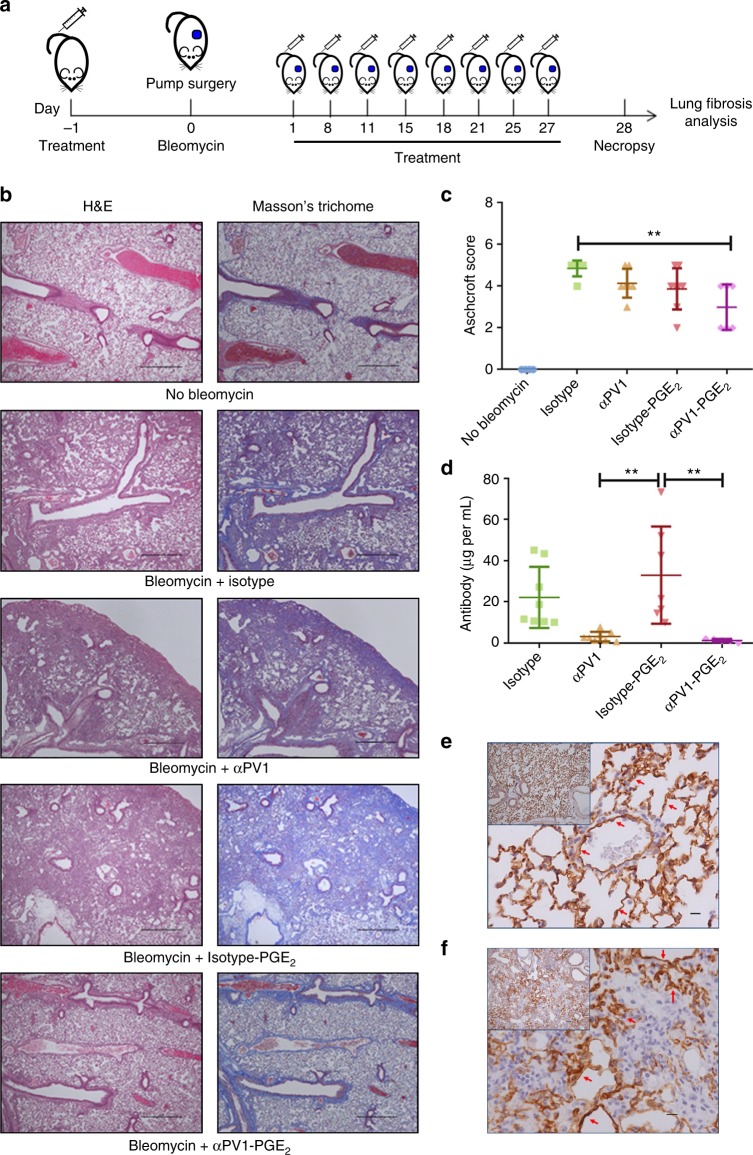
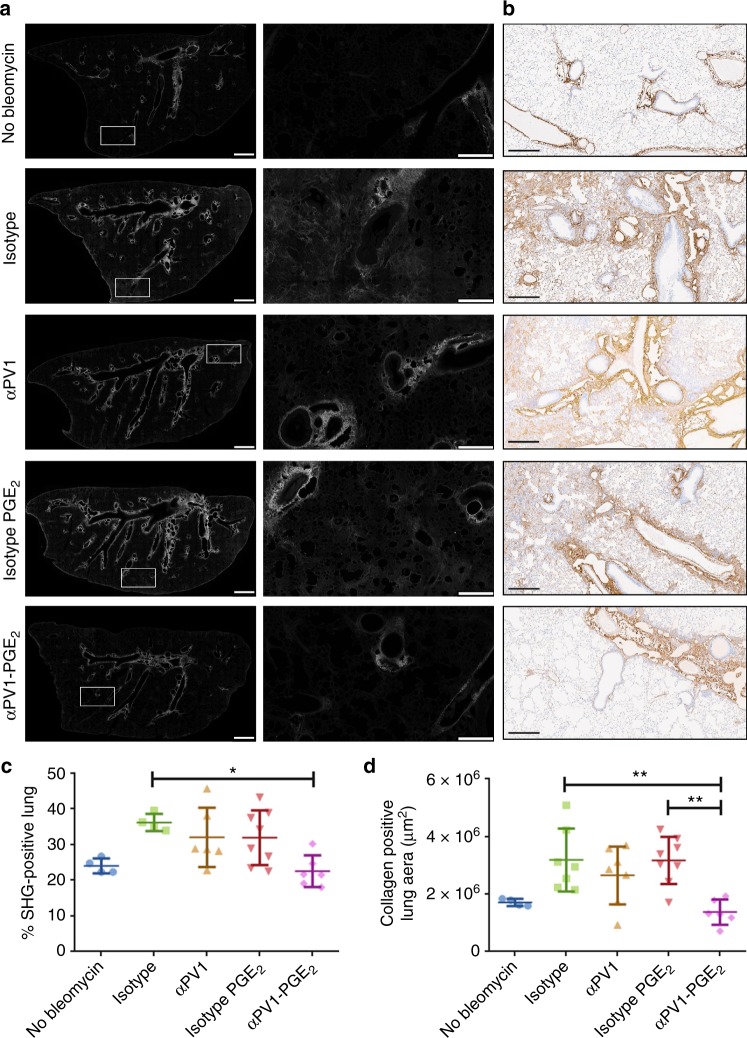
Systemic administration of bio-therapeutics can result in only a fraction of drug reaching targeted tissues, with the majority of drug being distributed to tissues irrelevant to the drug's site of action. Targeted delivery to specific organs may allow for greater accumulation, better efficacy, and improved safety. We investigated how targeting plasmalemma vesicle-associated protein (PV1), a protein found in the endothelial caveolae of lungs and kidneys, can promote accumulation in these organs. Using ex vivo fluorescence imaging, we show that intravenously administered αPV1 antibodies localize to mouse lungs and kidneys. In a bleomycin-induced idiopathic pulmonary fibrosis (IPF) mouse model, αPV1 conjugated to Prostaglandin E (PGE), a known anti-fibrotic agent, significantly reduced collagen content and fibrosis whereas a non-targeted PGE antibody conjugate failed to slow fibrosis progression. Our results demonstrate that PV1 targeting can be utilized to deliver therapeutics to lungs and this approach is potentially applicable for various lung diseases.
生物治疗药物的全身给药只能使一小部分药物到达靶向组织,而大部分药物则分布到与药物作用部位无关的组织中。针对特定器官的靶向递送可能会增加药物的积累,提高疗效,并改善安全性。我们研究了靶向质膜小泡相关蛋白(PV1)——一种在肺部和肾脏的内皮小窝中发现的蛋白——如何促进这些器官的药物积累。通过离体荧光成像,我们显示静脉内给予的αPV1 抗体可定位于小鼠的肺部和肾脏。在博来霉素诱导的特发性肺纤维化(IPF)小鼠模型中,与已知的抗纤维化药物前列腺素 E(PGE)偶联的αPV1 显著减少了胶原蛋白含量和纤维化,而非靶向 PGE 抗体偶联物则未能减缓纤维化的进展。我们的结果表明,PV1 靶向可用于将治疗药物递送到肺部,并且这种方法可能适用于各种肺部疾病。