Panozzo Giacomo, Staurenghi Giovanni, Dalla Mura Giulia, Giannarelli Diana, Alessio Giovanni, Alongi Salvatore, Appolloni Romolo, Baldascino Antonio, Boscia Francesco, Caporossi Aldo, Cereda Matteo, D'Ugo Erminia, Fallico Matteo, Avitabile Teresio, Galan Alessandro, La Spina Carlo, Lo Giudice Giuseppe, Mastropasqua Leonardo, Palmisano Carmela, Panico Claudio, Parravano Maria Cristina, Penna Rachele, Pintore Pierpaolo, Vaiano Agostino, Reibaldi Michele, Rizzo Stanislao, Rossi Tommaso, Varano Monica, Virgili Gianni
ESASO European School of Advances Studies in Ophthalmology, Lugano, Switzerland.
Department of Biomedical and Clinical Science Sacco Hospital, University of Milan, Italy.
Eur J Ophthalmol. 2020 Mar;30(2):315-320. doi: 10.1177/1120672119830578. Epub 2019 Mar 11.
The purpose of this study is to determine the prevalence of diabetes and diabetic macular edema in patients undergoing senile cataract surgery in Italy.
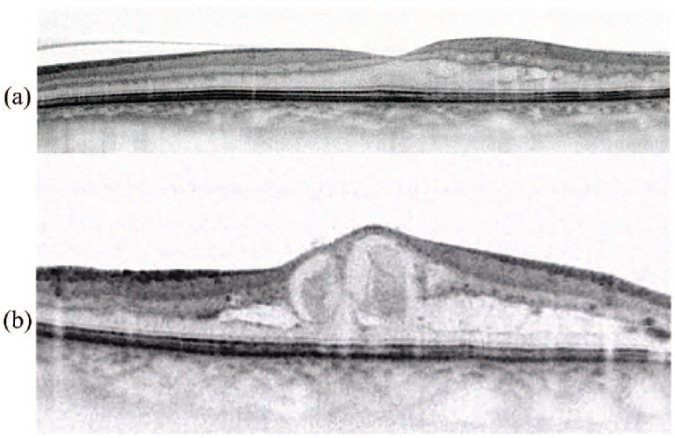
It is a prospective, multicenter, cross-sectional study. Thirteen ophthalmic units equally distributed across the Italian territory have been involved in the study. For a period of 3 months, all subjects undergoing phacoemulsification received an Optical Coherence Tompgraphy (OCT) scan and were screened for the anamnestic presence of diabetes. In addition, five selected units collected blood samples from all their patients to measure glycated hemoglobin (HbA1c) levels and detect the presence of occult diabetes (HbA1c > 6.5%). In diabetic patients, levels of retinopathy were measured and diabetic macular edema was considered significant (clinically significant macular edema) when foveal thickness was above 30% of normal levels.
A total number of 3657 subjects have been screened. Among them, 20.4% were diabetics. Prevalence of diabetes was significantly higher in males (24.7%) than in females (17%). Levels of HbA1c were tested in a representative sample of 1216 consecutive subjects, and occult diabetes was diagnosed in 4.8% of cases. No significant differences were observed between age groups or different geographic areas. Among diabetic patients, diabetic macular edema of any kind was present in 27.5% (clinically significant macular edema (6.6%)). No significant differences were seen in the prevalence of diabetic macular edema between males and females or between age groups. Among the 745 diabetic patients, no signs of retinopathy were seen in 537 subjects (76.3%), while 101 patients (14.3%) had nonproliferative retinopathy, 13 (1.7%) had nontreated proliferative diabetic retinopathy, and 53 (7.5%) had laser-treated retinopathy. In the entire sample of 3657 subjects, a normal macula was present in 90.9% of cases, diabetic macular edema of any kind in 5.4%, and other maculopathies in 3.4%.
In this large cohort study on patients undergoing cataract surgery, more than one-fourth were diabetics and more than one-fourth of these had diabetic macular edema. These high prevalences suggest the opportunity to plan an adequate preoperative assessment in all patients in order to reduce the risk of postoperative development or worsening of a sight-threatening complication such as chronic diabetic macular edema.
本研究旨在确定意大利接受老年性白内障手术患者中糖尿病及糖尿病性黄斑水肿的患病率。
这是一项前瞻性、多中心横断面研究。意大利境内均匀分布的13个眼科单位参与了该研究。在3个月的时间里,所有接受超声乳化手术的受试者均接受了光学相干断层扫描(OCT)检查,并筛查糖尿病既往史。此外,5个选定的单位收集了所有患者的血样,以测量糖化血红蛋白(HbA1c)水平并检测隐匿性糖尿病(HbA1c>6.5%)的存在。在糖尿病患者中,测量视网膜病变水平,当中心凹厚度高于正常水平的30%时,糖尿病性黄斑水肿被认为是显著的(临床显著性黄斑水肿)。
共筛查了3657名受试者。其中,20.4%为糖尿病患者。男性糖尿病患病率(24.7%)显著高于女性(17%)。在1216名连续受试者的代表性样本中检测了HbA1c水平,4.8%的病例被诊断为隐匿性糖尿病。各年龄组或不同地理区域之间未观察到显著差异。在糖尿病患者中,27.5%存在任何类型的糖尿病性黄斑水肿(临床显著性黄斑水肿占6.6%)。男性和女性之间或年龄组之间糖尿病性黄斑水肿的患病率未见显著差异。在745名糖尿病患者中,537名受试者(76.3%)未出现视网膜病变迹象,101名患者(14.3%)患有非增殖性视网膜病变,13名(1.7%)患有未经治疗的增殖性糖尿病视网膜病变,53名(7.5%)患有激光治疗的视网膜病变。在3657名受试者的整个样本中,90.9%的病例黄斑正常,5.4%存在任何类型的糖尿病性黄斑水肿,3.4%存在其他黄斑病变。
在这项针对白内障手术患者的大型队列研究中,超过四分之一为糖尿病患者,其中超过四分之一患有糖尿病性黄斑水肿。这些高患病率表明,有必要对所有患者进行充分的术前评估,以降低术后发生或恶化如慢性糖尿病性黄斑水肿等威胁视力并发症的风险。