Department of Molecular and Cellular Pharmacology, University of Miami Miller School of Medicine, Miami, Florida, 33136, USA.
Department of Molecular and Cellular Biology, University of California, Davis, CA, 95616, USA.
Sci Rep. 2019 Mar 11;9(1):4055. doi: 10.1038/s41598-019-40640-4.
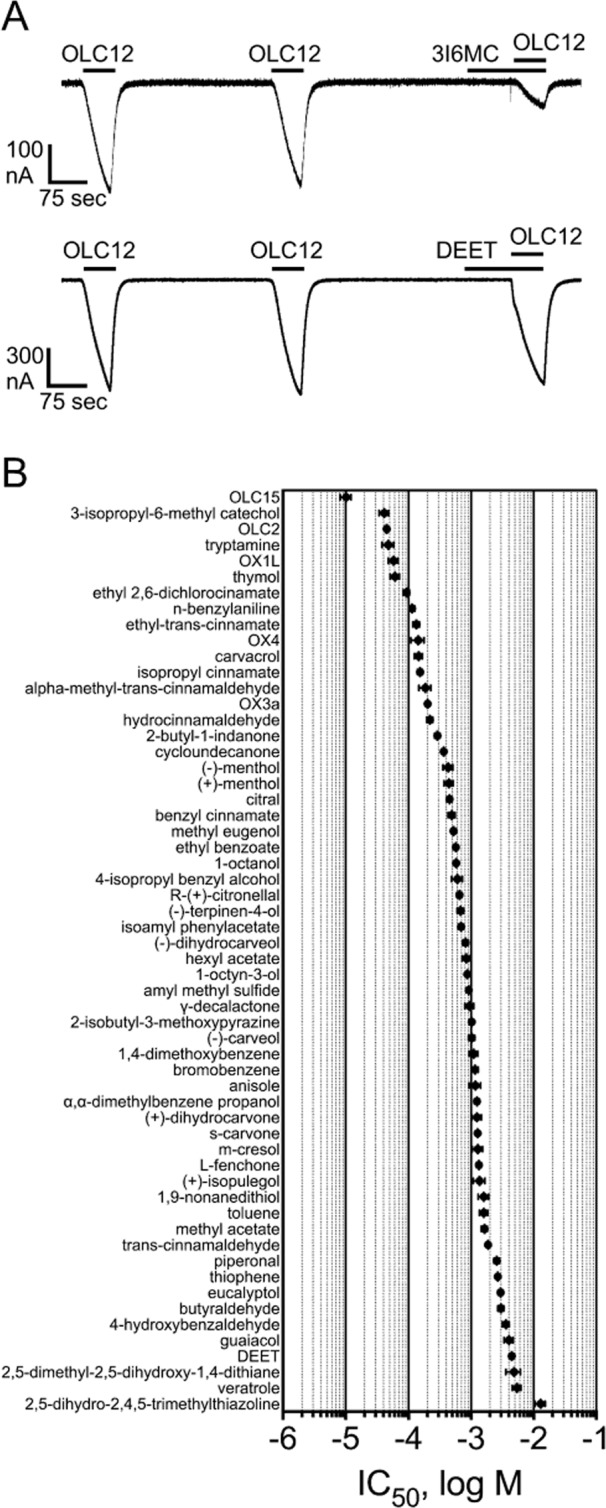
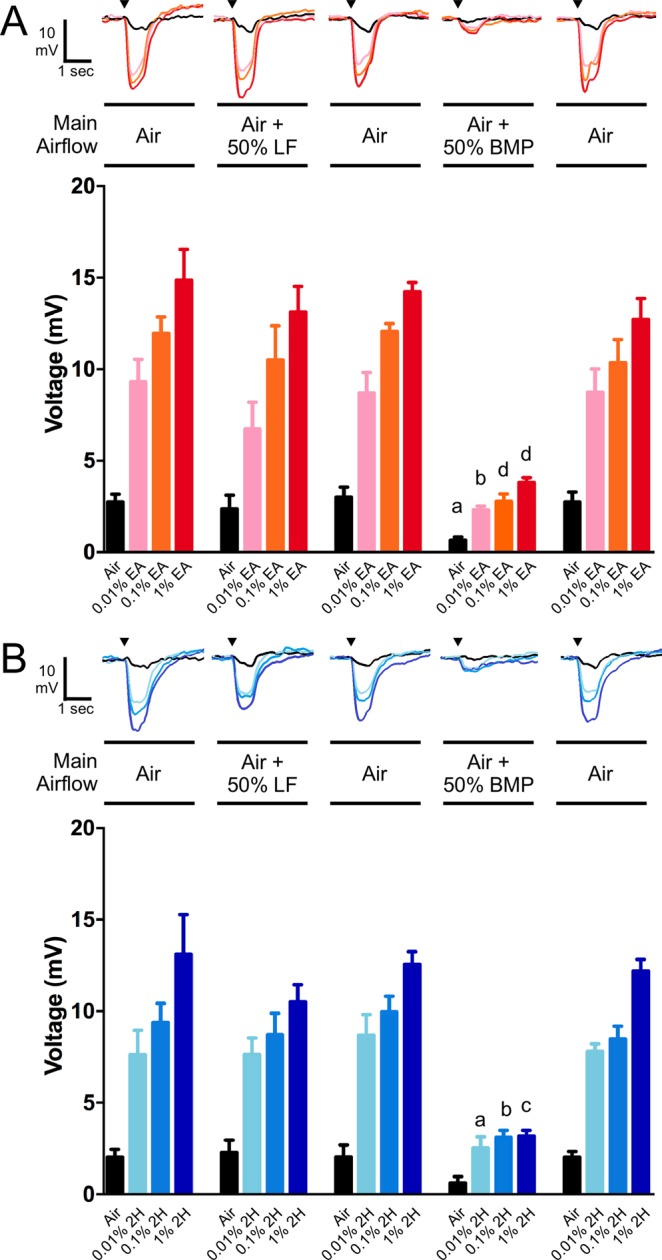
Olfaction is a key component of the multimodal approach used by mosquitoes to target and feed on humans, spreading various diseases. Current repellents have drawbacks, necessitating development of more effective agents. In addition to variable odorant specificity subunits, all insect odorant receptors (ORs) contain a conserved odorant receptor co-receptor (Orco) subunit which is an attractive target for repellent development. Orco directed antagonists allosterically inhibit odorant activation of ORs and we previously showed that an airborne Orco antagonist could inhibit insect olfactory behavior. Here, we identify novel, volatile Orco antagonists. We functionally screened 83 structurally diverse compounds against Orco from Anopheles gambiae. Results were used for training machine learning models to rank probable activity of a library of 1280 odorant molecules. Functional testing of a representative subset of predicted active compounds revealed enrichment for Orco antagonists, many structurally distinct from previously known Orco antagonists. Novel Orco antagonist 2-tert-butyl-6-methylphenol (BMP) inhibited odorant responses in electroantennogram and single sensillum recordings in adult Drosophila melanogaster and inhibited OR-mediated olfactory behavior in D. melanogaster larvae. Structure-activity analysis of BMP analogs identified compounds with improved potency. Our results provide a new approach to the discovery of behaviorally active Orco antagonists for eventual use as insect repellents/confusants.
嗅觉是蚊子用于靶向和吸食人类以及传播各种疾病的多模态方法的关键组成部分。目前的驱避剂存在缺点,需要开发更有效的药剂。除了可变的气味特异性亚基外,所有昆虫气味受体(OR)都包含一个保守的气味受体共受体(Orco)亚基,这是驱避剂开发的一个有吸引力的目标。Orco 定向拮抗剂变构抑制 OR 对气味的激活,我们之前表明,一种空气传播的 Orco 拮抗剂可以抑制昆虫嗅觉行为。在这里,我们鉴定了新的挥发性 Orco 拮抗剂。我们针对来自冈比亚按蚊的 Orco 对 83 种结构多样的化合物进行了功能筛选。结果用于训练机器学习模型,对 1280 种气味分子库的可能活性进行排名。对预测的活性化合物的代表性子集进行功能测试,发现富含 Orco 拮抗剂,其中许多与以前已知的 Orco 拮抗剂在结构上有很大不同。新型 Orco 拮抗剂 2-叔丁基-6-甲基苯酚(BMP)抑制了成年黑腹果蝇触角电图和单感器记录中的气味反应,并抑制了 OR 介导的黑腹果蝇幼虫的嗅觉行为。BMP 类似物的结构-活性分析确定了具有提高效力的化合物。我们的结果为发现具有行为活性的 Orco 拮抗剂提供了一种新方法,最终可用于作为昆虫驱避剂/混淆剂。