She Shenglin, Zhang Bei, Mi Lin, Li Haijing, Kuang Qijie, Bi Taiyong, Zheng Yingjun
Department of Psychiatry, The Affiliated Brain Hospital of Guangzhou Medical University (Guangzhou Huiai Hospital), Guangzhou 510370, China,
School of Management, Zunyi Medical University, Guizhou 563000, China,
Neuropsychiatr Dis Treat. 2019 Feb 18;15:481-489. doi: 10.2147/NDT.S188645. eCollection 2019.
Working memory (WM) deficits have been observed in people with schizophrenia (SZ) and are considered a core cognitive dysfunction in these patients. However, little is known about how stimuli and memory load influence visual WM deficits.
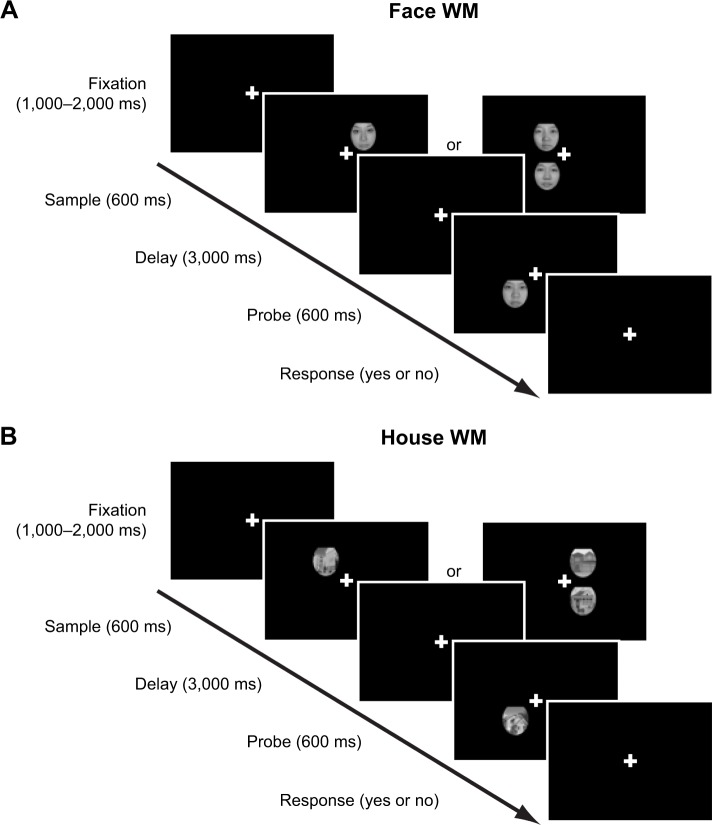
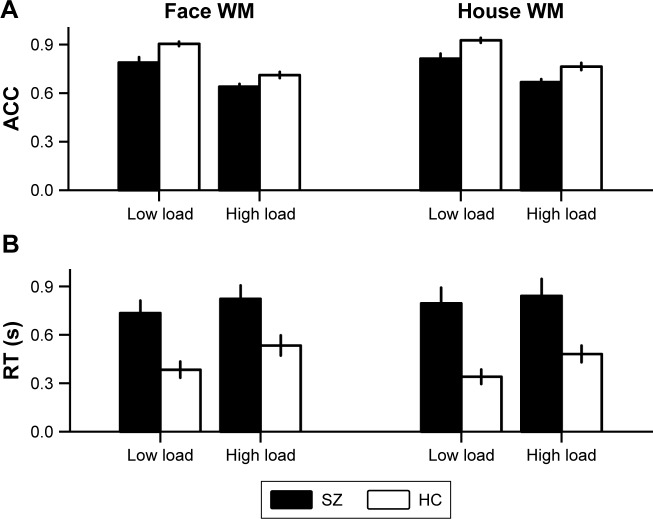
In the present study, we adopted a match-to-sample task to examine the visual WM in 18 first-episode patients with SZ and 18 healthy controls (HCs). Faces and houses were used as the stimuli, and there were two levels of memory load - one item and two items; the average accuracy (ACC) and reaction time were calculated for each condition. The Positive and Negative Syndrome Scale and the Personal and Social Performance scale were used to assess the psychiatric symptoms and social function, respectively.
The results showed equivalent levels of WM deficit when using face and house stimuli. Moreover, the WM deficits were not related to the duration of illness, medication, or SZ symptoms.
These results demonstrate that stimuli may have little impact on ACC in WM tasks in people with SZ. In addition, the memory load may have little impact on WM ACC when the load is relatively low.
在精神分裂症(SZ)患者中已观察到工作记忆(WM)缺陷,且被认为是这些患者的核心认知功能障碍。然而,关于刺激和记忆负荷如何影响视觉WM缺陷,人们知之甚少。
在本研究中,我们采用了样本匹配任务来检查18例首发SZ患者和18名健康对照者(HCs)的视觉WM。面孔和房屋用作刺激物,有两个记忆负荷水平——一项和两项;计算每种情况下的平均准确率(ACC)和反应时间。分别使用阳性和阴性症状量表以及个人和社会表现量表来评估精神症状和社会功能。
结果显示,使用面孔和房屋刺激时WM缺陷水平相当。此外,WM缺陷与病程、用药情况或SZ症状无关。
这些结果表明,刺激对SZ患者WM任务中的ACC可能影响很小。此外,当负荷相对较低时,记忆负荷对WM的ACC可能影响很小。