Wang Hui, Liu Xiaoye, Jiang Xuechao, Song Yongchun, Wang Xiaoguang, Wang Jingsheng, Dong Yang, Li Fengtong, Wu Zhiqiang, Zhang Yuhan, Yuan Zhiyong
Department of Radiation Oncology, Tianjin Medical University Cancer Institute and Hospital, National Clinical Research Center for Cancer, Key Laboratory of Cancer Prevention and Therapy, Tianjin's Clinical Research Center for Cancer, Tianjin, China,
Cancer Manag Res. 2019 Feb 20;11:1753-1763. doi: 10.2147/CMAR.S188674. eCollection 2019.
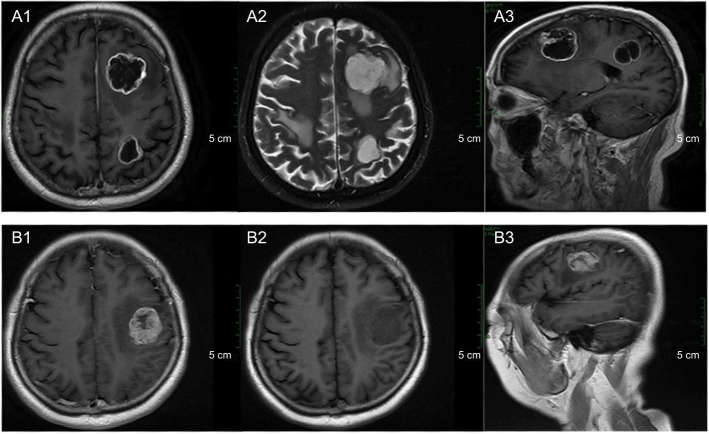
Traditionally, radiosurgery was considered less effective for patients with cystic brain metastases. However, comparisons of prognosis between cystic and solid brain metastases in cancer patients have been seldom reported. We aimed to compare the survival between cystic and solid brain metastases and assess risk factors for overall survival after brain metastases (BMOS) in patients who underwent radiosurgery treatment.
The Kaplan-Meier method and multivariate Cox regression analysis were used to compare survival time and evaluate risk factors for BMOS.
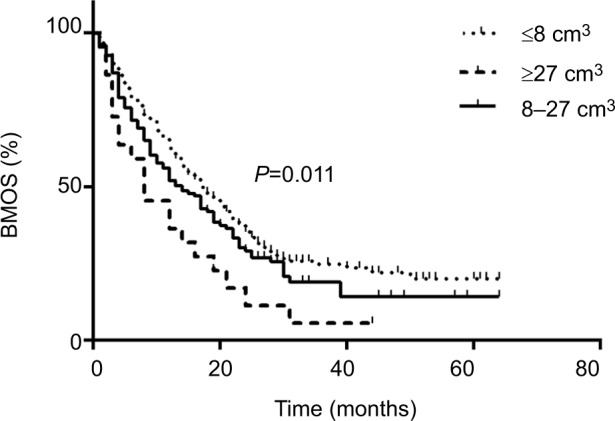
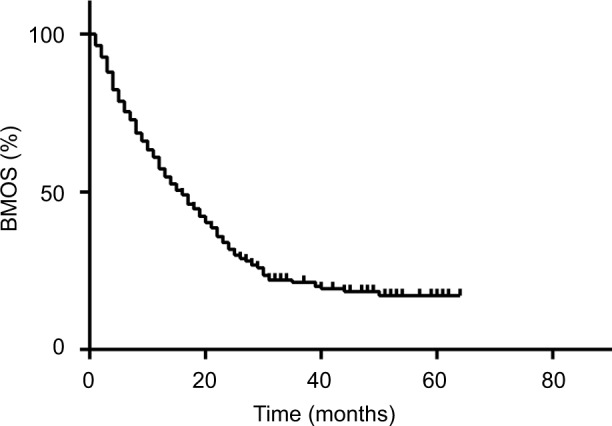
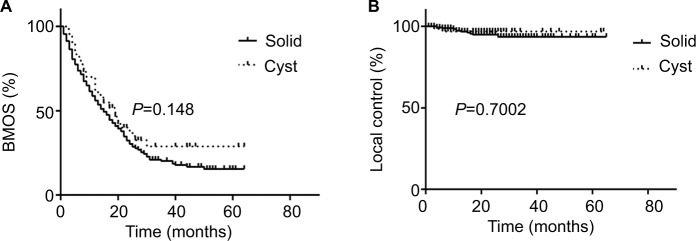
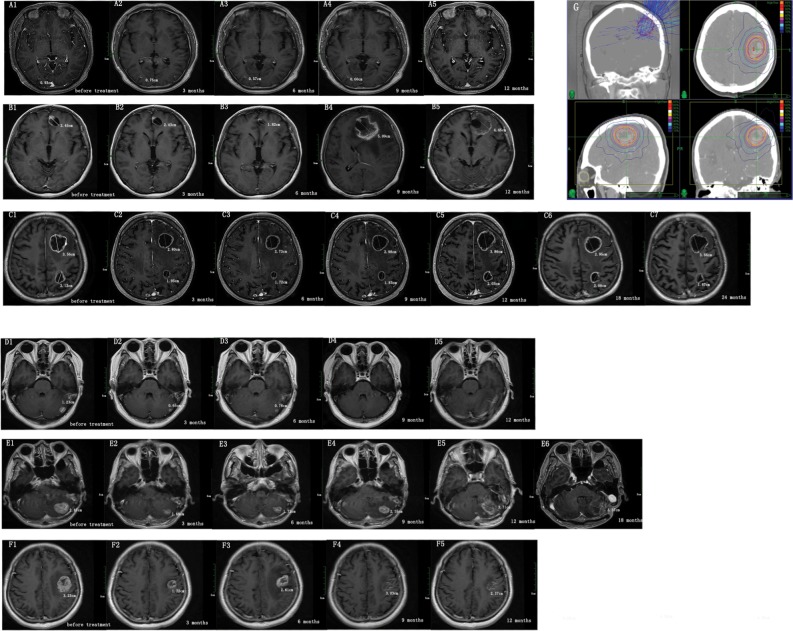
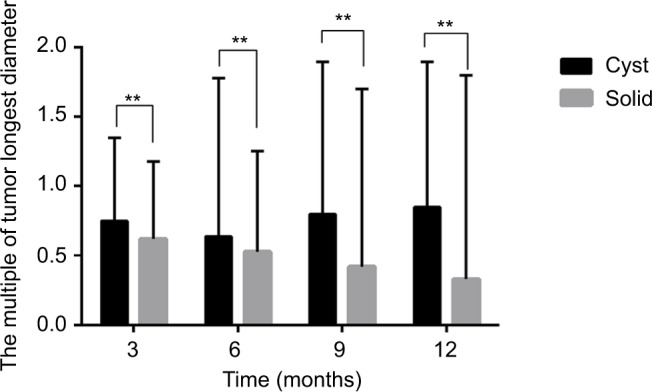
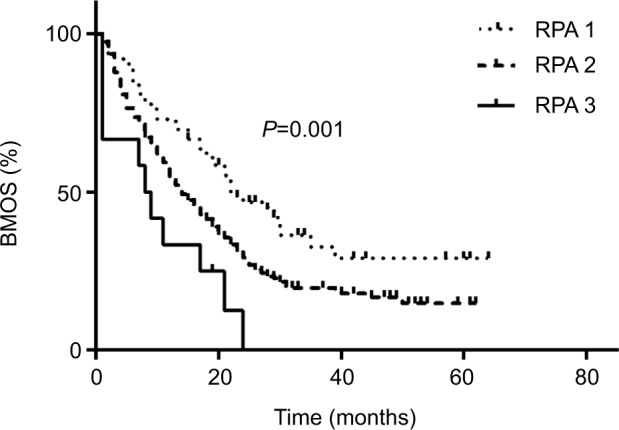
A total of 356 patients (including 498 brain metastases) were analyzed in our study, including 67 patients (67/356, 18.8%) with 75 cystic brain metastases. There is no statistical significance in BMOS between patients with cystic (17 months, range: 3-64 months) and solid (17.5 months, range: 1-65 months) brain metastases (=0.148). However, the volume of cystic brain metastases decreased more slowly than solid brain metastases (<0.05). The results indicated that high recursive partitioning analysis classification (=0.006), large volume of brain metastases (=0.006), and different primary lesion (especially gastrointestinal tract tumor) (=0.001) were associated with poor prognosis in patients with brain metastases.
There is no difference in prognosis and local control between patients with cystic and solid brain metastases who underwent radiosurgery. However, the rate and speed of tumor shrinkage were lower in cystic brain metastases after radiotherapy. Patients with larger brain metastases had shorter survival time, regardless of cystic or solid brain metastases.
传统上,放射外科手术被认为对脑囊性转移瘤患者效果较差。然而,癌症患者中脑囊性转移瘤和实性转移瘤预后的比较鲜有报道。我们旨在比较脑囊性转移瘤和实性转移瘤患者的生存期,并评估接受放射外科治疗的患者脑转移瘤后总生存期(BMOS)的危险因素。
采用Kaplan-Meier法和多变量Cox回归分析比较生存时间并评估BMOS的危险因素。
本研究共分析了356例患者(包括498个脑转移瘤),其中67例患者(67/356,18.8%)有75个脑囊性转移瘤。脑囊性转移瘤患者(17个月,范围:3 - 64个月)和实性转移瘤患者(17.5个月,范围:1 - 65个月)的BMOS无统计学意义(P = 0.148)。然而,脑囊性转移瘤体积缩小比实性转移瘤更慢(P < 0.05)。结果表明,高递归分区分析分类(P = 0.006)、脑转移瘤体积大(P = 0.006)和原发病变不同(尤其是胃肠道肿瘤)(P = 0.001)与脑转移瘤患者预后不良相关。
接受放射外科治疗的脑囊性转移瘤和实性转移瘤患者的预后和局部控制无差异。然而,放疗后脑囊性转移瘤的肿瘤缩小率和速度较低。无论脑囊性转移瘤还是实性转移瘤,体积较大的脑转移瘤患者生存期较短。