Shafiekhani Mojtaba, Ommati Mohammad Mehdi, Azarpira Negar, Heidari Reza, Salarian Amir Ahmad
Toxin Research Center, Faculty of Medicine, Aja University of Medical Science, Tehran, Iran,
Department of Clinical Pharmacy, Faculty of Pharmacy, Shiraz University of Medical Sciences, Shiraz, Iran.
J Exp Pharmacol. 2019 Feb 18;11:15-22. doi: 10.2147/JEP.S190846. eCollection 2019.
Lead (Pb) is an environmental pollutant responsible for various organ damages including renal injury. It seems that OS and associated events are crucial mechanisms of lead-induced renal dysfunction. The current study aimed to explore the potential protective effects of glycine against renal injury caused by lead in mice.
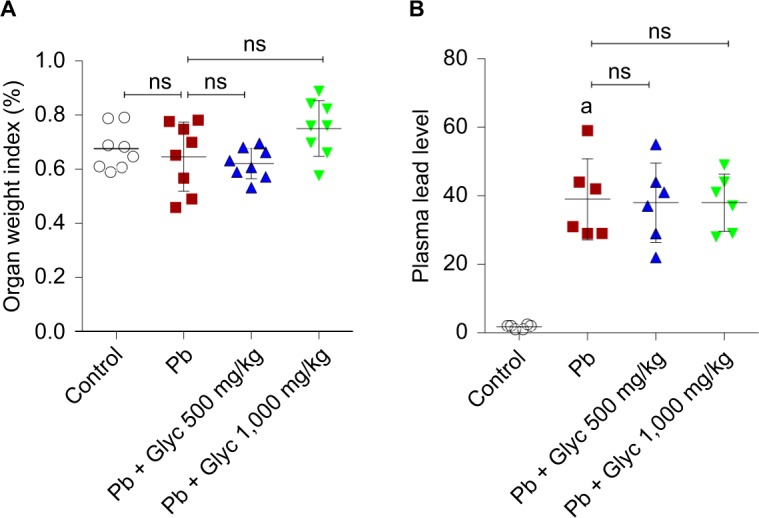
Mature male mice (n=32) were allocated into four groups. The following treatment regimens were the control (vehicle-treated); Pb-acetate (20 mg/kg/day, gavage); Pb-acetate + glycine (500 mg/kg/day, IP); and Pb-acetate + glycine (1,000 mg/kg/day, IP). Pb-acetate + glycine was administered for 14 consecutive days, Pb-acetate was given first and then glycine at least 6 hours later. On day 15, the subjects were anesthetized, and samples were collected. Serum biomarkers such as BUN and serum creatinine were monitored along with formation of reactive oxygen species, lipid peroxidation, kidney GSH level, and histopathological changes.
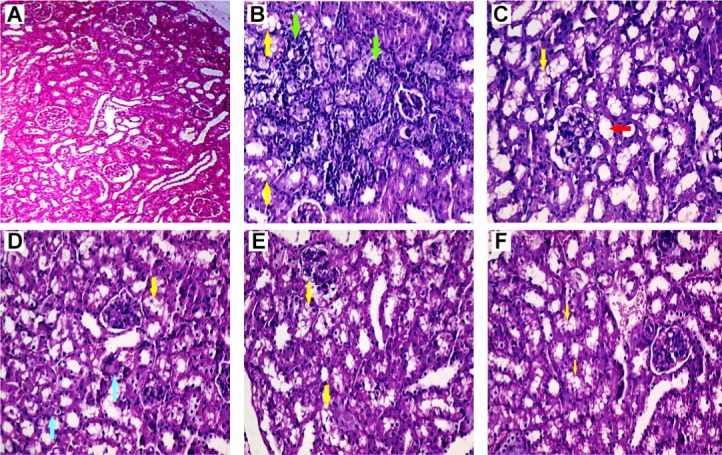
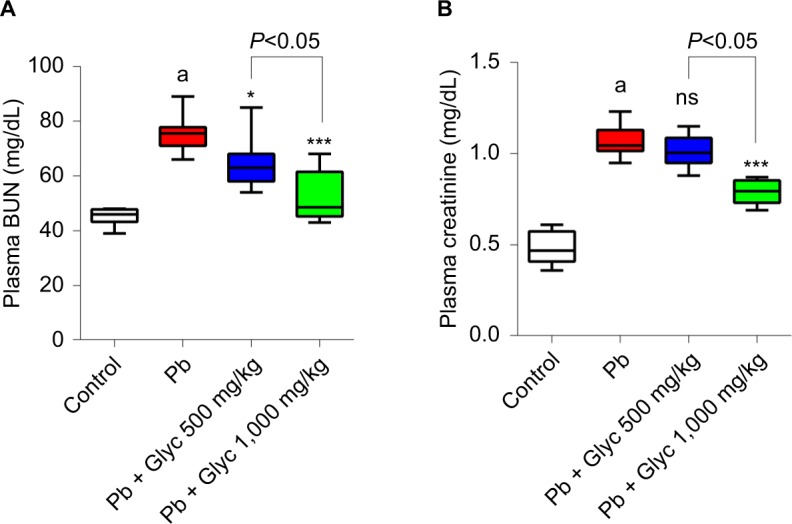
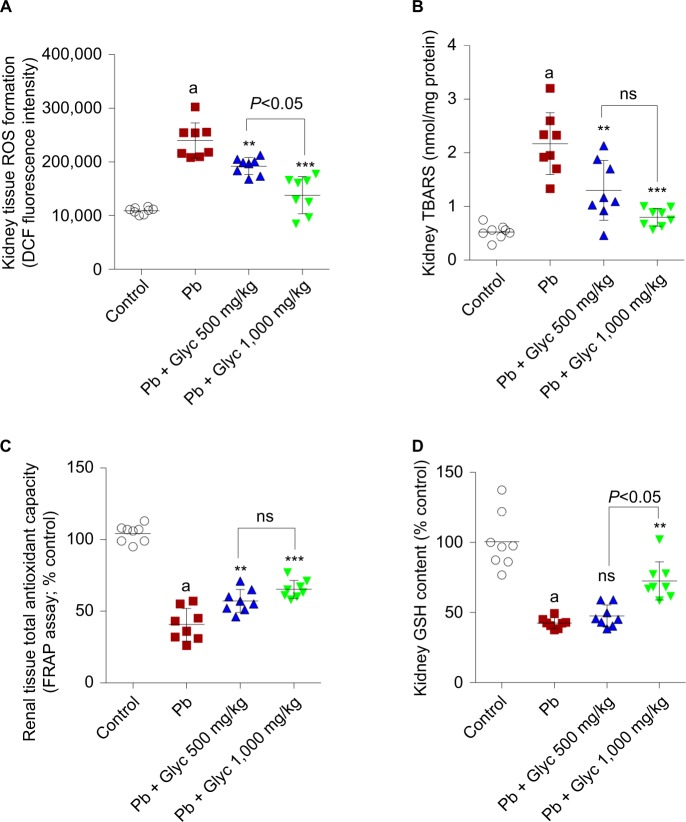
Based on the results, BUN and serum creatinine levels significantly increased following exposure to lead. Glycine supplementation (500 and 1,000 mg/kg, IP) decreased BUN and creatinine serum levels (<0.001). Biomarkers of OS were also reduced in renal tissue following glycine therapy in Pb-exposed mice (<0.001). Histopathological changes were observed in mice treated with lead as tubular dilation, protein cast, vacuolization, and inflammation. In this regard, glycine inhibited histopathological alterations in kidney caused by lead exposure.
It was found that glycine treatment significantly mitigated Pb-induced renal injury most likely through alleviating OS and the associated deleterious outcomes on the kidney tissue.
铅(Pb)是一种环境污染物,可导致包括肾损伤在内的各种器官损害。氧化应激(OS)及相关事件似乎是铅诱导肾功能障碍的关键机制。本研究旨在探讨甘氨酸对小鼠铅诱导肾损伤的潜在保护作用。
将32只成熟雄性小鼠分为四组。以下治疗方案分别为:对照组(给予赋形剂);醋酸铅组(20 mg/kg/天,灌胃);醋酸铅+甘氨酸组(500 mg/kg/天,腹腔注射);醋酸铅+甘氨酸组(1000 mg/kg/天,腹腔注射)。连续14天给予醋酸铅+甘氨酸,先给予醋酸铅,至少6小时后再给予甘氨酸。在第15天,将小鼠麻醉并采集样本。监测血清生物标志物如血尿素氮(BUN)和血清肌酐,同时监测活性氧的形成、脂质过氧化、肾脏谷胱甘肽(GSH)水平以及组织病理学变化。
结果显示,接触铅后BUN和血清肌酐水平显著升高。补充甘氨酸(500和1000 mg/kg,腹腔注射)可降低血清BUN和肌酐水平(<0.001)。在铅暴露小鼠中,甘氨酸治疗后肾组织中OS的生物标志物也降低(<0.001)。在用铅处理的小鼠中观察到组织病理学变化,如肾小管扩张、蛋白管型、空泡化和炎症。在这方面,甘氨酸抑制了铅暴露引起的肾脏组织病理学改变。
发现甘氨酸治疗可显著减轻铅诱导的肾损伤,最可能的机制是减轻氧化应激及其对肾组织的相关有害影响。