Graduate School of Health, University of Technology Sydney, Sydney, New South Wales, Australia.
Pharmaceutical Sciences Postgraduate Programme, Universidade Federal do Paraná, Curitiba, Brazil.
PLoS One. 2019 Mar 12;14(3):e0213432. doi: 10.1371/journal.pone.0213432. eCollection 2019.
Adherence-enhancing interventions have been assessed in the literature, however heterogeneity and conflicting findings have prohibited a consensus on the most effective approach to maintain adherence over time. With the ageing population and growth of chronic conditions, evaluation of sustainable strategies to improve and maintain medication adherence long term is paramount. We aimed to determine the comparative effectiveness of interventions for improving medication adherence over time among adults with any clinical condition.
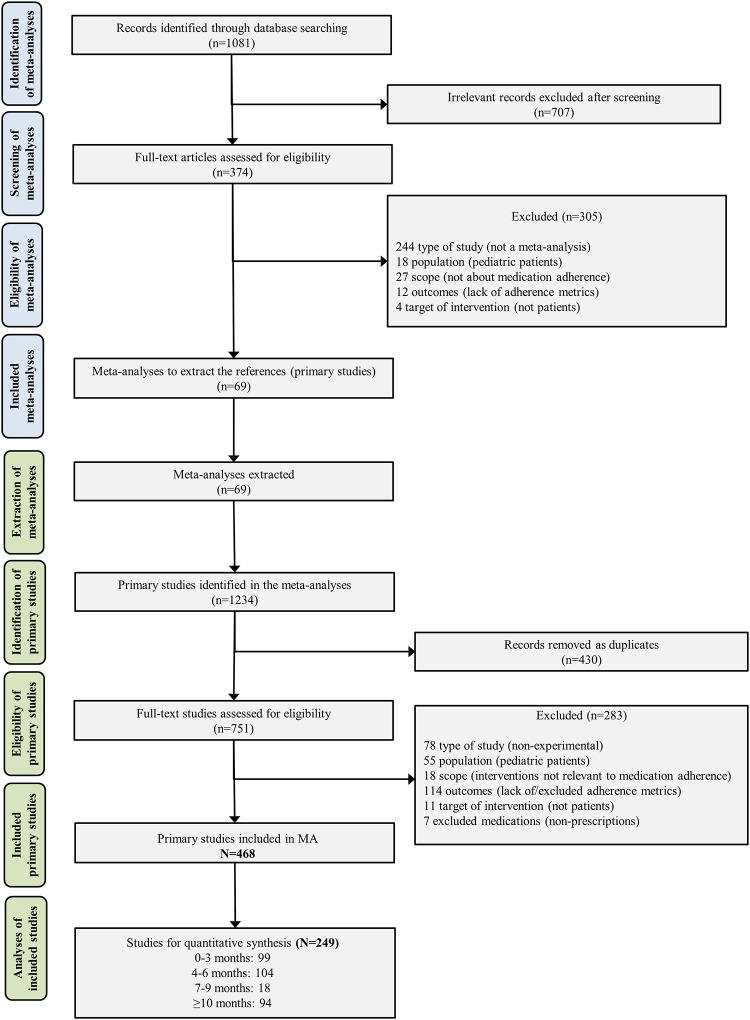
Meta-analyses evaluating interventions to improve medication adherence were searched in PubMed in January 2019 and reviewed for primary studies. Experimental studies with a comparison group assessing an intervention to enhance medication adherence in adult patients with reported adherence outcomes were included. Two authors extracted data for study characteristics, interventions and adherence outcomes. Interventions were categorized into four groups or combinations: educational, attitudinal, technical and rewards. Four network meta-analyses were performed to compare interventions based on patient follow-up time. Medication adherence effect sizes were reported as odds ratios (OR) with a 95% credibility interval (CrI) and surface under the cumulative ranking curve (SUCRA) to allow ranking probabilities. Risk of bias was assessed as per Cochrane guidelines.
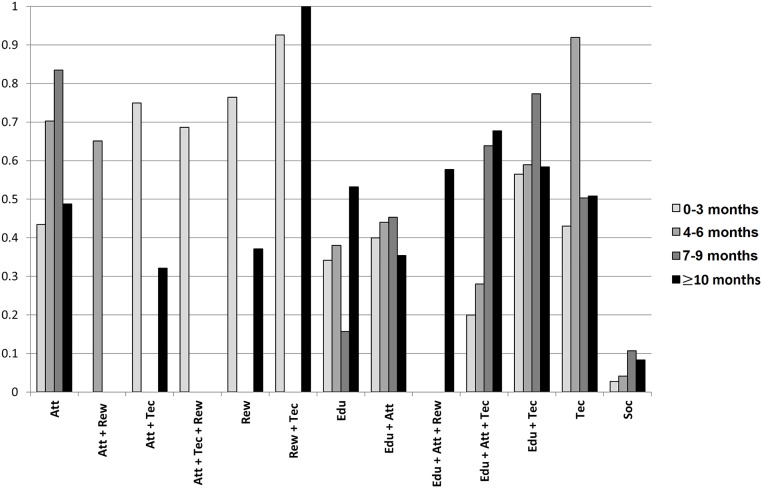
Data was obtained from 69 meta-analyses with 468 primary studies being included in qualitative synthesis. The four networks compromised of 249 studies in total (0-3 month follow-up: 99 studies, 4-6 months: 104, 7-9 months: 18, ≥10 months: 94). Interventions showing success in follow-ups of less than 10 months varied across time. Significant effects compared to standard of care (SOC) were found in technical (4-6 months: OR 0.34, 95% CrI 0.25-0.45) and attitudinal interventions (7-9 months: 0.37, 0.17-0.84). Multicomponent interventions demonstrated effectiveness compared to standard of care with an additive effect displayed, particularly in longer follow-ups (educational + attitudinal + technical interventions ≥10 months: OR 0.49, 95% CrI 0.27-0.88).
All interventions reviewed improved medication adherence compared to standard of care. Multicomponent interventions displayed the most promising results in maintenance of long-term medication adherence. Technical and reward components enhanced adherence on a short-term basis, while educational and attitudinal interventions evolved over time to be more effective in follow-ups greater than 7 months. Sustainability of adherence to medications over time is dependent upon multicomponent interventions including educational, attitudinal and technical aspects to modify and enhance patient medication-taking behavior. Future research should focus on the most cost-effective approaches able to be integrated into routine practice.
文献中已经评估了增强依从性的干预措施,但是异质性和相互矛盾的结果使得人们无法就维持长期依从性的最有效方法达成共识。随着人口老龄化和慢性病的增长,评估改善和维持长期药物依从性的可持续策略至关重要。我们旨在确定改善任何临床条件的成年人随时间推移的药物依从性的干预措施的比较效果。
在 2019 年 1 月在 PubMed 中搜索了评估改善药物依从性的干预措施的荟萃分析,并对其进行了综述以查找主要研究。纳入了具有报告的依从性结果的比较组评估干预措施以增强成年患者药物依从性的实验研究。两位作者提取了研究特征、干预措施和依从性结果的数据。干预措施分为四类或组合:教育、态度、技术和奖励。进行了四项网络荟萃分析,以根据患者随访时间比较干预措施。药物依从性效果大小以优势比(OR)和 95%可信度区间(CrI)和累积排序曲线下面积(SUCRA)报告,以允许排序概率。根据 Cochrane 指南评估了偏倚风险。
从 69 项荟萃分析中获得了数据,其中包括 468 项主要研究,这些研究进行了定性综合分析。四个网络共包含 249 项研究(0-3 个月随访:99 项研究,4-6 个月:104 项,7-9 个月:18 项,≥10 个月:94 项)。在随访时间少于 10 个月的情况下,与标准护理(SOC)相比,成功的干预措施各不相同。与 SOC 相比,在技术(4-6 个月:OR 0.34,95%CrI 0.25-0.45)和态度干预(7-9 个月:0.37,0.17-0.84)中发现了显著效果。与 SOC 相比,多组分干预措施显示出有效性,并且显示出附加效果,特别是在较长的随访中(教育+态度+技术干预措施≥10 个月:OR 0.49,95%CrI 0.27-0.88)。
与 SOC 相比,所有审查的干预措施都改善了药物依从性。多组分干预措施在维持长期药物依从性方面显示出最有希望的结果。技术和奖励措施在短期内增强了依从性,而教育和态度干预措施随着时间的推移而演变,在随访时间超过 7 个月时更有效。随着时间的推移,药物依从性的可持续性取决于包括教育、态度和技术方面的多组分干预措施,以改变和增强患者的药物服用行为。未来的研究应侧重于最具成本效益的方法,以便能够纳入常规实践。