Department of Microbiology, Immunology, Genetics, University of North Texas Health Science Center, Fort Worth, Texas, United States of America.
Department of Pharmacology and Neuroscience, University of North Texas Health Science Center, Fort Worth, Texas, United States of America.
PLoS One. 2019 Mar 12;14(3):e0213527. doi: 10.1371/journal.pone.0213527. eCollection 2019.
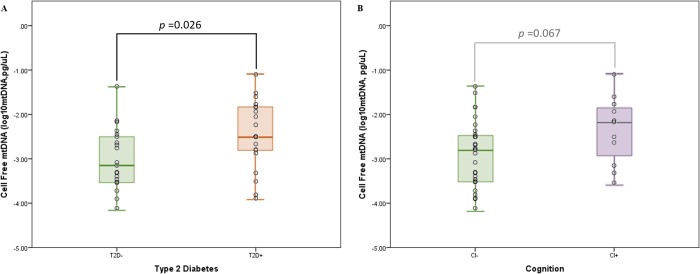
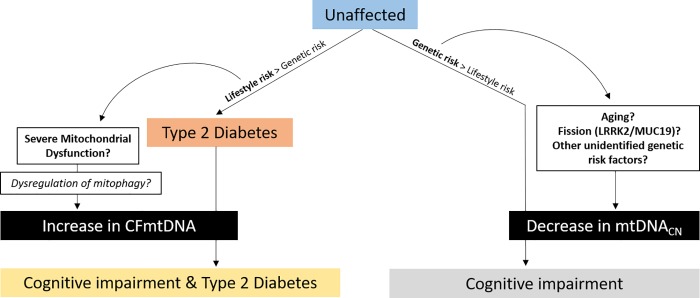
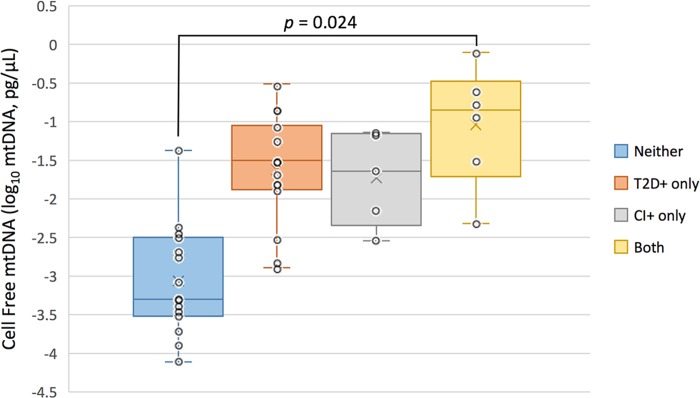
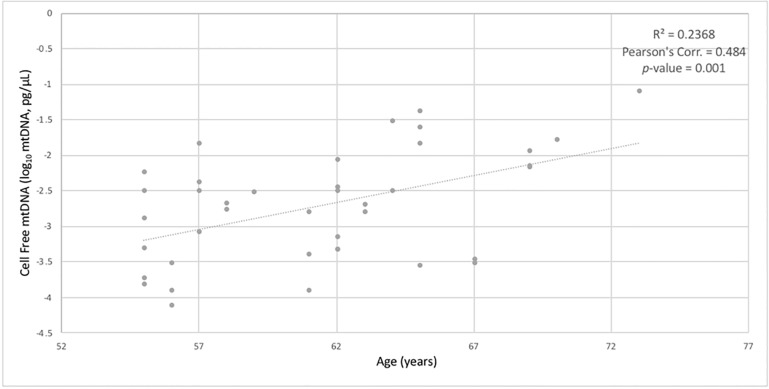
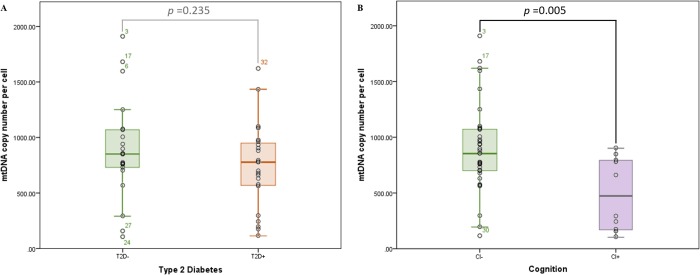
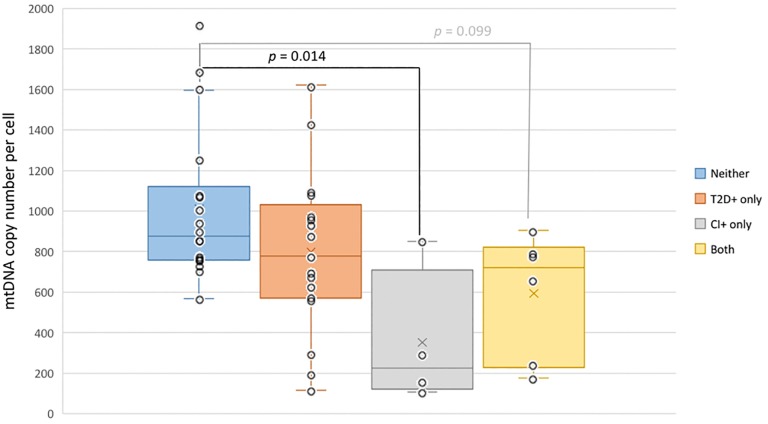
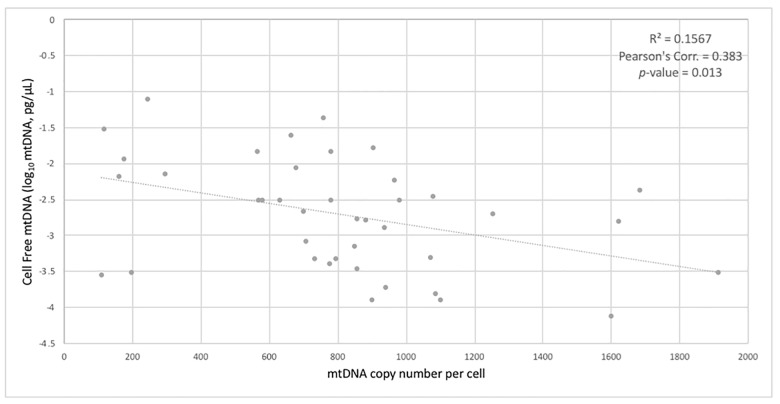
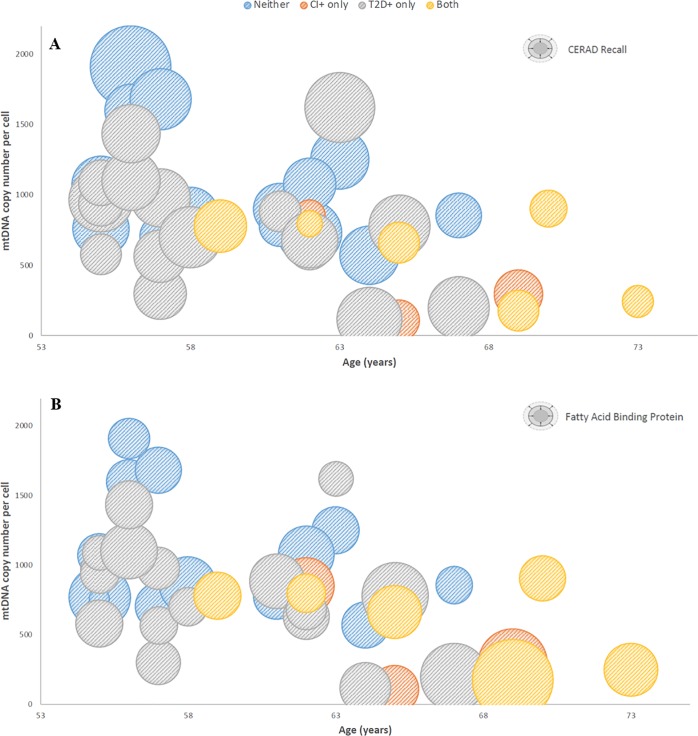
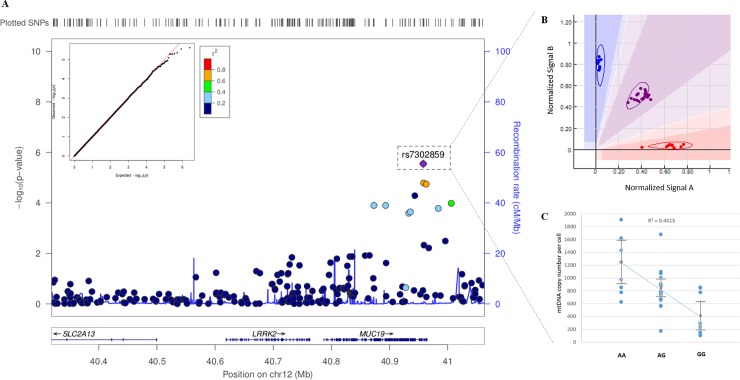
Mitochondrial function has been implicated and studied in numerous complex age-related diseases. Understanding the potential role of mitochondria in disease pathophysiology is of importance due to the rise in prevalence of complex age-related diseases, such as type 2 diabetes (T2D) and Alzheimer's disease (AD). These two diseases specifically share common pathophysiological characteristics which potentially point to a common root cause or factors for disease exacerbation. Studying the shared phenomena in Mexican Americans is of particular importance due to the disproportionate prevalence of both T2D and AD in this population. Here, we assessed the potential role of mitochondria in T2D and cognitive impairment (CI) in a Mexican American cohort by analyzing blood-based indices of mitochondrial DNA copy number (mtDNACN) and cell-free mitochondrial DNA (CFmtDNA). These mitochondrial metrics were also analyzed for correlation with relevant neuropsychological variables and physiological data collected as indicators of disease and/or disease progression. We found mtDNACN to be significantly decreased in individuals with CI, while CFmtDNA was significantly elevated in T2D; further, CFmtDNA elevation was significantly exacerbated in individuals with both diseases. MtDNACN was found to negatively correlate with age and fatty acid binding protein concentration, while positively correlating with CFmtDNA as well as CERAD total recall score. Candidate gene SNP-set analysis was performed on genes previously implicated in maintenance and control of mitochondrial dynamics to determine if nuclear variants may account for variability in mtDNACN. The results point to a single significant locus, in the LRRK2/MUC19 region, encoding leucine rich repeat kinase 2 and mucin 19. This locus has been previously implicated in Parkinson's disease, among others; rs7302859 was the driver SNP. These combined findings further indicate that mitochondrial dysfunction (as assessed by proxy via mtDNACN) is intimately linked to both T2D and CI phenotypes as well as aging.
线粒体功能已在许多与年龄相关的复杂疾病中被涉及和研究。由于 2 型糖尿病 (T2D) 和阿尔茨海默病 (AD) 等复杂与年龄相关疾病的患病率上升,了解线粒体在疾病病理生理学中的潜在作用非常重要。这两种疾病具有共同的病理生理特征,这可能指向疾病恶化的共同根本原因或因素。由于这两种疾病在墨西哥裔美国人中的发病率不成比例,因此研究墨西哥裔美国人中的共同现象尤为重要。在这里,我们通过分析基于血液的线粒体 DNA 拷贝数 (mtDNACN) 和无细胞线粒体 DNA (CFmtDNA) 的指数,评估了线粒体在 T2D 和认知障碍 (CI) 中的潜在作用。还分析了这些线粒体指标与相关神经心理学变量以及作为疾病和/或疾病进展指标的生理数据的相关性。我们发现,CI 个体的 mtDNACN 显著降低,而 T2D 个体的 CFmtDNA 显著升高;此外,两种疾病患者的 CFmtDNA 升高显著加剧。mtDNACN 与年龄和脂肪酸结合蛋白浓度呈负相关,而与 CFmtDNA 以及 CERAD 总回忆评分呈正相关。对先前涉及维持和控制线粒体动力学的基因进行了候选基因 SNP 集分析,以确定核变体是否可以解释 mtDNACN 的变异性。结果指向一个单一的显著位点,在 LRRK2/MUC19 区域,编码富含亮氨酸重复激酶 2 和粘蛋白 19。该基因座先前已被牵连入帕金森病等疾病;rs7302859 是驱动 SNP。这些综合发现进一步表明,线粒体功能障碍(通过 mtDNACN 间接评估)与 T2D 和 CI 表型以及衰老密切相关。