Department of Microbiology, College of Medicine, Soochow University, Suzhou, Jiangsu Province, 215123, China.
Sci Rep. 2019 Mar 12;9(1):4235. doi: 10.1038/s41598-019-40682-8.
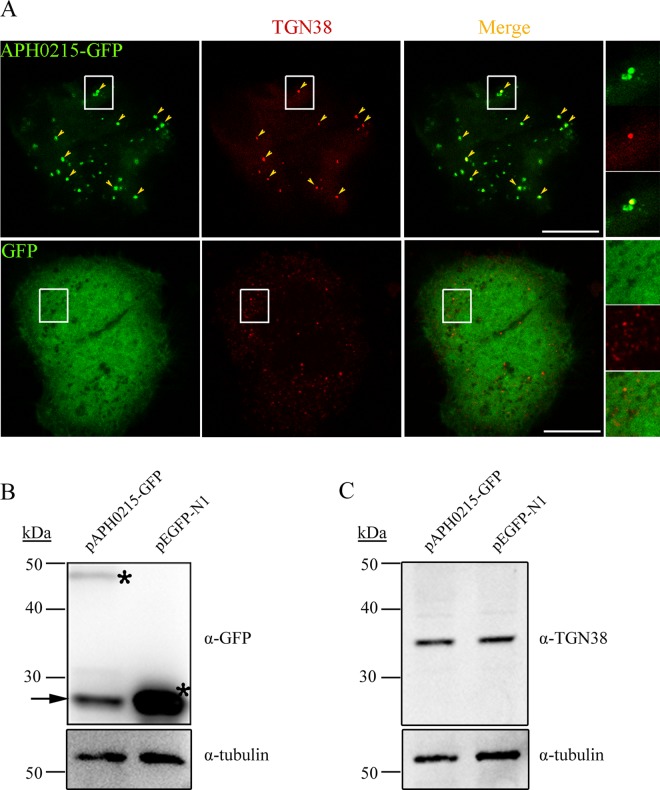
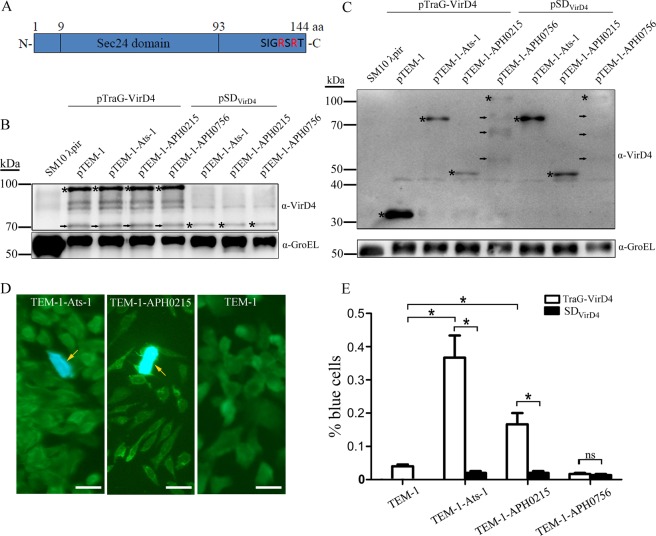
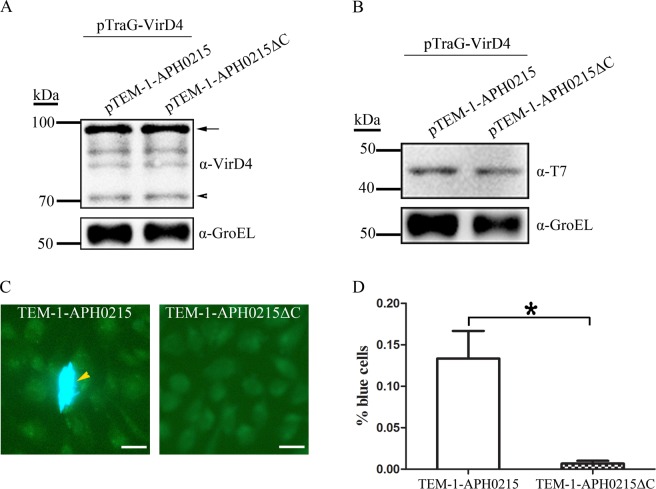
Anaplasma phagocytophilum, the aetiologic agent of human granulocytic anaplasmosis (HGA) is an obligate intracellular Gram-negative bacterium with the genome size of 1.47 megabases. The intracellular life style and small size of genome suggest that A. phagocytophilum has to modulate a multitude of host cell physiological processes to facilitate its replication. One strategy employed by A. phagocytophilum is through its type IV secretion system (T4SS), which translocates bacterial effectors into target cells to disrupt normal cellular activities. In this study we developed a TEM-1 β-lactamase based protein translocation assay and applied this assay for identification of A. phagocytophilum T4SS effectors. An A. phagocytophilum hypothetical protein, APH0215 is identified as a T4SS effector protein and found interacting with trans-Golgi network in transfected cells. Hereby, this protein translocation assay developed in this study will facilitate the identification of A. phagocytophilum T4SS effectors and elucidation of HGA pathogenesis.
嗜吞噬细胞无形体是人类粒细胞无形体病(HGA)的病原体,是一种专性细胞内革兰氏阴性细菌,基因组大小为 1.47 兆碱基。这种细菌的细胞内生活方式和较小的基因组表明,它必须调节多种宿主细胞的生理过程,以促进其复制。嗜吞噬细胞无形体采用的一种策略是通过其 IV 型分泌系统(T4SS),将细菌效应蛋白转运到靶细胞中,破坏正常的细胞活动。在这项研究中,我们开发了一种基于 TEM-1 内酰胺酶的蛋白转运测定法,并将该测定法应用于鉴定嗜吞噬细胞无形体 T4SS 效应蛋白。嗜吞噬细胞无形体的一个假定蛋白 APH0215 被鉴定为 T4SS 效应蛋白,并在转染细胞中发现与反式高尔基体网络相互作用。因此,本研究中开发的这种蛋白转运测定法将有助于鉴定嗜吞噬细胞无形体 T4SS 效应蛋白,并阐明 HGA 的发病机制。