Division of Molecular and Cellular Biology, Eunice Kennedy Shriver National Institute of Child Health and Human Development, National Institutes of Health, Bethesda, Maryland, USA.
Department of Microbiology and Immunology, University of Maryland School of Medicine, Baltimore, Maryland, USA.
mBio. 2024 May 8;15(5):e0075923. doi: 10.1128/mbio.00759-23. Epub 2024 Apr 2.
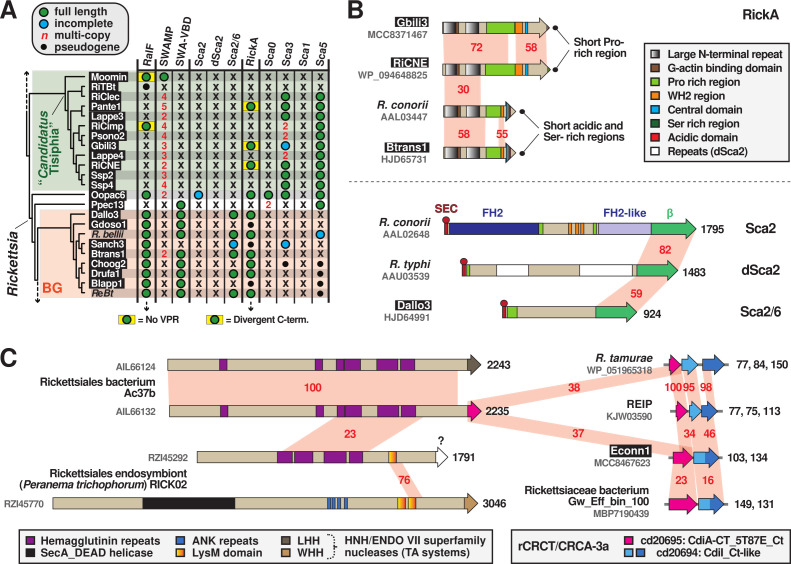
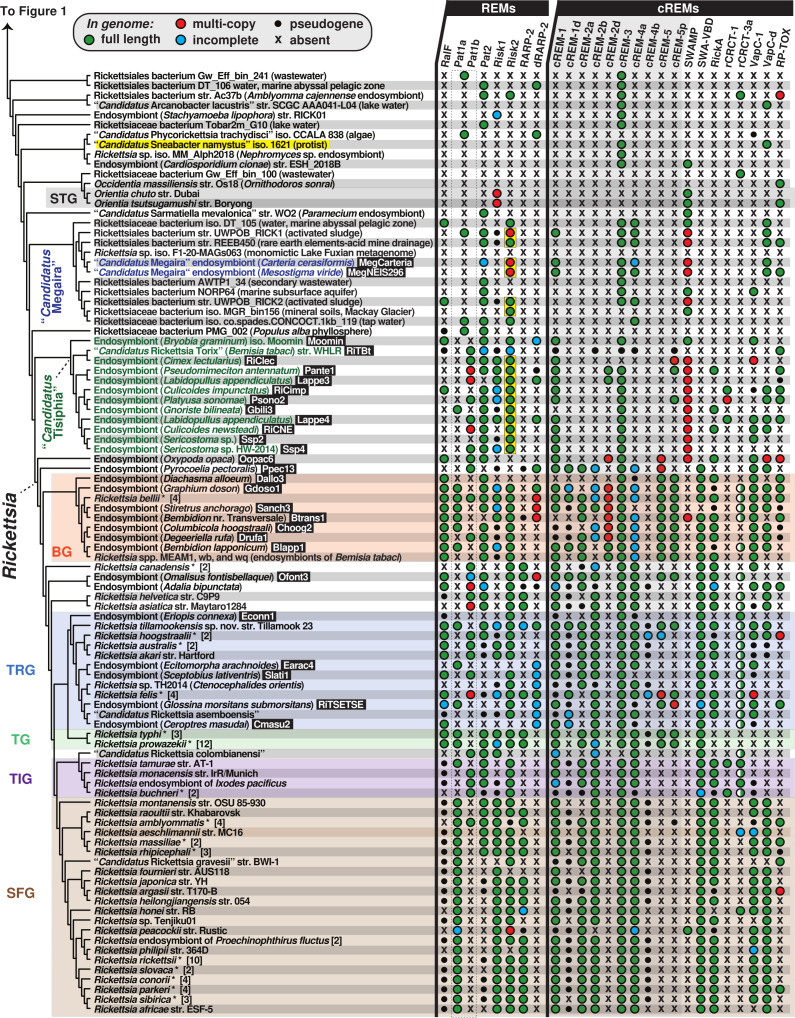
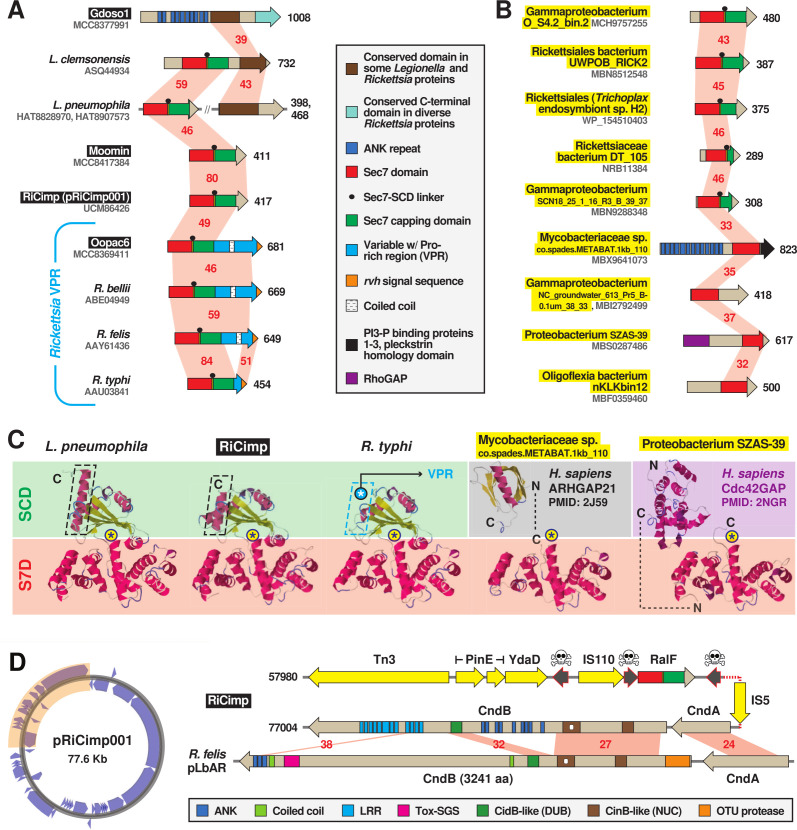
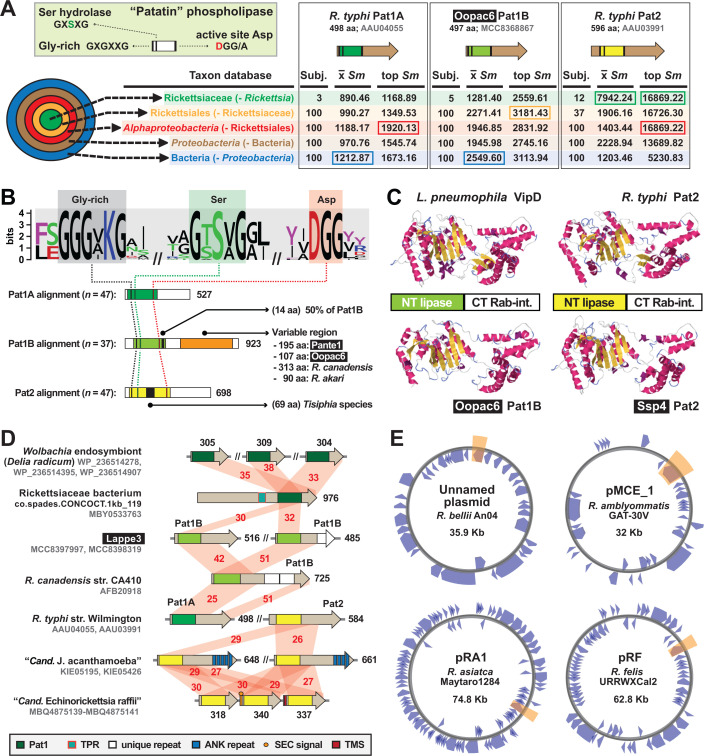
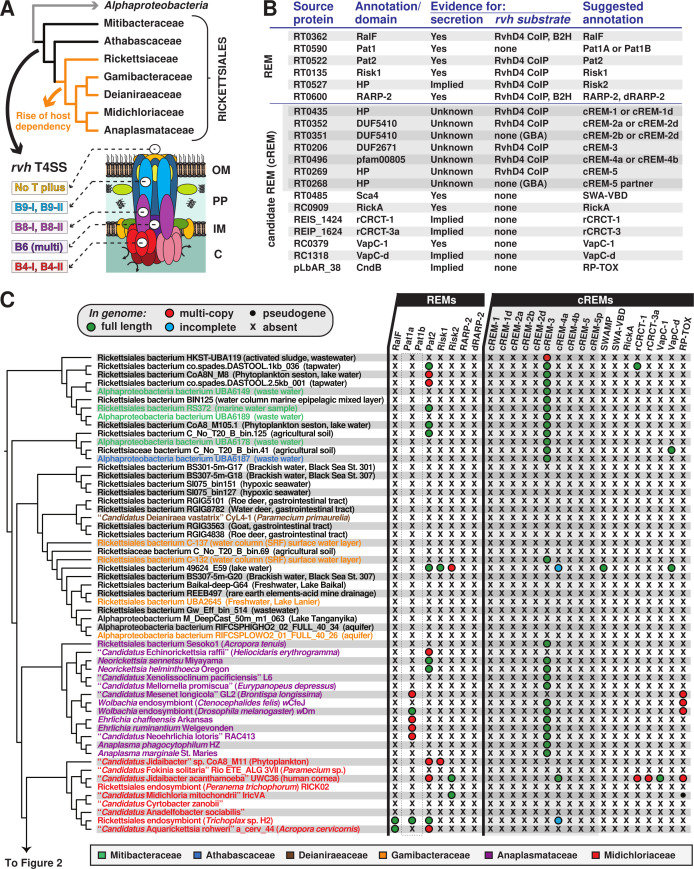
Recent metagenome-assembled genome (MAG) analyses have profoundly impacted Rickettsiology systematics. The discovery of basal lineages (novel families Mitibacteraceae and Athabascaceae) with predicted extracellular lifestyles exposed an evolutionary timepoint for the transition to host dependency, which seemingly occurred independent of mitochondrial evolution. Notably, these basal rickettsiae carry the Rickettsiales homolog () type IV secretion system and purportedly use to kill congener microbes rather than parasitize host cells as described for later-evolving rickettsial pathogens. MAG analysis also substantially increased diversity for the genus and delineated a sister lineage (the novel genus ) that stands to inform on the emergence of human pathogens from protist and invertebrate endosymbionts. Herein, we probed Rickettsiales MAG and genomic diversity for the distribution of effectors to ascertain their origins. A sparse distribution of most effectors outside of Rickettsiaceae lineages illuminates unique evolution from basal extracellular species and other rickettsial families. Remarkably, nearly every effector was found in multiple divergent forms with variable architectures, indicating profound roles for gene duplication and recombination in shaping effector repertoires in pathogens. Lateral gene transfer plays a prominent role in shaping the effector landscape, as evinced by the discovery of many effectors on plasmids and conjugative transposons, as well as pervasive effector gene exchange between and species. Our study exemplifies how MAGs can yield insight into pathogen effector origins, particularly how effector architectures might become tailored to the discrete host cell functions of different eukaryotic hosts.IMPORTANCEWhile rickettsioses are deadly vector-borne human diseases, factors distinguishing pathogens from the innumerable bevy of environmental rickettsial endosymbionts remain lacking. Recent metagenome-assembled genome (MAG) studies revealed evolutionary timepoints for rickettsial transitions to host dependency. The type IV secretion system was likely repurposed from congener killing in basal extracellular species to parasitizing host cells in later-evolving pathogens. Our analysis of MAG diversity for over two dozen effectors unearthed their presence in some non-pathogens. However, most effectors were found in multiple divergent forms with variable architectures, indicating gene duplication and recombination-fashioned effector repertoires of pathogens. Lateral gene transfer substantially shaped pathogen effector arsenals, evinced by the discovery of effectors on plasmids and conjugative transposons, as well as pervasive effector gene exchanges between and species. Our study exemplifies how MAGs yield insight into pathogen effector origins and evolutionary processes tailoring effectors to eukaryotic host cell biology.
最近的宏基因组组装基因组 (MAG) 分析极大地影响了立克次体系统学。基础谱系(新型的 Mitibacteraceae 和 Athabascaceae 科)的发现具有预测的细胞外生活方式,揭示了向宿主依赖性的进化转折点,这似乎独立于线粒体进化发生。值得注意的是,这些基础立克次体携带立克次体同源物 () 型 IV 分泌系统,并据称使用 杀死同种微生物,而不是像后来进化的立克次体病原体那样寄生宿主细胞。MAG 分析还大大增加了属的多样性,并划定了一个姐妹谱系(新型属 ),这将有助于了解从原生生物和无脊椎动物内共生体中出现的人类病原体。在此,我们探讨了立克次体的 MAG 和基因组多样性,以确定效应物的分布,从而确定它们的起源。除了立克次体科谱系之外,大多数效应物的分布稀疏,说明了从基础细胞外物种和其他立克次体科的独特进化。值得注意的是,几乎每个效应物都以多种不同的形式存在,结构各异,表明基因复制和重组在塑造 病原体效应物库方面发挥了重要作用。水平基因转移在塑造 效应物景观方面起着突出的作用,正如在质粒和转座子上发现许多效应物以及在 和 物种之间普遍存在效应物基因交换所证明的那样。我们的研究例证了 MAG 如何深入了解病原体效应物的起源,特别是效应物结构如何针对不同真核宿主的离散宿主细胞功能进行定制。
重要性
虽然立克次氏体病是致命的虫媒传播的人类疾病,但区分 病原体与无数环境立克次氏体内共生体的因素仍然缺乏。最近的宏基因组组装基因组 (MAG) 研究揭示了立克次氏体向宿主依赖性的进化转折点。 型 IV 分泌系统可能是从基础细胞外物种的同种杀伤中重新利用的,用于寄生后来进化的病原体中的宿主细胞。我们对 20 多种 效应物的 MAG 多样性进行分析,发现它们存在于一些非病原体中。然而,大多数效应物以多种不同的形式存在,结构各异,表明基因复制和重组形成了 病原体的效应物库。水平基因转移极大地塑造了病原体效应物的武器库,这可以从质粒和转座子上发现效应物以及 和 物种之间普遍存在的效应物基因交换中得到证明。我们的研究例证了 MAG 如何深入了解病原体效应物的起源以及使效应物适应真核宿主细胞生物学的进化过程。