Department of Anatomy and Cell Biology, Faculty of Medicine and Health Sciences, Université de Sherbrooke, Sherbrooke, QC, Canada.
Centre de recherche de l'Institut universitaire de cardiologie et de pneumologie de Québec, Faculty of Medicine, Université Laval, Québec, QC, Canada.
Sci Rep. 2019 Mar 12;9(1):4200. doi: 10.1038/s41598-019-41061-z.
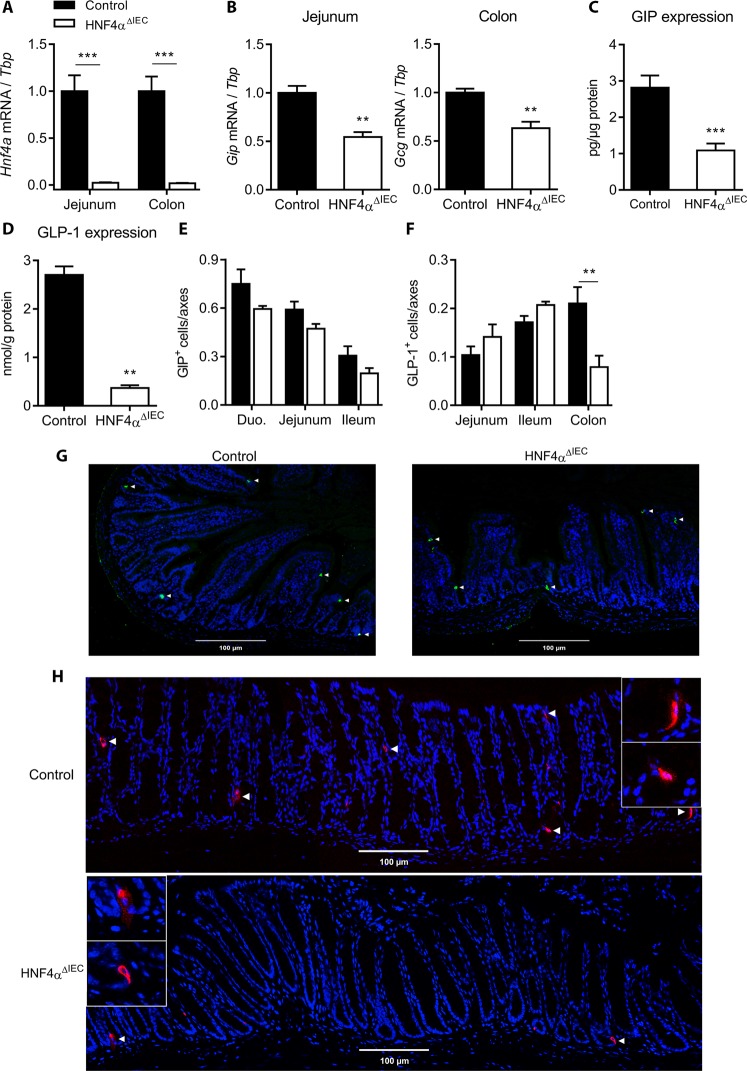
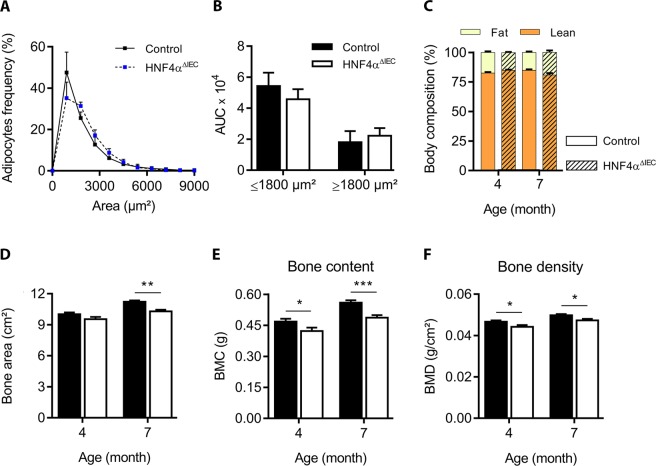
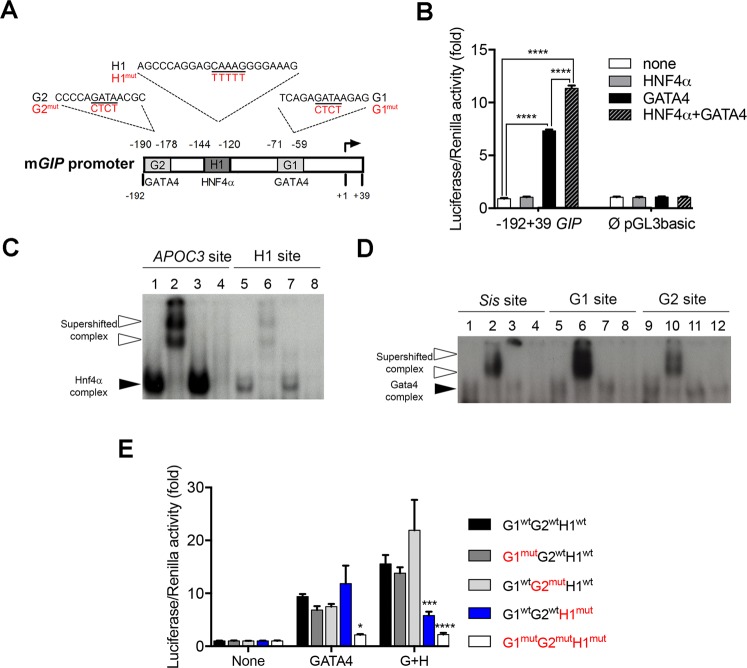
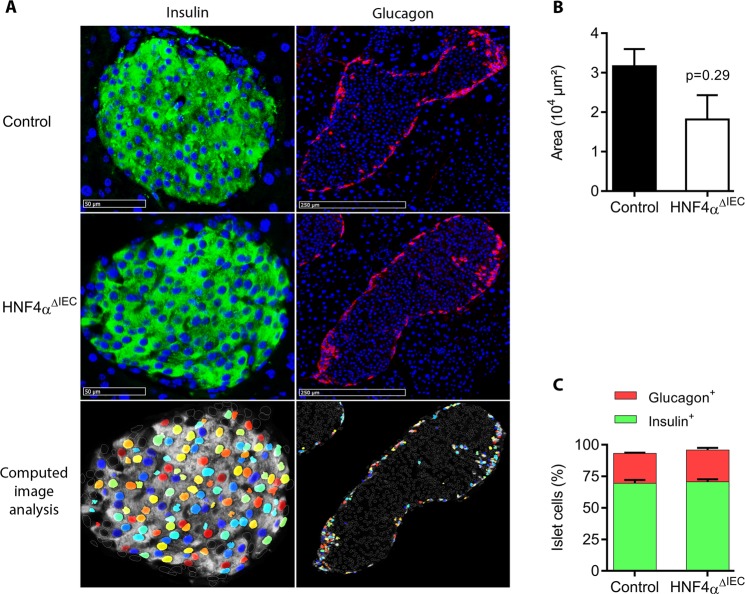
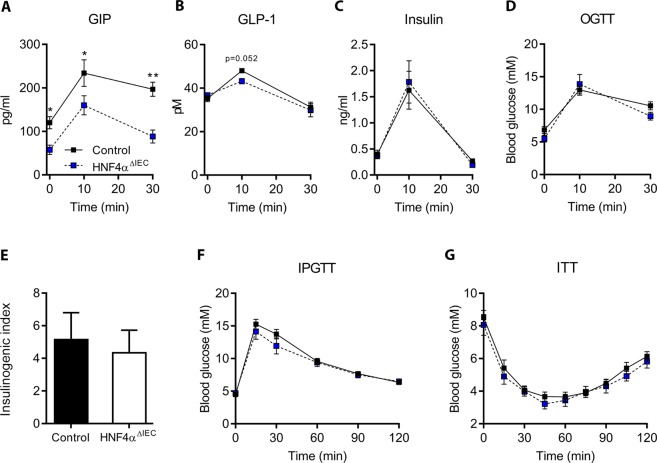
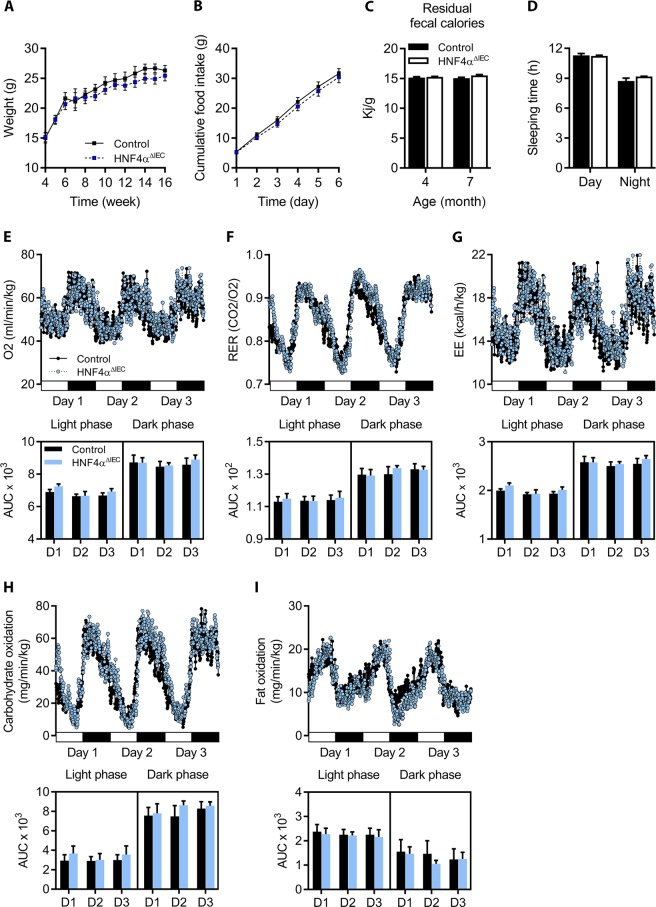
Mutations in the HNF4A gene cause MODY1 and are associated with an increased risk of Type 2 diabetes mellitus. On the other hand, incretins are hormones that potentiate reductions in blood glucose levels. Given the established role of incretin-based therapy to treat diabetes and metabolic disorders, we investigated a possible regulatory link between intestinal epithelial HNF4α and glucose-dependent insulinotropic polypeptide (GIP), an incretin that is specifically produced by gut enteroendocrine cells. Conditional deletion of HNF4α in the whole intestinal epithelium was achieved by crossing Villin-Cre and Hnf4α C57BL/6 mouse models. GIP expression was measured by qPCR, immunofluorescence and ELISA. Gene transcription was assessed by luciferase and electrophoretic mobility shift assays. Metabolic parameters were analyzed by indirect calorimetry and dual-energy X-ray absorptiometry. HNF4α specific deletion in the intestine led to a reduction in GIP. HNF4α was able to positively control Gip transcriptional activity in collaboration with GATA-4 transcription factor. Glucose homeostasis and glucose-stimulated insulin secretion remained unchanged in HNF4α deficient mice. Changes in GIP production in these mice did not impact nutrition or energy metabolism under normal physiology but led to a reduction of bone area and mineral content, a well described physiological consequence of GIP deficiency. Our findings point to a novel regulatory role between intestinal HNF4α and GIP with possible functional impact on bone density.
HNF4A 基因突变导致 MODY1,并与 2 型糖尿病的风险增加相关。另一方面,肠促胰岛素是增强血糖降低的激素。鉴于基于肠促胰岛素的治疗方法对治疗糖尿病和代谢紊乱的既定作用,我们研究了肠道上皮细胞 HNF4α 和葡萄糖依赖性胰岛素释放肽 (GIP) 之间可能存在的调节联系,GIP 是一种专门由肠道内分泌细胞产生的肠促胰岛素。通过交叉Villin-Cre 和 Hnf4α C57BL/6 小鼠模型,实现了整个肠上皮细胞中 HNF4α 的条件性缺失。通过 qPCR、免疫荧光和 ELISA 测量 GIP 表达。通过荧光素酶和电泳迁移率变动分析评估基因转录。通过间接量热法和双能 X 射线吸收仪分析代谢参数。肠道中 HNF4α 的特异性缺失导致 GIP 减少。HNF4α 能够与 GATA-4 转录因子合作,正向控制 Gip 转录活性。HNF4α 缺陷小鼠的葡萄糖稳态和葡萄糖刺激的胰岛素分泌保持不变。这些小鼠中 GIP 产生的变化在正常生理条件下不会影响营养或能量代谢,但会导致骨面积和矿物质含量减少,这是 GIP 缺乏的一种典型生理后果。我们的研究结果表明,肠道 HNF4α 和 GIP 之间存在新的调节作用,可能对骨密度具有功能影响。