Division of Endocrinology, Boston Children's Hospital, Boston, MA, 02115, USA.
Department of Pediatrics, Harvard Medical School, Boston, MA, 02115, USA.
Nat Commun. 2022 Jan 11;13(1):261. doi: 10.1038/s41467-021-27901-5.
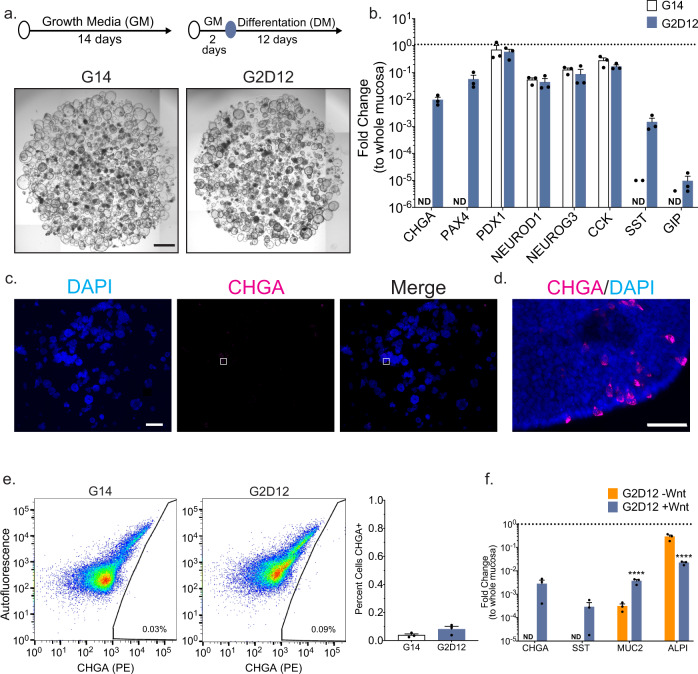
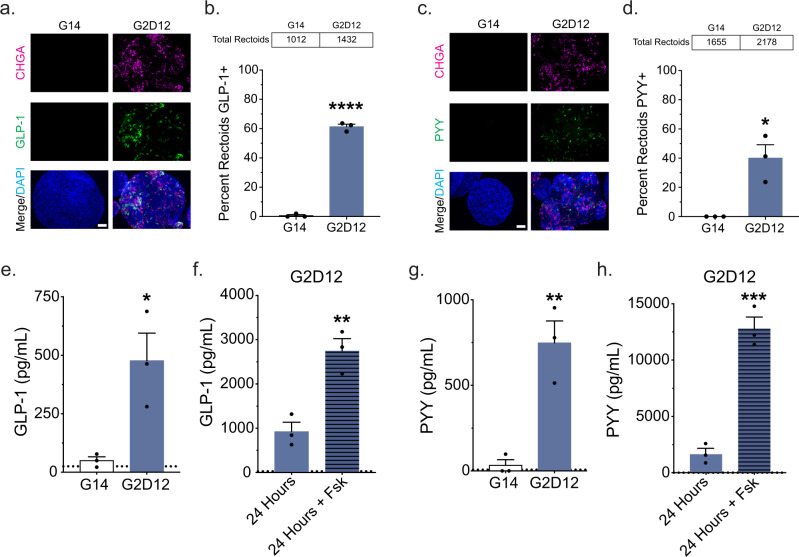
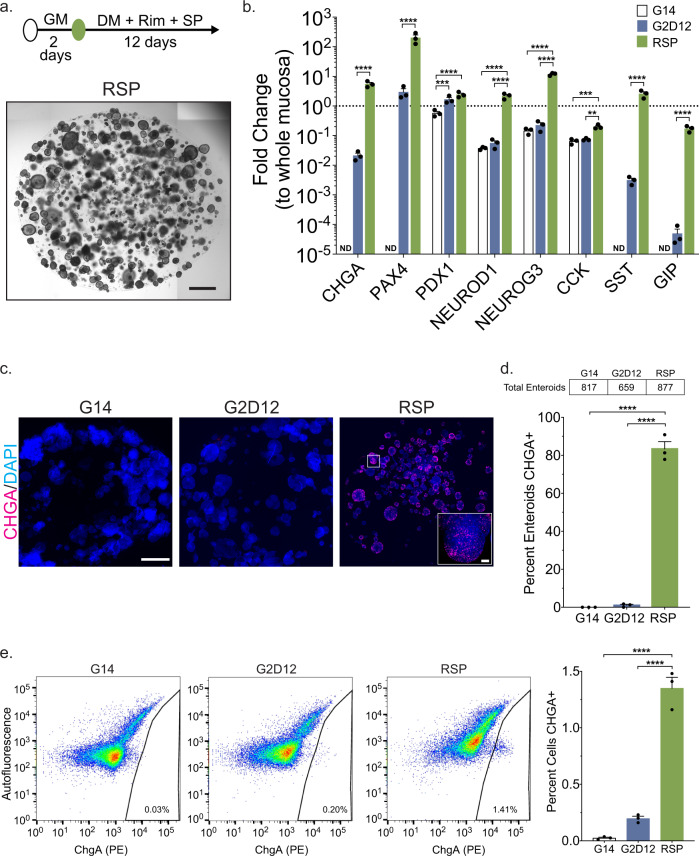
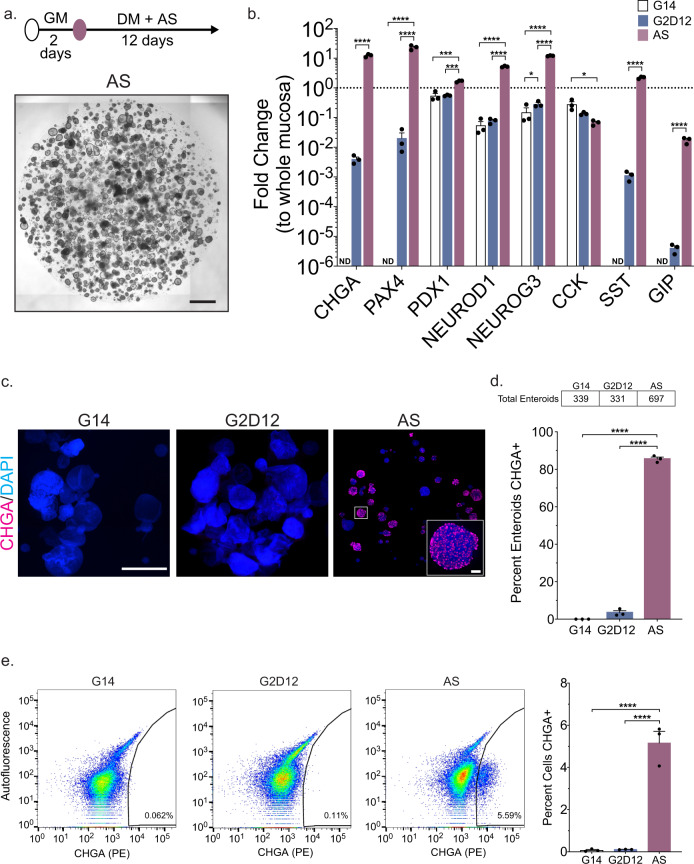
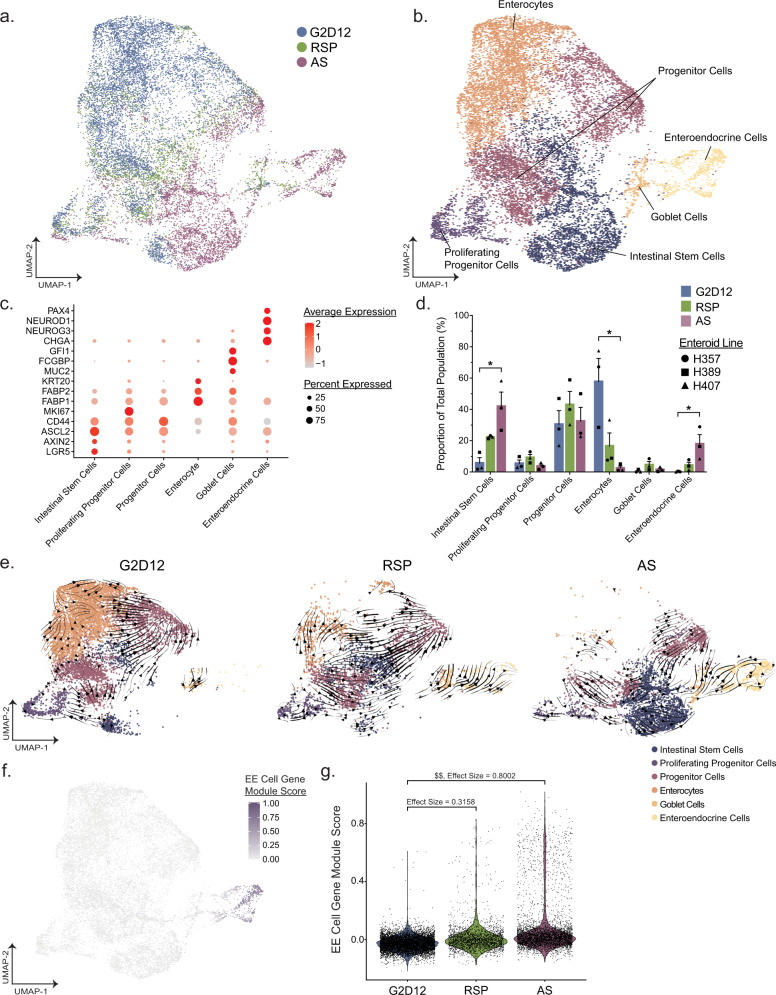
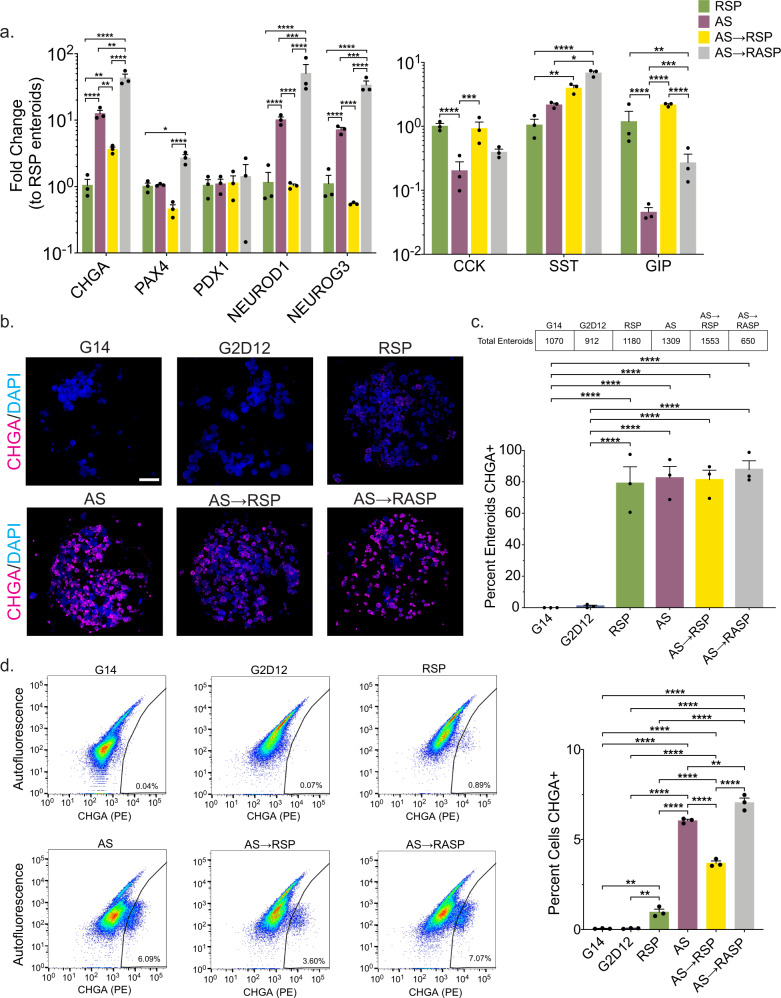
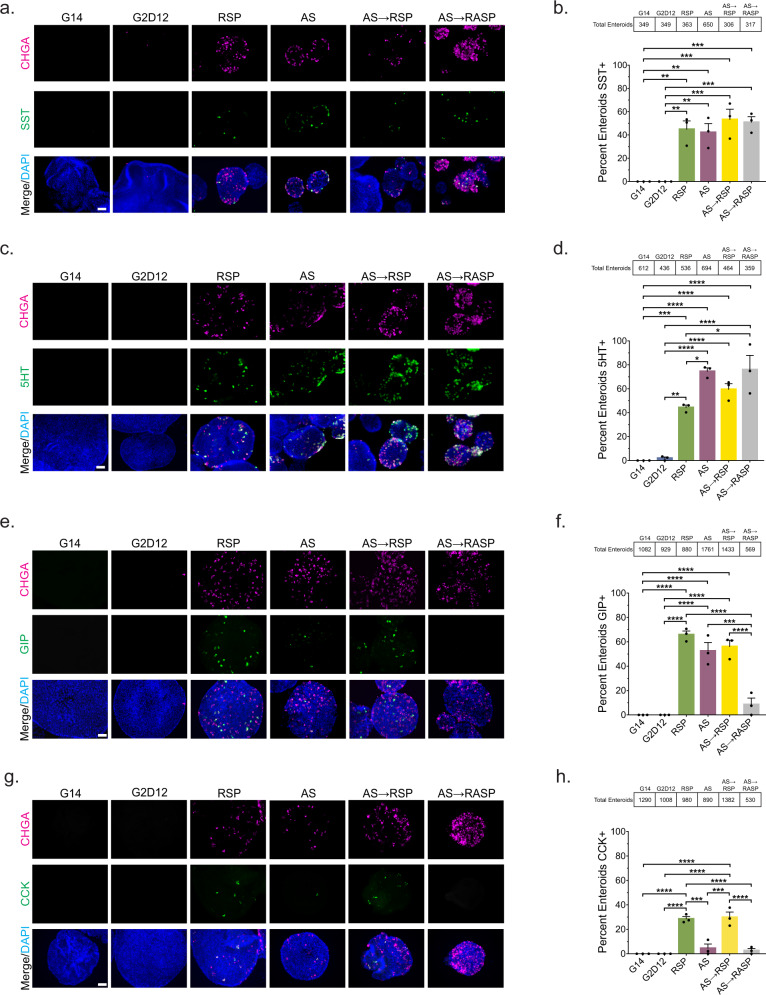
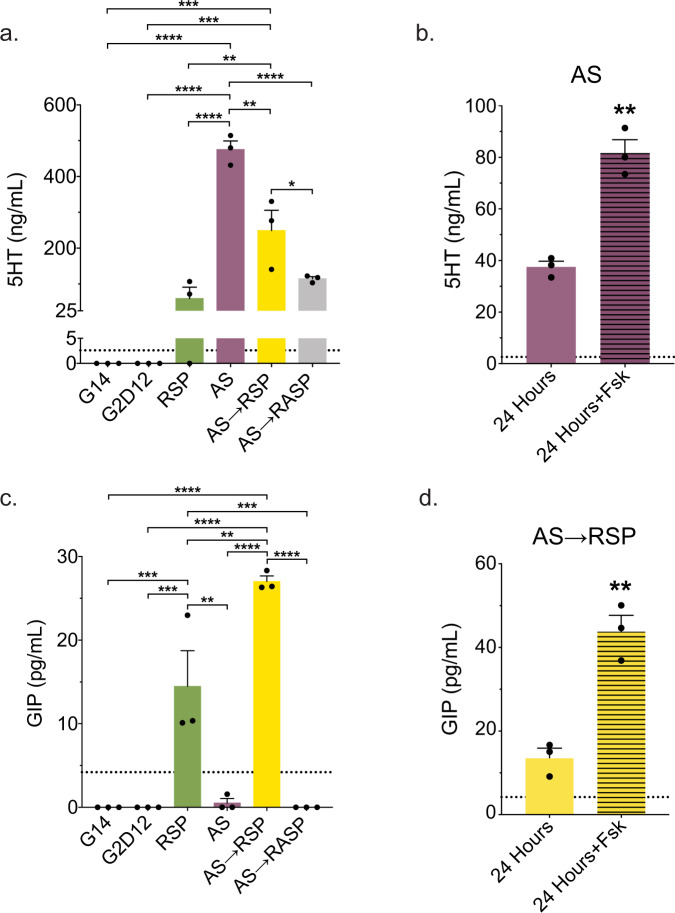
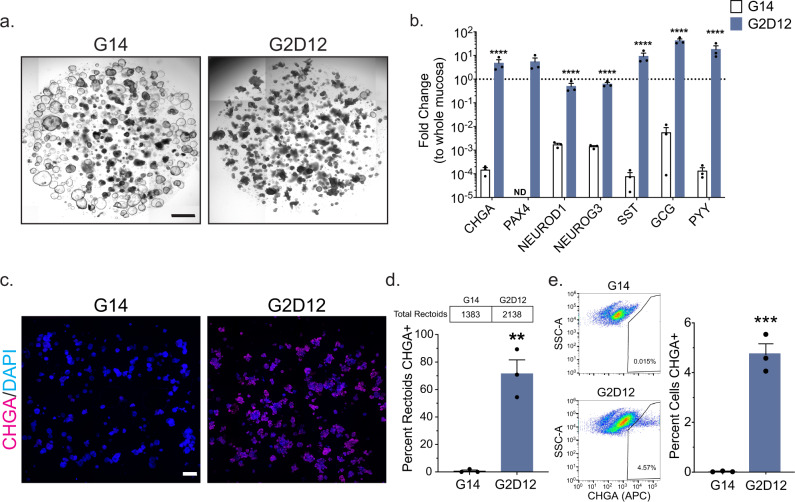
Enteroendocrine (EE) cells are the most abundant hormone-producing cells in humans and are critical regulators of energy homeostasis and gastrointestinal function. Challenges in converting human intestinal stem cells (ISCs) into functional EE cells, ex vivo, have limited progress in elucidating their role in disease pathogenesis and in harnessing their therapeutic potential. To address this, we employed small molecule targeting of the endocannabinoid receptor signaling pathway, JNK, and FOXO1, known to mediate endodermal development and/or hormone production, together with directed differentiation of human ISCs from the duodenum and rectum. We observed marked induction of EE cell differentiation and gut-derived expression and secretion of SST, 5HT, GIP, CCK, GLP-1 and PYY upon treatment with various combinations of three small molecules: rimonabant, SP600125 and AS1842856. Robust differentiation strategies capable of driving human EE cell differentiation is a critical step towards understanding these essential cells and the development of cell-based therapeutics.
肠内分泌(EE)细胞是人类中最丰富的激素产生细胞,是能量平衡和胃肠道功能的关键调节剂。将人类肠干细胞(ISCs)体外转化为功能性 EE 细胞的挑战,限制了对其在疾病发病机制中的作用以及利用其治疗潜力的研究进展。为了解决这个问题,我们采用了小分子靶向内源性大麻素受体信号通路、JNK 和 FOXO1 的方法,这些通路已知可以介导内胚层发育和/或激素产生,同时对来自十二指肠和直肠的人 ISCs 进行定向分化。我们观察到,在用三种小分子(利莫那班、SP600125 和 AS1842856)的不同组合处理后,EE 细胞分化和肠道衍生的 SST、5HT、GIP、CCK、GLP-1 和 PYY 的表达和分泌明显增加。能够驱动人 EE 细胞分化的稳健分化策略是理解这些重要细胞和开发基于细胞的治疗方法的关键步骤。