Department of Orthopaedics, Peking University Third Hospital, Beijing, China,
Institute of Medical Information, Chinese Academy of Medical Sciences, Peking Union Medical College, Beijing, China.
Clin Interv Aging. 2019 Feb 15;14:361-366. doi: 10.2147/CIA.S191449. eCollection 2019.
Given the aging Chinese population and the inevitable degenerative process of the spine, more elderly patients with spinal degenerative disease (SDD) are surgical candidates, placing a significant burden on health care resources. Few studies have investigated recent trends in hospital admissions and procedures for SDD in China. This study aimed to identify the trends, if any, in the number of surgical procedures undertaken for SDD in a large patient cohort.
This retrospective cohort analysis used data from inpatient medical records at Peking University Third Hospital between 2003 and 2016. Descriptive statistical analysis, regression models, and a Holt-Winters seasonal model were used to analyze trends.
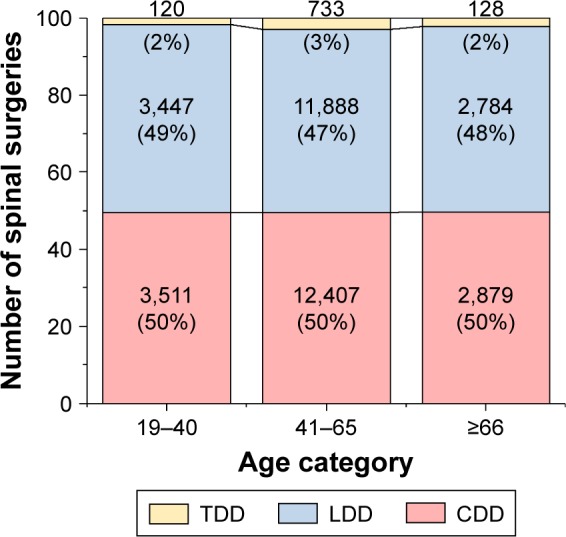
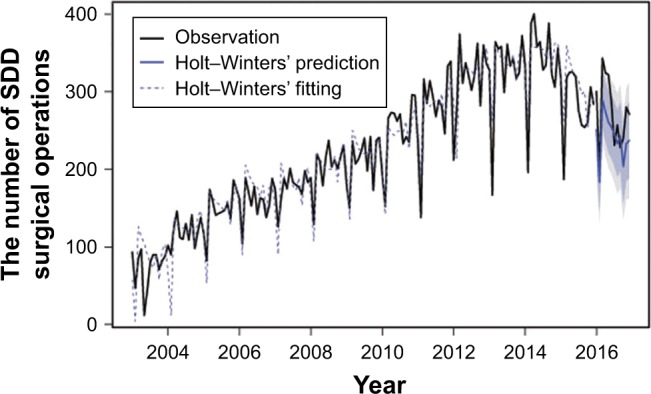
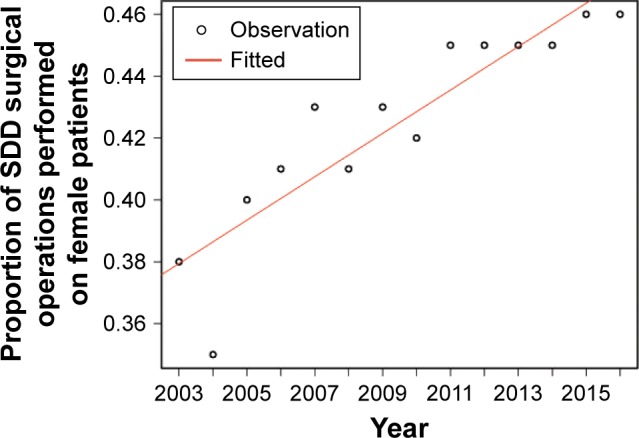
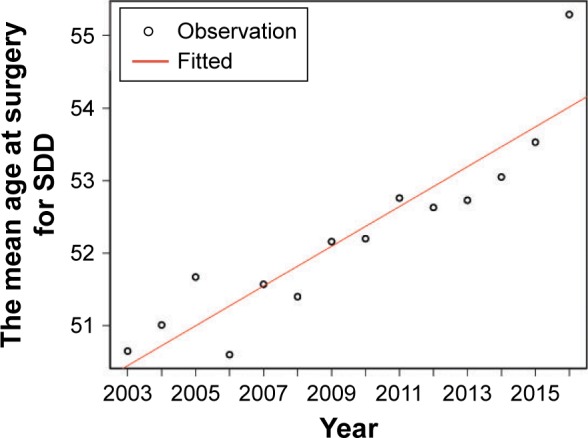
Altogether, 38,676 surgery records from 37,897 SDD patients who had undergone surgical treatment were included in our study, among whom 49.60%, 47.81%, and 2.59% were treated because of cervical, lumbar, and thoracic degenerative disease, respectively. There was an increasing trend for spinal surgery performance with an increasing mean age at surgery, from 50.65 years of age in 2003 to 55.29 years in 2016. We also revealed interesting seasonal variation in our study - that is, most of the spinal procedures were performed during the winter and spring months.
Our study showed a significantly increasing surgical workload for addressing SDD in China. Both the public and the health care system should be aware of this increase in chronic degenerative disease in the aging population.
鉴于中国人口老龄化以及脊柱不可避免的退行性过程,更多患有脊柱退行性疾病(SDD)的老年患者成为手术候选人,这给医疗保健资源带来了巨大负担。很少有研究调查过中国 SDD 住院人数和治疗方法的近期趋势。本研究旨在确定在大量患者群体中,SDD 手术数量是否存在任何趋势。
本回顾性队列分析使用了 2003 年至 2016 年期间北京大学第三医院住院病历中的数据。采用描述性统计分析、回归模型和霍尔特-温特斯季节性模型来分析趋势。
共有 37897 例 SDD 患者的 38676 份手术记录纳入本研究,其中 49.60%、47.81%和 2.59%分别因颈椎、腰椎和胸椎退行性疾病接受治疗。随着手术年龄的增加,脊柱手术呈上升趋势,从 2003 年的 50.65 岁增加到 2016 年的 55.29 岁。我们的研究还揭示了有趣的季节性变化,即大多数脊柱手术都在冬春两季进行。
本研究表明,中国治疗 SDD 的手术工作量显著增加。公众和医疗保健系统都应该意识到老龄化人口中慢性退行性疾病的增加。