Nenni Mardi J, Fisher Malcolm E, James-Zorn Christina, Pells Troy J, Ponferrada Virgilio, Chu Stanley, Fortriede Joshua D, Burns Kevin A, Wang Ying, Lotay Vaneet S, Wang Dong Zhou, Segerdell Erik, Chaturvedi Praneet, Karimi Kamran, Vize Peter D, Zorn Aaron M
Division of Developmental Biology, Cincinnati Children's Hospital, Cincinnati, OH, United States.
Department of Biological Sciences, University of Calgary, Calgary, AB, Canada.
Front Physiol. 2019 Feb 26;10:154. doi: 10.3389/fphys.2019.00154. eCollection 2019.
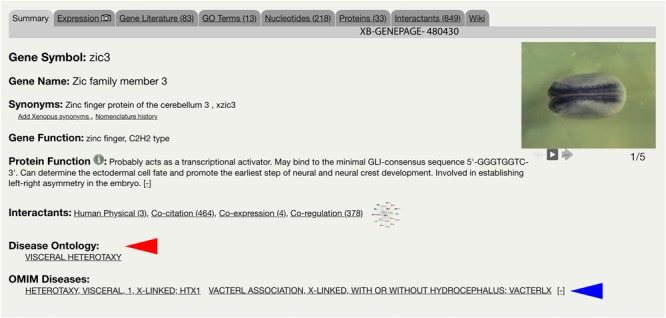
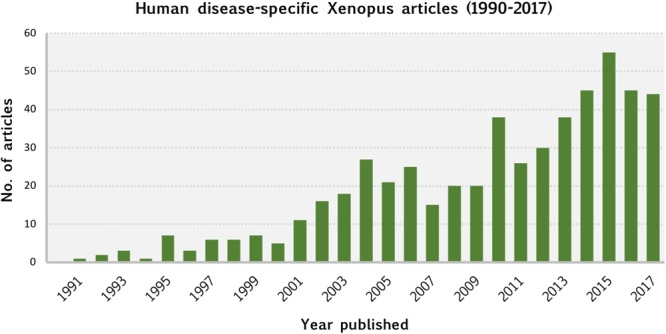
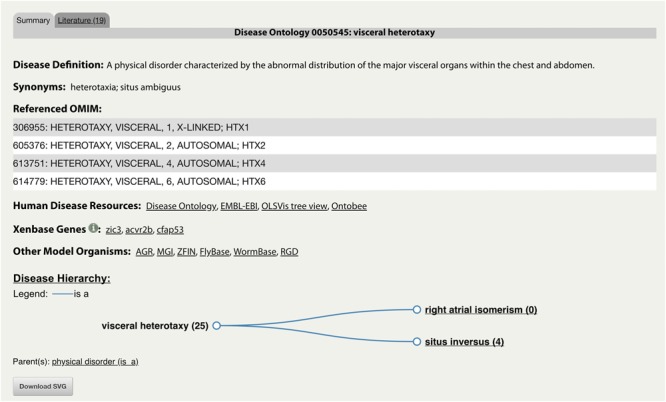
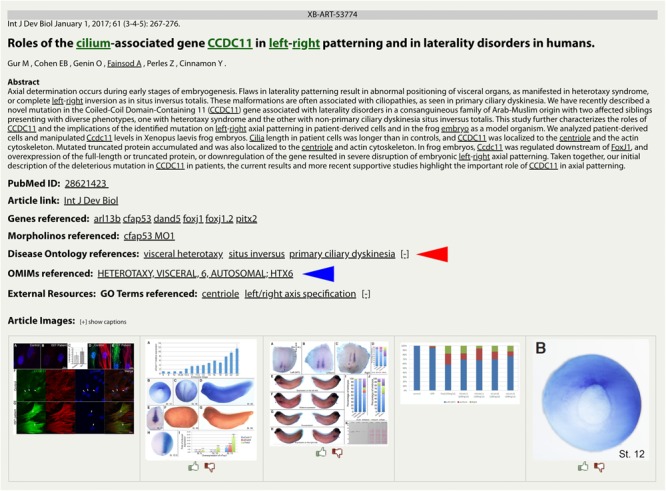
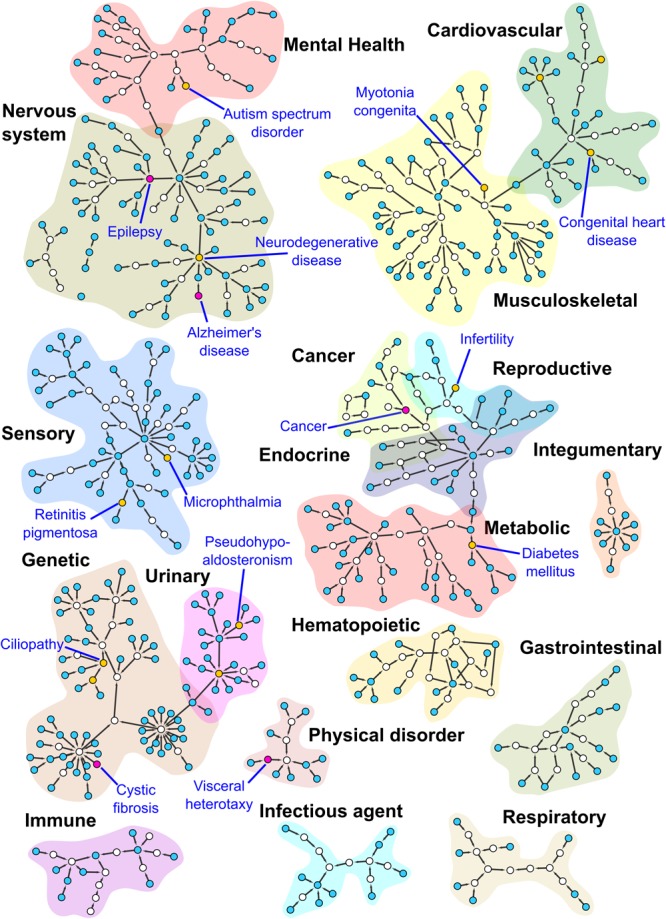
At a fundamental level most genes, signaling pathways, biological functions and organ systems are highly conserved between man and all vertebrate species. Leveraging this conservation, researchers are increasingly using the experimental advantages of the amphibian to model human disease. The online resource, Xenbase, enables human disease modeling by curating the literature published in PubMed and integrating these data with orthologous human genes, anatomy, and more recently with links to the Online Mendelian Inheritance in Man resource (OMIM) and the Human Disease Ontology (DO). Here we review how Xenbase supports disease modeling and report on a meta-analysis of the published research providing an overview of the different types of diseases being modeled in and the variety of experimental approaches being used. Text mining of over 50,000 research articles imported into Xenbase from PubMed identified approximately 1,000 putative disease- modeling articles. These articles were manually assessed and annotated with disease ontologies, which were then used to classify papers based on disease type. We found that is being used to study a diverse array of disease with three main experimental approaches: cell-free egg extracts to study fundamental aspects of cellular and molecular biology, oocytes to study ion transport and channel physiology and embryo experiments focused on congenital diseases. We integrated these data into Xenbase Disease Pages to allow easy navigation to disease information on external databases. Results of this analysis will equip researchers with a suite of experimental approaches available to model or dissect a pathological process. Ideally clinicians and basic researchers will use this information to foster collaborations necessary to interrogate the development and treatment of human diseases.
在基本层面上,大多数基因、信号通路、生物学功能和器官系统在人类与所有脊椎动物物种之间高度保守。利用这种保守性,研究人员越来越多地利用两栖动物的实验优势来模拟人类疾病。在线资源Xenbase通过整理发表在PubMed上的文献,并将这些数据与直系同源的人类基因、解剖结构,以及最近与人类孟德尔遗传在线资源(OMIM)和人类疾病本体(DO)的链接进行整合,从而实现人类疾病建模。在这里,我们回顾了Xenbase如何支持疾病建模,并报告了一项已发表研究的荟萃分析,该分析概述了在两栖动物中建模的不同类型疾病以及所使用的各种实验方法。对从PubMed导入Xenbase的50000多篇研究文章进行文本挖掘,确定了大约1000篇假定的疾病建模文章。这些文章经过人工评估并用疾病本体进行注释,然后用于根据疾病类型对论文进行分类。我们发现,两栖动物正被用于通过三种主要实验方法研究各种各样的疾病:利用无细胞卵提取物研究细胞和分子生物学的基本方面,利用卵母细胞研究离子转运和通道生理学,以及利用胚胎实验研究先天性疾病。我们将这些数据整合到Xenbase疾病页面中,以便轻松导航到外部数据库上的疾病信息。该分析结果将为两栖动物研究人员提供一系列可用于模拟或剖析病理过程的实验方法。理想情况下,临床医生和基础研究人员将利用这些信息促进询问人类疾病的发展和治疗所需的合作。