Espinoza Javier, Urzúa Alejandro, Sanhueza Loreto, Walter Mariana, Fincheira Paola, Muñoz Patricia, Mendoza Leonora, Wilkens Marcela
Laboratorio de Ecología Química, Departamento de Ciencias Químicas y Recursos Naturales, Universidad de La Frontera, Temuco, Chile.
Centro de Excelencia en Investigación Biotecnológica Aplicada al Medio Ambiente, Universidad de La Frontera, Temuco, Chile.
Front Microbiol. 2019 Feb 26;10:337. doi: 10.3389/fmicb.2019.00337. eCollection 2019.
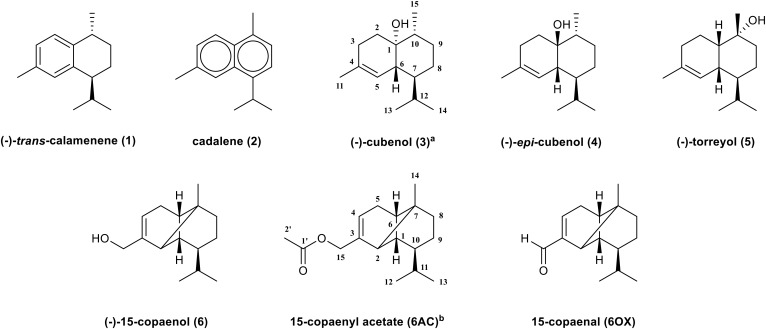
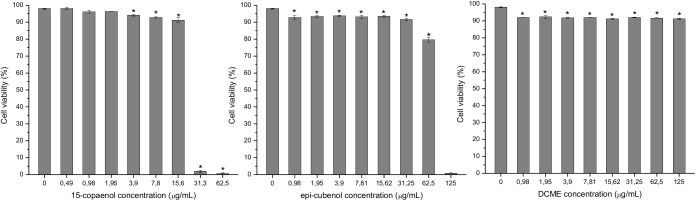
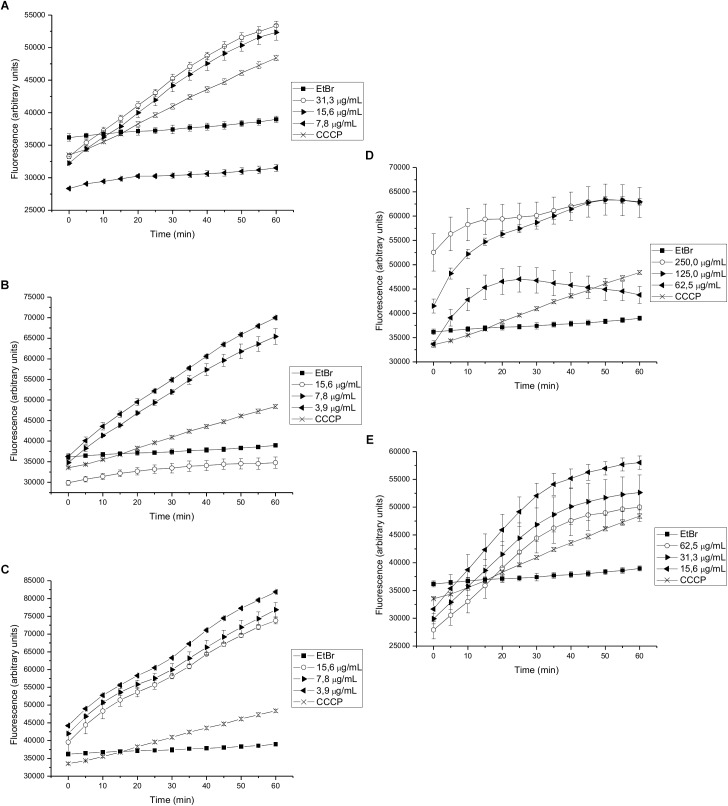
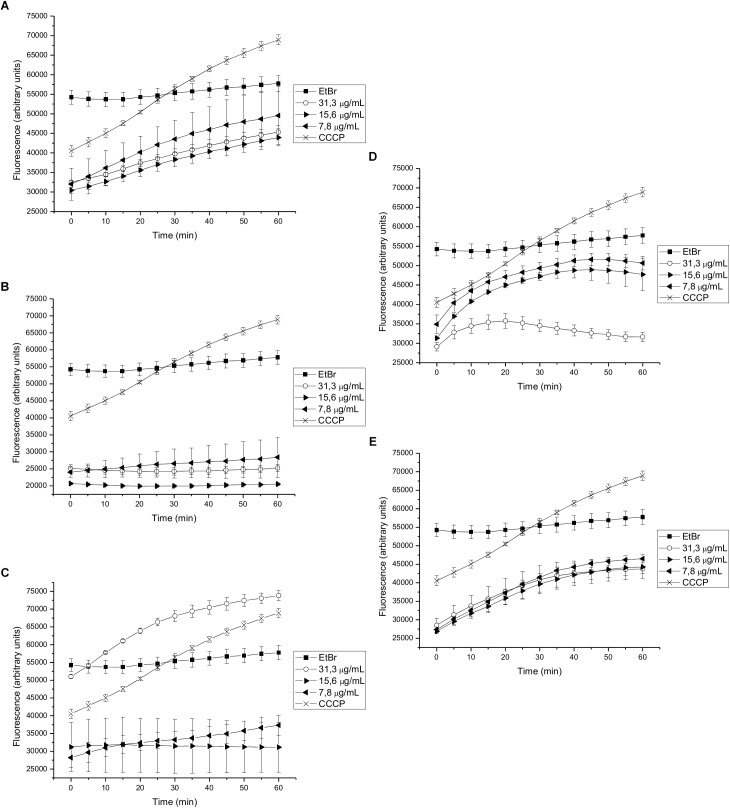
is a serious human pathogen that is highly adaptive to environmental conditions and rapidly develops antibiotic resistance. The use of efflux pumps to reduce antibiotic concentrations at the intracellular level is one of the main mechanisms by which bacteria develop antibiotic resistance. The management of efflux pumps, specifically NorA, which is expressed by strains, is a valuable strategy for restoring susceptibility in strains resistant to antibacterial agents. In recent years, many studies have focused on searching for natural substances that can reverse efflux pump-mediated resistance in . Extracts and compounds obtained from plants can be efficient efflux pump inhibitors (EPIs) and represent a potentially patient-friendly strategy for controlling . In the present study, we evaluated the ability of essential oils, petroleum ether extracts, dichloromethane extract (DCME) and six compounds isolated from the heartwood of (Cupressaceae) and two synthetic derivatives to inhibit efflux in NorA pumps in the following three strains: K2378, which overexpressed the gene (++), K1902 (-deleted, Δ) and the parental strain, NCTC 8325-4. Efflux activity was evaluated using a fluorometric method that measured the accumulation of the universal efflux pump substrate ethidium bromide (EtBr). Only DCME and the compounds 15-copaenol and -cubenol inhibited EtBr efflux by K2378. Even the lowest concentration of 15-copaenol exhibited a stronger inhibitory effect than carbonyl cyanide -chlorophenyl hydrazone on EtBr efflux by K2378. 15-copaenal only showed inhibition of EtBr efflux in K2378 cells at 125 μg/mL, but not superior to the control inhibitor and 15-copaenyl acetate exerted no intrinsic EPI activity against K2378. Fractional inhibitory concentration index (FICI) values obtained in the checkerboard assays, indicated that all combinations between DCME, -cubenol and 15-copaenol, and tested antibiotics showed a synergistic effect in wild type, and Δ strains. Moreover, those were not toxic for the HeLa cell line at concentrations in which the synergistic effect and inhibitory activity of efflux pumps was determined. Other extracts and compounds obtained from did not display EtBr efflux-inhibiting activity against the evaluated strains.
是一种严重的人类病原体,对环境条件具有高度适应性,并能迅速产生抗生素耐药性。利用外排泵降低细胞内抗生素浓度是细菌产生抗生素耐药性的主要机制之一。对外排泵,特别是由菌株表达的NorA进行调控,是恢复对抗菌药物耐药菌株敏感性的一种有价值的策略。近年来,许多研究致力于寻找能够逆转外排泵介导的耐药性的天然物质。从植物中提取的提取物和化合物可以成为有效的外排泵抑制剂(EPI),是一种潜在的对患者友好的控制策略。在本研究中,我们评估了从柏科植物的心材中分离得到的精油、石油醚提取物、二氯甲烷提取物(DCME)和六种化合物以及两种合成衍生物对以下三种菌株中NorA泵外排的抑制能力:过表达基因(++)的K2378、基因缺失(Δ)的K1902及其亲本菌株NCTC 8325-4。使用荧光法评估外排活性,该方法测量通用外排泵底物溴化乙锭(EtBr)的积累。只有DCME以及化合物15-可巴烯醇和 - 古巴烯醇抑制了K2378的EtBr外排。即使是15-可巴烯醇的最低浓度对K2378的EtBr外排也表现出比羰基氰化物 - 氯苯腙更强的抑制作用。15-可巴烯醛仅在125μg/mL时对K2378细胞的EtBr外排有抑制作用,但不优于对照抑制剂,且15-可巴烯基乙酸酯对K2378没有内在的EPI活性。棋盘法获得的分数抑制浓度指数(FICI)值表明,DCME、 - 古巴烯醇和15-可巴烯醇与测试抗生素之间的所有组合在野生型、 和Δ菌株中均显示出协同作用。此外,在确定协同作用和外排泵抑制活性的浓度下,它们对HeLa细胞系无毒。从该植物中获得的其他提取物和化合物对所评估的菌株未显示出EtBr外排抑制活性。