Cell Biology and Immunology Group, Wageningen University & Research, Wageningen, Netherlands.
Department of Molecular & Biomedical Sciences, University of Maine, Orono, ME, United States.
Front Immunol. 2019 Feb 26;10:280. doi: 10.3389/fimmu.2019.00280. eCollection 2019.
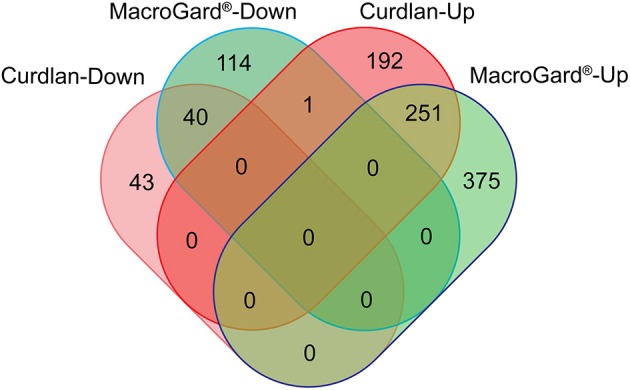
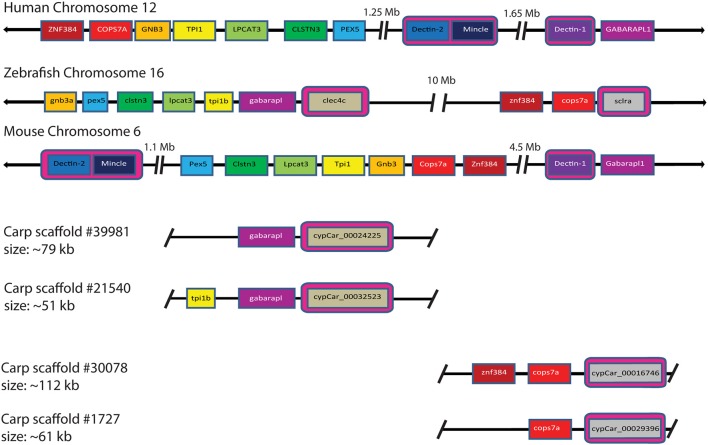
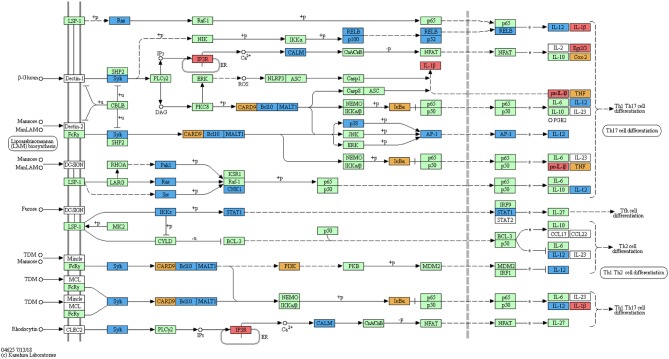
Immune-modulatory effects of β-glucans are generally considered beneficial to fish health. Despite the frequent application of β-glucans in aquaculture practice, the exact receptors and downstream signalling remains to be described for fish. In mammals, Dectin-1 is a member of the C-type lectin receptor (CLR) family and the best-described receptor for β-glucans. In fish genomes, no clear homologue of Dectin-1 could be identified so far. Yet, in previous studies we could activate carp macrophages with curdlan, considered a Dectin-1-specific β-(1,3)-glucan ligand in mammals. It was therefore proposed that immune-modulatory effects of β-glucan in carp macrophages could be triggered by a member of the CLR family activating the classical CLR signalling pathway, different from Dectin-1. In the current study, we used primary macrophages of common carp to examine immune modulation by β-glucans using transcriptome analysis of RNA isolated 6 h after stimulation with two different β-glucan preparations. Pathway analysis of differentially expressed genes (DEGs) showed that both β-glucans regulate a comparable signalling pathway typical of CLR activation. Carp genome analysis identified 239 genes encoding for proteins with at least one C-type Lectin Domains (CTLD). Narrowing the search for candidate β-glucan receptors, based on the presence of a conserved glucan-binding motif, identified 13 genes encoding a WxH sugar-binding motif in their CTLD. These genes, however, were not expressed in macrophages. Instead, among the β-glucan-stimulated DEGs, a total of six CTLD-encoding genes were significantly regulated, all of which were down-regulated in carp macrophages. Several candidates had a protein architecture similar to Dectin-1, therefore potential conservation of synteny of the mammalian region was investigated by mining the zebrafish genome. Partial conservation of synteny with a region on the zebrafish chromosome 16 highlighted two genes as candidate β-glucan receptor. Altogether, the regulation of a gene expression profile typical of a signalling pathway associated with CLR activation and, the identification of several candidate β-glucan receptors, suggest that immune-modulatory effects of β-glucan in carp macrophages could be a result of signalling mediated by a member of the CLR family.
β-葡聚糖的免疫调节作用通常被认为对鱼类健康有益。尽管β-葡聚糖在水产养殖实践中经常被应用,但鱼类的确切受体和下游信号通路仍有待描述。在哺乳动物中,Dectin-1 是 C 型凝集素受体 (CLR) 家族的成员,也是β-葡聚糖的最佳受体。在鱼类基因组中,到目前为止还没有发现 Dectin-1 的明确同源物。然而,在之前的研究中,我们可以用几丁质激活鲤鱼巨噬细胞,几丁质被认为是哺乳动物中 Dectin-1 特异性的β-(1,3)-葡聚糖配体。因此,有人提出,β-葡聚糖在鲤鱼巨噬细胞中的免疫调节作用可能是由 CLR 家族的一个成员激活经典的 CLR 信号通路而触发的,与 Dectin-1 不同。在本研究中,我们使用鲤鱼原代巨噬细胞,通过用两种不同的β-葡聚糖制剂刺激后 6 小时分离的 RNA 进行转录组分析,研究β-葡聚糖的免疫调节作用。差异表达基因 (DEG) 的通路分析表明,两种β-葡聚糖均调节类似于 CLR 激活的典型信号通路。鲤鱼基因组分析鉴定了 239 个编码至少具有一个 C 型凝集素结构域 (CTLD) 的蛋白质的基因。基于保守的葡聚糖结合基序,缩小候选β-葡聚糖受体的搜索范围,鉴定出 13 个编码 CTLD 中 WxH 糖结合基序的基因。然而,这些基因在巨噬细胞中没有表达。相反,在β-葡聚糖刺激的 DEG 中,共有 6 个 CTLD 编码基因被显著调控,所有基因在鲤鱼巨噬细胞中均下调。一些候选基因的蛋白质结构与 Dectin-1 相似,因此通过挖掘斑马鱼基因组来研究哺乳动物区域的基因座保守性。在斑马鱼 16 号染色体上发现了与该区域部分保守的基因座,突出了两个候选β-葡聚糖受体基因。总之,β-葡聚糖对与 CLR 激活相关的信号通路的基因表达谱的调控,以及几个候选β-葡聚糖受体的鉴定,表明β-葡聚糖在鲤鱼巨噬细胞中的免疫调节作用可能是 CLR 家族成员介导的信号传递的结果。