Molina Laura, Yang Hong, Adebayo Michael Adeola O, Oertel Michael, Bell Aaron, Singh Sucha, Chen Xin, Tao Junyan, Monga Satdarshan P S
Division of Experimental Pathology, Department of Pathology, University of Pittsburgh School of Medicine, Pittsburgh, PA, USA.
Medical Scientist Training Program, University of Pittsburgh School of Medicine, Pittsburgh, PA, USA.
Oncotarget. 2019 Feb 19;10(15):1475-1490. doi: 10.18632/oncotarget.26668.
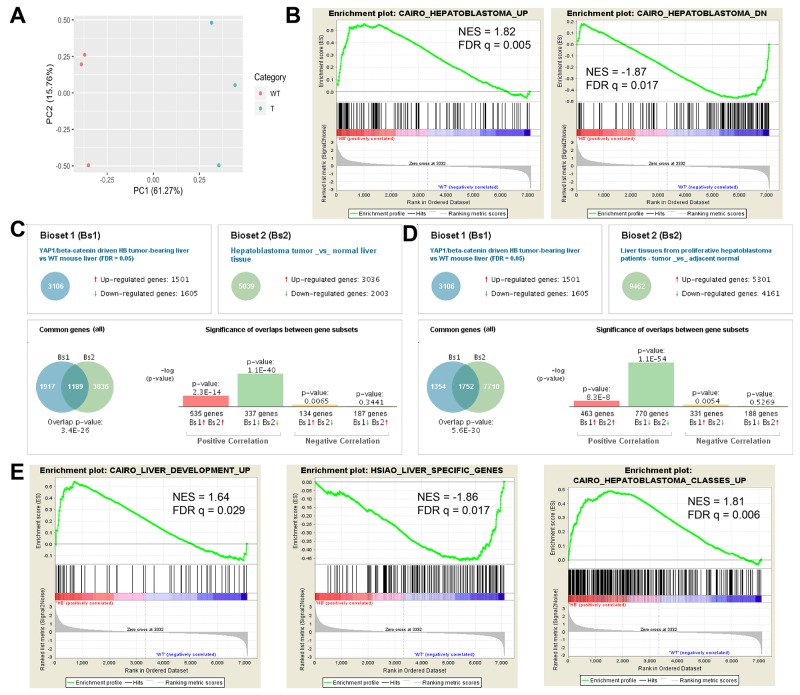
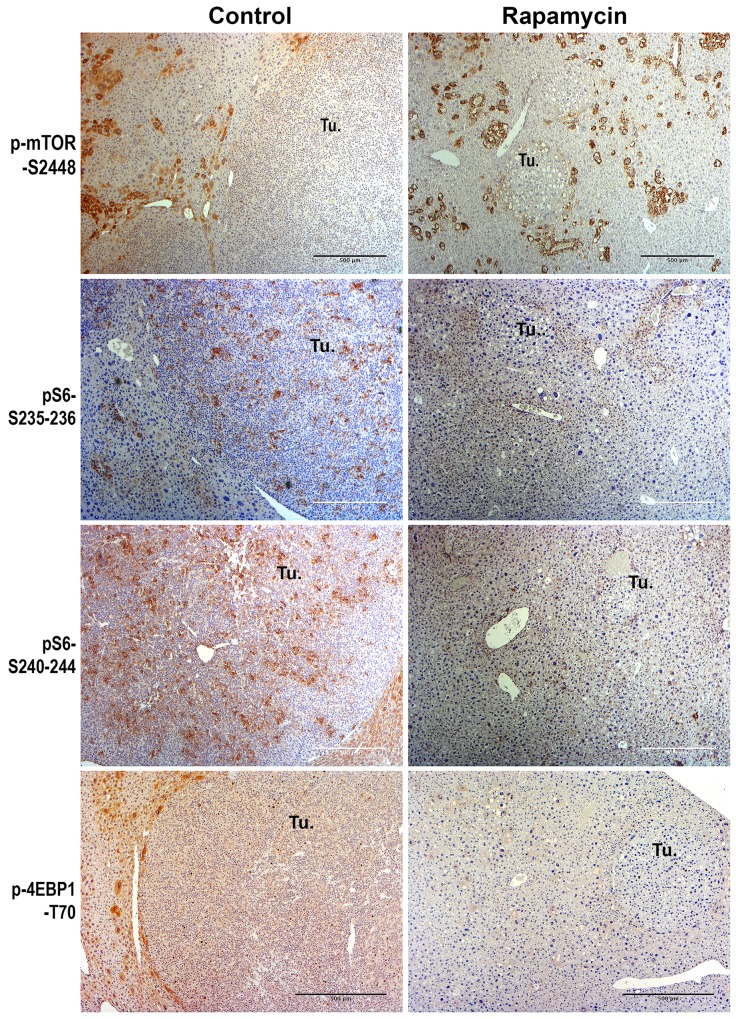
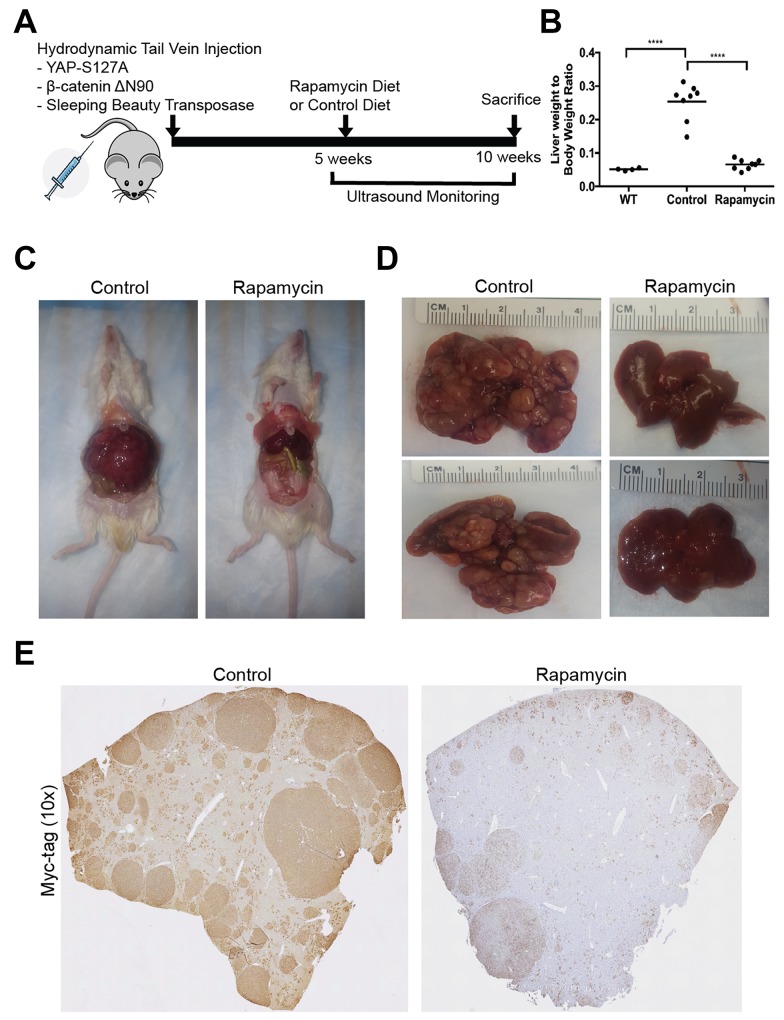
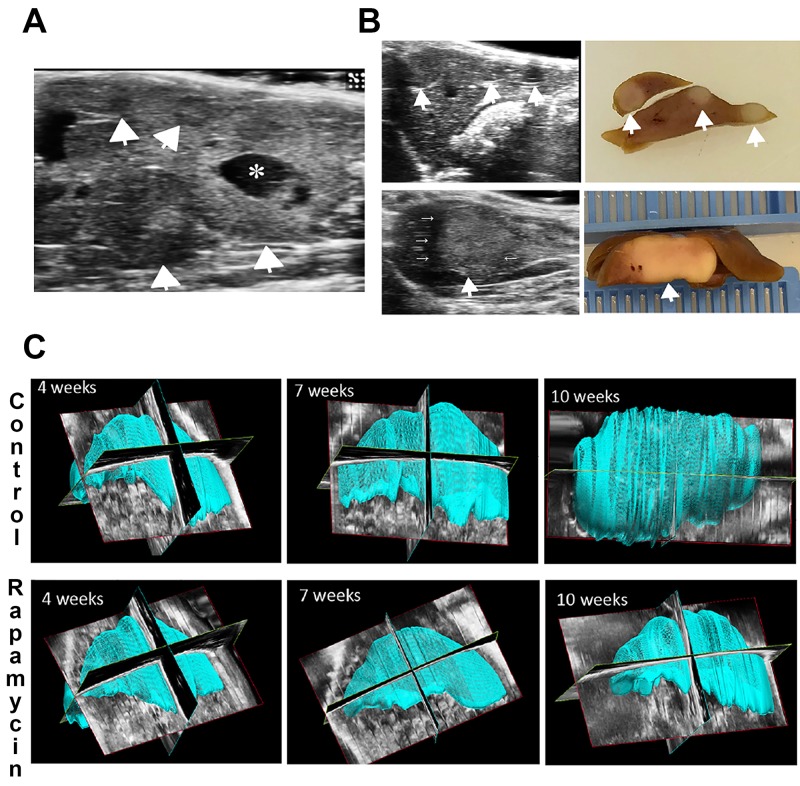
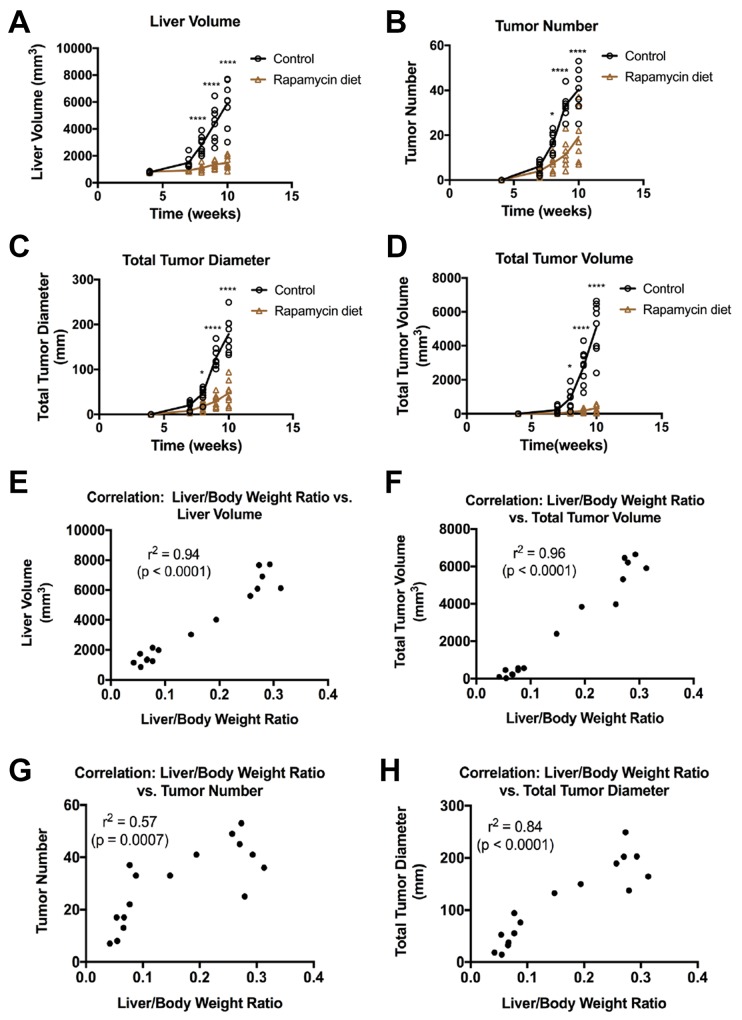
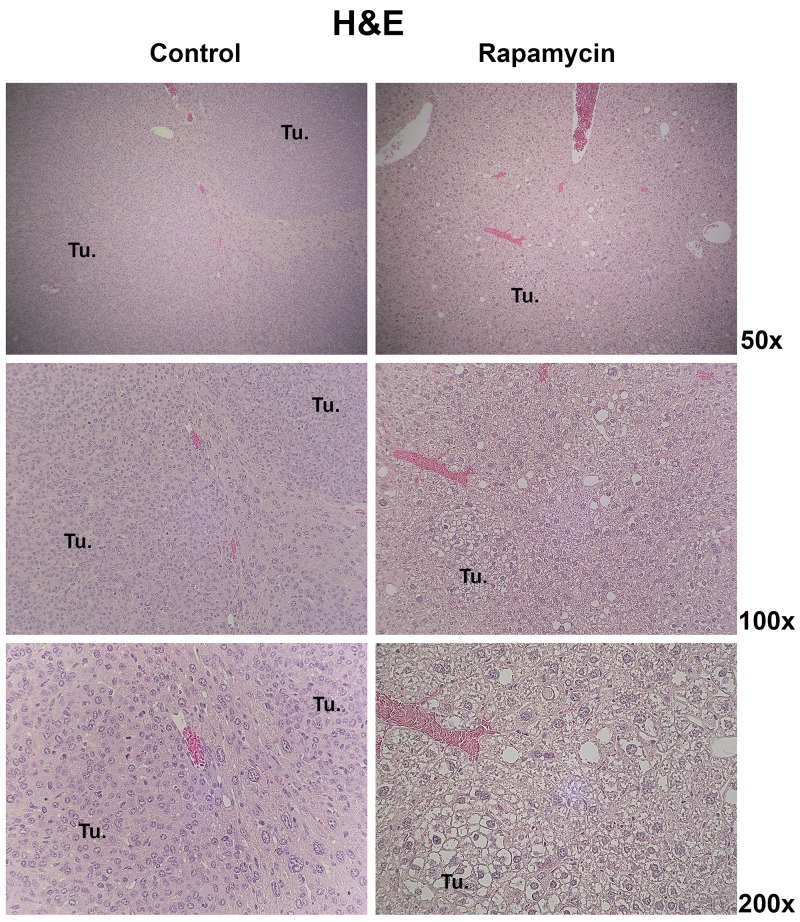
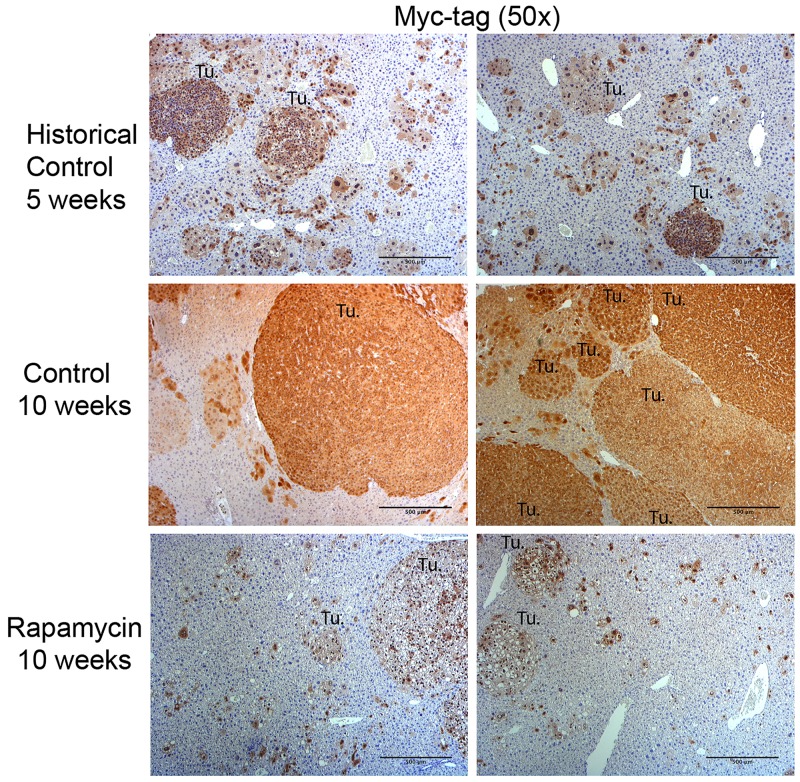
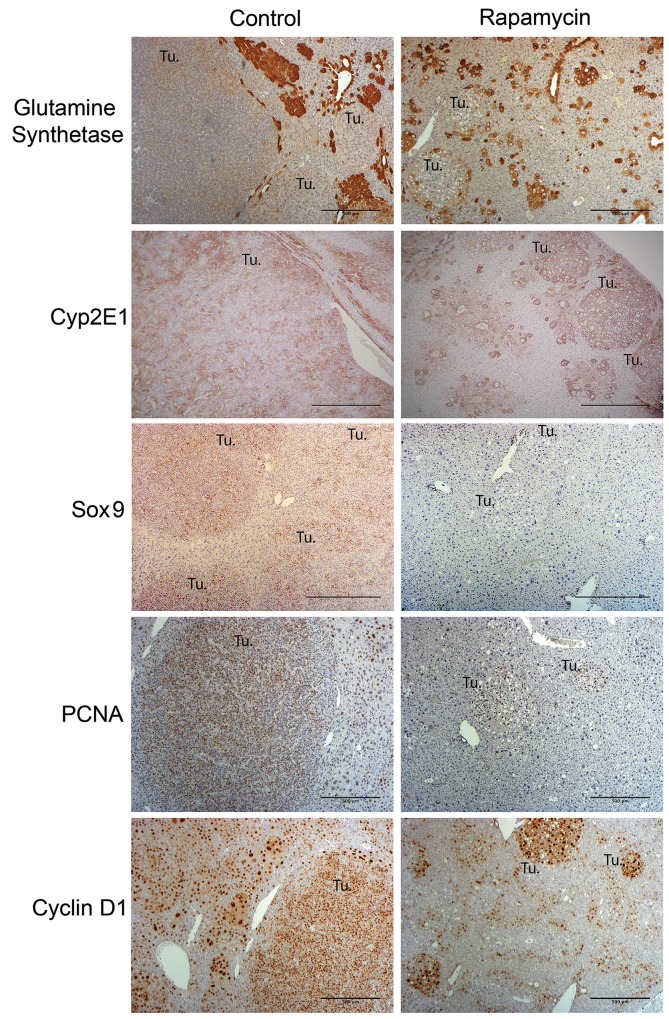
Hepatoblastoma (HB) is the most common pediatric liver malignancy. Around 80% of HB demonstrate simultaneous activation of β-catenin and Yes-associated protein 1 (Yap1). The mechanism by which these signaling pathways contribute to HB pathogenesis remain obscure. Recently, mTORC1 activation was reported in human HB cells and in a murine HB model driven by β-catenin and Yap1. Here, we directly investigate the therapeutic impact of mTOR inhibition following HB development in the Yap1-β-catenin model. HB were established by hydrodynamic tail vein injection of Sleeping Beauty transposase and plasmids coding for ΔN90-β-catenin and S127A-Yap1. Five weeks after injection, when HB were evident, mice were randomized into Rapamycin diet-fed or basal-diet-fed groups for 5-weeks. Tumor growth was monitored via ultrasound imaging and mice in both groups were euthanized after 5-weeks for molecular analysis. Transcriptomic analysis showed a strong correlation in gene expression between HB in the Yap1-β-catenin model and HB patient cohorts. Rapamycin treatment decreased HB burden, almost normalizing liver weight to body weight ratio. Ultrasound imaging showed reduction in tumor growth over the duration of Rapamycin treatment as compared to controls. Majority of HB in the controls exhibited crowded fetal or embryonal histology, while remnant tumors in the experimental group showed well-differentiated fetal morphology. Immunohistochemistry confirmed inhibition of mTORC1 in the Rapamycin group. Thus, Rapamycin reduces HB in a clinically relevant model driven by β-catenin and Yap1, supporting use of mTORC1 inhibitors in their therapy. We also show the utility of standard and 3D ultrasound imaging for monitoring liver tumors in mice.
肝母细胞瘤(HB)是最常见的儿童肝脏恶性肿瘤。约80%的HB表现出β-连环蛋白和Yes相关蛋白1(Yap1)的同时激活。这些信号通路促成HB发病机制的具体机制仍不清楚。最近,在人HB细胞以及由β-连环蛋白和Yap1驱动的小鼠HB模型中报道了mTORC1的激活。在此,我们直接研究在Yap1-β-连环蛋白模型中HB发生后mTOR抑制的治疗效果。通过尾静脉高压注射睡美人转座酶以及编码ΔN90-β-连环蛋白和S127A-Yap1的质粒来建立HB模型。注射后五周,当HB明显出现时,将小鼠随机分为雷帕霉素饮食喂养组或基础饮食喂养组,持续5周。通过超声成像监测肿瘤生长,5周后对两组小鼠实施安乐死以进行分子分析。转录组分析显示Yap1-β-连环蛋白模型中的HB与HB患者队列之间在基因表达上有很强的相关性。雷帕霉素治疗降低了HB负担,几乎使肝脏重量与体重之比恢复正常。超声成像显示,与对照组相比,在雷帕霉素治疗期间肿瘤生长减缓。对照组中的大多数HB呈现密集的胎儿或胚胎组织学特征,而实验组中的残留肿瘤表现出分化良好的胎儿形态。免疫组织化学证实雷帕霉素组中mTORC1受到抑制。因此,在由β-连环蛋白和Yap1驱动的临床相关模型中,雷帕霉素可降低HB,支持在其治疗中使用mTORC1抑制剂。我们还展示了标准和三维超声成像在监测小鼠肝脏肿瘤方面的实用性。