Naqib Ankur, Jeon Trisha, Kunstman Kevin, Wang Weihua, Shen Yiding, Sweeney Dagmar, Hyde Marieta, Green Stefan J
Sequencing Core, Research Resources Center, University of Illinois at Chicago, Chicago, IL, United States of America.
PeerJ. 2019 Mar 4;7:e6570. doi: 10.7717/peerj.6570. eCollection 2019.
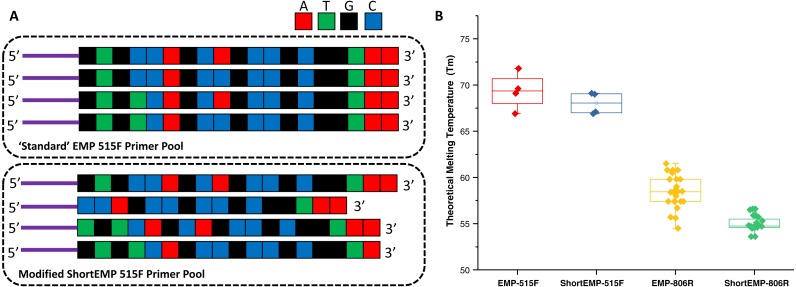
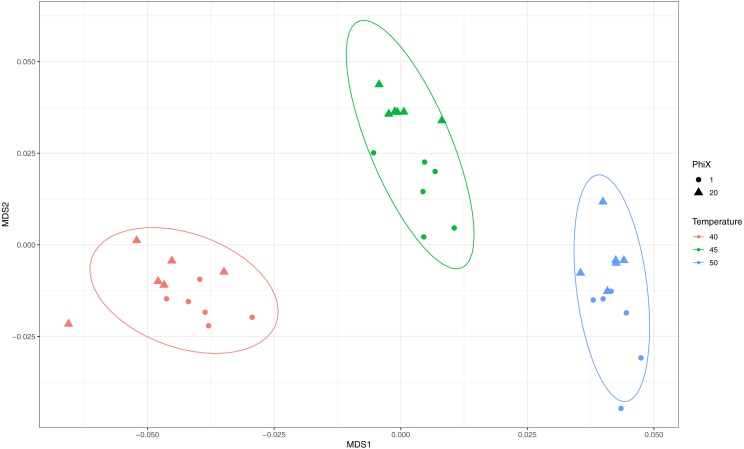
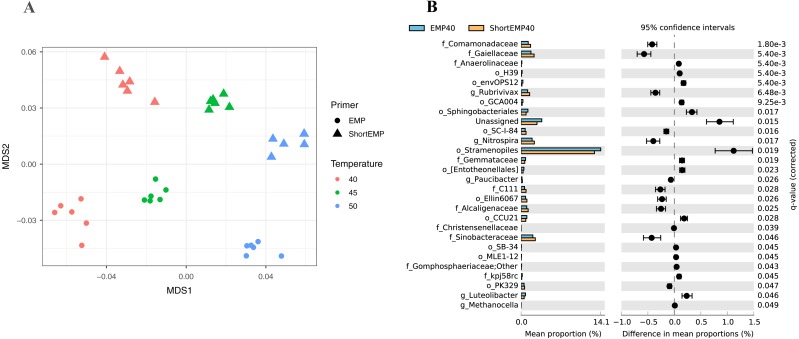
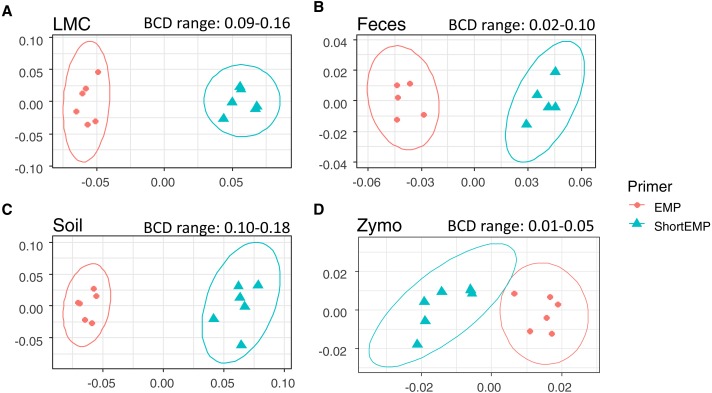
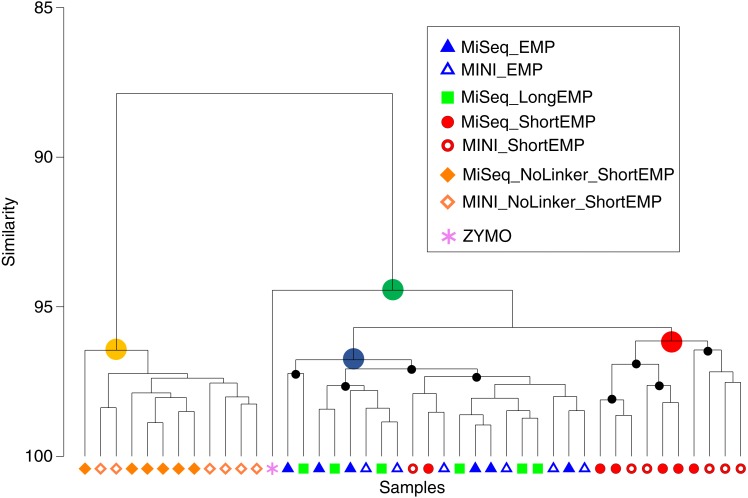
Deep sequencing of small subunit ribosomal RNA (SSU rRNA) gene amplicons continues to be the most common approach for characterization of complex microbial communities. PCR amplifications of conserved regions of SSU rRNA genes often employ degenerate pools of primers to enable targeting of a broad spectrum of organisms. One little noticed feature of such degenerate primer sets is the potential for a wide range of melting temperatures between the primer variants. The melting temperature variation of primers in a degenerate pool could lead to variable amplification efficiencies and PCR bias. Thus, we sought to adjust the melting temperature of each primer variant individually. Individual primer modifications were used to reduce theoretical melting temperature variation between primers, as well as to introduce inter-cluster nucleotide diversity during Illumina sequencing of primer regions. We demonstrate here the suitability of such primers for microbial community analysis. However, no substantial differences in microbial community structure were revealed when using primers with adjusted melting temperatures, though the optimal annealing temperature decreased.
对小亚基核糖体RNA(SSU rRNA)基因扩增子进行深度测序仍然是表征复杂微生物群落最常用的方法。SSU rRNA基因保守区域的PCR扩增通常采用简并引物库,以便能够靶向多种生物体。此类简并引物组一个很少被注意到的特点是引物变体之间的解链温度范围很广。简并引物库中引物的解链温度变化可能导致扩增效率不同和PCR偏差。因此,我们试图分别调整每个引物变体的解链温度。使用单个引物修饰来降低引物之间的理论解链温度变化,并在引物区域的Illumina测序过程中引入簇间核苷酸多样性。我们在此证明了此类引物适用于微生物群落分析。然而,使用解链温度调整后的引物时,虽然最佳退火温度降低了,但微生物群落结构并未显示出实质性差异。